
Bonga South-West Aparo: The $21Bn Project That Could Reshape Nigeria’s Energy Oil Future
By Salihu Onimisi


After more than two decades of delays, negotiations and uncertainty, one of Nigeria’s most ambitious deepwater oil projects is moving closer to reality. With potential lifetime investment of up to $21 billion, the Bonga South-West Aparo (BSWA) project could become a defining test of whether Nigeria has restored the conditions necessary to attract large-scale energy investments.

For more than two decades, beneath the deep waters of Nigeria’s offshore Niger Delta, one of the country’s most promising petroleum assets has remained undeveloped. It has endured changes in government, evolving fiscal policies, prolonged negotiations, commercial disputes and an accelerating global energy transition that has made investment decisions on large oil projects increasingly complex.
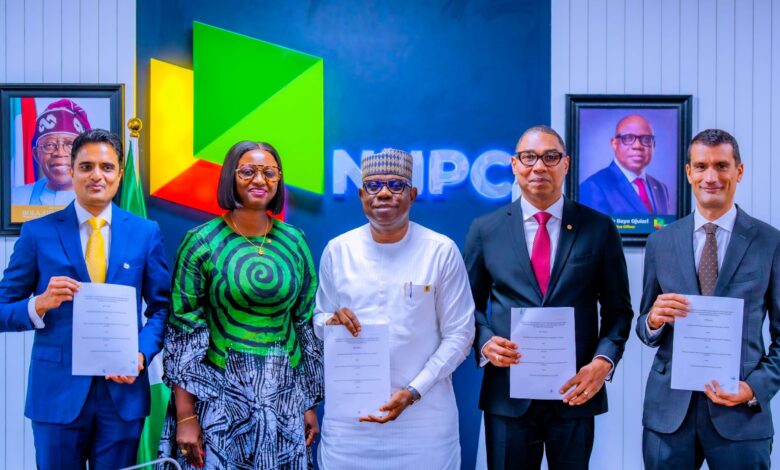
Today, however, the long-delayed BSWA project has returned to the centre of Nigeria’s energy agenda. The project, estimated to attract between $15 billion and $21 billion over its lifetime, has taken a significant step towards Final Investment Decision (FID) following the execution of addenda to the Oil Mining Lease (OML) 118 Production Sharing Contract (PSC) and the Dispute Settlement Agreement (DSA) by NNPC Limited and its contractor partners, Shell Nigeria Exploration and Production Company Limited (SNEPCo), Esso Exploration and Production Nigeria (Deepwater) Limited and Nigerian Agip Exploration Limited.
The agreements, executed in August 2026, represent more than contractual formalities. They are an effort to unlock one of the largest deepwater investments contemplated in Nigeria in years and may signal a broader restoration of confidence in the country’s upstream petroleum sector.
The asset was discovered more than two decades ago and spans offshore acreage within Nigeria’s deepwater petroleum province. Despite its considerable resource potential, the project remained caught in a cycle of delays.
The breakthrough moment
On August 24, 2026, NNPC Ltd and the OML 118 Contractor Parties executed addenda to both the PSC and DSA, providing renewed momentum for the project. The agreements give effect to fiscal and commercial terms approved by the Federal Government and are intended to establish the conditions required for the partners to proceed towards Final Investment Decision (FID).
The development followed the Federal Government’s approval of the Deep Offshore Oil and Gas Projects Incentives (Tax Remission) Order, 2026, a policy intervention aimed at improving the competitiveness of Nigeria’s deepwater investment environment.
For Nigeria, the significance of this development extends beyond a single oilfield.
A $21 billion vote of confidence
At the upper end of current projections, Bonga South-West Aparo could attract as much as $21 billion in investment.
At a time when global capital is increasingly cautious about long cycle fossil fuel projects, that figure is highly significant. Twenty-one billion dollars represents more than a line item in an investment announcement. It could translate into capital deployed across engineering, fabrication, drilling, subsea infrastructure, logistics, technology, professional services and workforce development.
The project is expected to rank among Nigeria’s largest deepwater developments, with projected peak production of approximately 175,000 barrels of oil per day and about 140 million standard cubic feet of gas per day.
These volumes could significantly strengthen Nigeria’s oil and gas production profile as the country seeks to stabilise output, improve revenue generation and reinforce its foreign exchange position.
Perhaps the investment’s greatest value, however, is its potential to restore market confidence. For years, Nigeria’s oil and gas industry has faced difficult questions from investors.
A successful transition of the BSWA project from negotiations to FID would provide a compelling response. It would demonstrate that Nigeria remains capable of competing for major international energy capital.
More than barrels of oil.
It is easy to assess an oil project solely by its projected production volumes. However, the economic impact of Bonga South-West Aparo could extend well beyond crude production.
Large deepwater projects generate activity across a broad value chain. Engineers design facilities. Fabricators construct components. Nigerian service companies provide logistics. Marine operators support offshore installations. Technology firms supply specialised systems. Financial institutions structure transactions.
The project could also create training opportunities for young professionals and facilitate knowledge transfer between international operators and indigenous companies.
According to NNPC Ltd, the project could contribute to government revenues, foreign exchange earnings, employment, local content development and expanded opportunities for Nigerian businesses.
For a country facing persistent foreign exchange pressures, the prospect of a major new source of hydrocarbon production is particularly important. Although the country is pursuing economic diversification, its oil and gas industry will continue to play a critical role in financing national development for years to come.
The challenge is to derive greater value from the resources already available. The Bonga South-West Aparo project could form part of that strategy.
The NNPC factor
At the centre of the project is NNPC Limited, which has increasingly positioned itself as a commercially oriented national energy company focused on partnerships and investment attraction.
The recent Bonga South-West Aparo negotiations underscore the importance of collaboration among government institutions, regulators and international partners. No single institution can deliver a project of this scale independently.
The Federal Government establishes the policy framework. Regulators provide oversight and certainty while NNPC, as the concessionaire, plays a central coordinating and commercial role. On their part, the international partners contribute technical expertise, operational experience and investment capacity.
The recent agreements suggest that such alignment is beginning to emerge.
Local content: The opportunity beyond the ocean
One of the most important questions surrounding a $21 billion project is how much of that investment will circulate within Nigeria. This is where local content becomes critical.
Nigeria’s energy industry has made significant progress in developing indigenous capacity. Nigerian companies now participate in fabrication, logistics, marine services, engineering and other areas once dominated almost entirely by foreign firms.
A project of Bonga South-West Aparo’s scale could provide another major platform for expanding that capacity. The opportunity, however, extends beyond awarding contracts to Nigerian companies. Effective local content should involve building sustainable capabilities, and facilitating technology transfer.
It should also develop specialists capable of competing internationally, competent enough to strengthen domestic supply chains and most importantly, creating businesses that can remain viable beyond a single project.
The legacy of Bonga South-West Aparo project may therefore not be measured solely by the number of barrels produced, but it could also be assessed by the number of Nigerian companies strengthened and professionals equipped with advanced deepwater expertise.
The energy transition question
There is, of course, a broader question. Why invest $21 billion in oil at a time when the world is focused on renewable energy and decarbonisation? The answer lies in the complexity of the global energy transition. The world may be moving towards cleaner energy sources, but the transition will not occur overnight.
Oil and gas remain essential components of the global energy mix. For resource rich countries such as Nigeria, the challenge is not to ignore the transition, but to advance towards this transition, strategically.
Nigeria must develop renewable energy, expand electricity access, monetise its substantial gas resources and maximise value from petroleum assets while global demand remains.
The Bonga South-West Aparo project reflects this balancing act. Its projected gas component is particularly relevant as Nigeria seeks to position natural gas as a transition fuel for industrialisation, power generation and good revenue through exports.
The central policy question is not whether Nigeria should abandon oil immediately. It is whether the country can use today’s petroleum resources strategically to finance tomorrow’s economy.
If Bonga South-West Aparo reaches FID and progresses successfully to production, it would surely send a powerful message beyond Nigeria’s shores. It would signal to global investors that Africa’s largest oil producer is serious about restoring its competitiveness.
It would demonstrate that difficult commercial disputes can be resolved. Also, it would validate the proposition that fiscal reforms can unlock dormant investments. And it could create momentum for other deepwater projects awaiting development which may be the project’s greatest significance.
Bonga South-West Aparo is not only about Bonga, but also about what follows. If Nigeria manages the project effectively, it could be remembered not merely as another deepwater development, but as that very investment that helped reshape the trajectory of Nigeria’s oil and gas industry. And, in doing so, reshape the country’s energy future.
Onimisi, an Upstream Analyst, writes from Lagos.