The Federal Government has restored the full autonomy of the National Commission for Mass Literacy Adult and Non-formal Education (NMEC) as part of efforts to tackle the challenge of adults who lack basic literacy and numeracy skills in Nigeria.
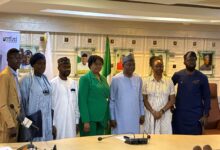
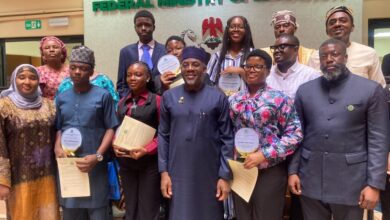
Minister of State for Education, Prof. Suwaiba Ahmad, disclosed this during the 2026 International Literacy Day Ministerial Press Briefing in Abuja on Friday.
Speaking on the theme, “Literacy for People, The Planet and Prosperity”, Ahmad said the theme reminds Nigerians that literacy was far more than the ability to read and write, noting that it is the foundation of human dignity, sustainable development, and shared prosperity.
She said the theme also calls for connecting literacy to the realities of daily life to enable citizens to participate in economic activities, acquire vocational skills, harness digital technologies, and improve their livelihood.
The Minister admitted that the scale of the challenge demands a coordinated, innovative, and sustainable response, and that was why the government was strengthening NMEC and enhancing its operational capacity to effectively discharge its mandate as the lead federal institution for mass literacy, adult, and non-formal education.
She described the restoration of NMEC’s autonomy as a critical step for effective planning, coordination, and contribution, and acknowledged President Bola Tinubu for his unwavering support in restoring the Commission to its rightful institutional position.
“For too long, the Commission has operated under significant constraints. We are now addressing these challenges head on,” the minister said.
She listed ongoing interventions to include the rehabilitation of facilities at the National Centre for Adult Education in Kano, the development of infrastructure nationwide, and working towards a permanent corporate headquarters for NMEC.
Furthermore, she said the move was not merely an infrastructural project but a statement of the government’s determination to give literacy and lifelong learning the visibility, dignity, and national prominence they deserve.
The Minister also announced the activation of learning centres across the country, noting that NMEC staff were not only establishing the centres but also serving as facilitators.
She said the innovative approach addresses the perennial challenge of sustaining facilitators’ welfare while expanding access to literacy opportunities, and that the centres will provide flexible and accessible pathways for young people and adults who missed out on formal education.
The Minister maintained that the challenge of youth and adult literacy was too vast to be tackled by government alone and called on state governments, local governments, development partners, civil society organisations, traditional and religious institutions, the private sector, community leaders, and the media to join hands with NMEC in taking literacy programmes to every community where they are needed.
Responding to questions from journalists, the Minister said the administration of President Bola Ahmed Tinubu was holding every agency accountable through key deliverables that are reported on quarterly.
She explained that while NMEC has direct responsibility for youth and adult literacy, she could not immediately provide the specific target of adults and youths to be made literate between September 2026 and September 2027, but assured that the information would be shared after the interaction.
On Nigeria’s status regarding SDG 4, she said the country was on track, adding that that the Ministry was conscious of carrying rural communities along in the digital economy through initiatives such as the digitisation of the Teacher Professional Development (TPD) training for teachers and linking it to AI to ensure that even a teacher with a simple android phone can access the platform.
Ahmad also challenged the new NMEC Executive Secretary to be more proactive and carry the media and all stakeholders along in its activities, saying “you can’t be in a room and only you and your people know what is happening.”
She said the government is working on a permanent headquarters for NMEC, which is currently in a rented office, and expanding the regional zonal office in Kano to serve as a centre for TVET activities.
According to her, the centre will offer standardised international level vocational training for adults and youths.
Also speaking, the Executive Secretary of NMEC, Prof. Muhammad Shuni, said the restoration of the Commission’s autonomy would make its activities more visible in the coming months.