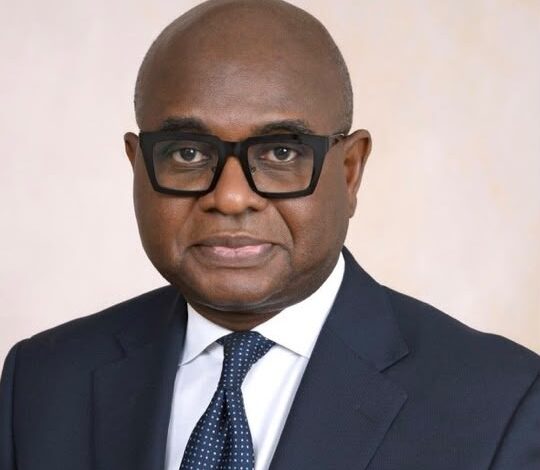


Former Deputy Governor of the Central Bank of Nigeria (CBN), Kingsley Moghalu, has warned that the recently adopted UN resolution correcting the visual size of Africa on world maps, while symbolically important, will not by itself translate into economic transformation for the continent.
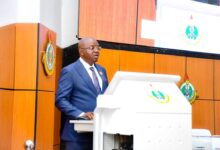
The UN General Assembly voted 164 to 1 in favour of the “Correct the Map” resolution, led by Togo on behalf of the African Group and backed by the African Union.
The resolution encourages schools, governments, international organisations and technology platforms to adopt equal-area projections such as Equal Earth, rather than the centuries-old Mercator map, which enlarges landmasses near the poles and shrinks those near the equator.
Under the Mercator projection, Africa, roughly fourteen times larger than Greenland, appears about the same size as the Arctic island.
Moghalu, in a post on his X handle on Monday, noted that the resolution was not binding, does not affect Mercator’s continued use in navigation, and does not alter any borders. It simply asks that the world stop teaching a geographic distortion as fact.
In his commentary, Moghalu said the correction matters because maps shape perception, telling children who is large and who is small, who is central and who is peripheral.
He said Africa’s visual minimisation on the widely used Mercator map has made it easier for the continent to be treated as marginal in global politics, capital and history, and described the correction as a matter of dignity and intellectual accuracy.
However, he cautioned that an accurate map would not industrialise Africa, keep the lights on, raise agricultural yields, secure property rights, or produce the manufactured goods needed to move the continent from poverty to prosperity.
Referencing his book, Emerging Africa, Moghalu argued that the continent was “emerging” rather than “rising,” stressing that the distinction is not semantic.
He described emergence as visibility in other people’s narratives, while transformation requires productivity, skills, governance and a coherent national sense of direction.
He said development begins as a state of mind, built on values, strategy and organisation, without which nations mistake symbols for substance.
He pointed to the industrial rise of China, South Korea, Singapore, Taiwan and Vietnam as examples of countries that escaped poverty through investment in education, industrial discipline, state capacity and long-term national purpose, not through favourable cartography. “The map followed the factories, not the other way around,” he said.
Moghalu said he supported teaching Africa’s true size to children as a useful shock to the imagination, noting the continent is large enough to contain the United States, China, India, Japan, Mexico and much of Europe combined, with room to spare. But he insisted the more important question was what Africa intends to build on that land.
In a follow-up post responding to public reaction to the resolution, including a vendor in an East African shopping mall who approached him with a “new map” of the continent, Moghalu said Africa must confront its structural fundamentals rather than take comfort in symbolic wins.
He cited International Monetary Fund figures showing Sub-Saharan Africa’s average nominal GDP per capita at $1,940, compared with $9,445 for Asia.
He also criticised the state of democratic institutions across the continent, arguing that many African countries have adopted Western liberal democracy in form but continue to rig elections and operate weak institutions and rule of law, resulting in what he called “anocracies,” a hybrid of democracy and autocracy.
Moghalu further noted that while African nations are heavy consumers of technology, manufacturing and intellectual property remain concentrated elsewhere.
He warned that with Africa on track to represent 40 percent of the global workforce by 2050, the continent risks squandering that demographic potential unless it converts political independence and technology adoption into productivity, even as countries like China invest heavily in artificial intelligence to offset a declining and ageing population.
He said Africa needs both thinkers and doers engaged in long-term “futures thinking,” concluding that a fairer map marks only the beginning of perception, not the beginning of prosperity.
“The world does not owe Africa a projection,” he said. “Africa owes itself a plan.”