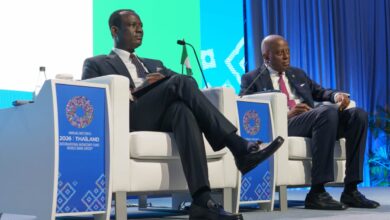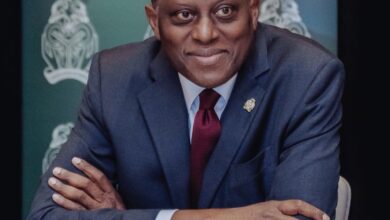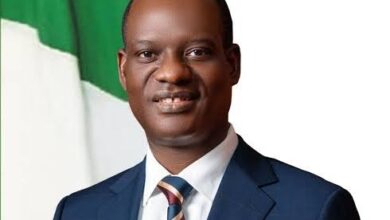
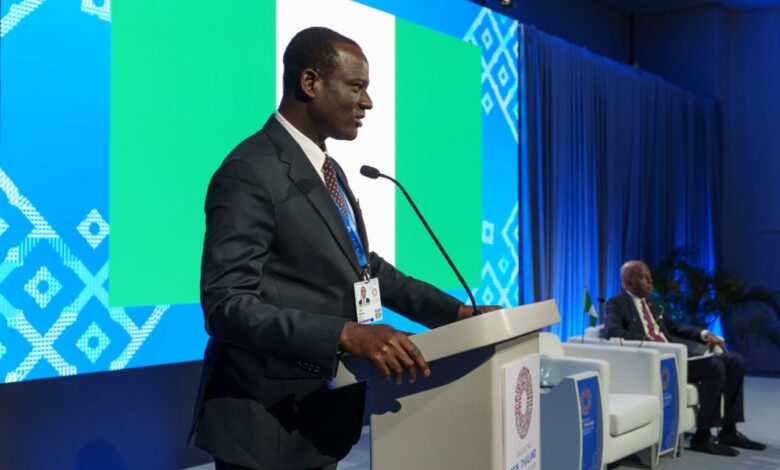


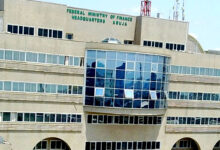
The Minister of Finance and Coordinating Minister of the Economy, Prof. Taiwo Oyedele, said the country leaves the 2026 IMF/World Bank Group Annual Meetings with international partners’ backing for its economic reforms, and warned that the harder test now is turning stability into jobs.
Concluding the week in Bangkok under the Nigerian sub-theme “From Stability to Growth,” Oyedele, said there would be “no return to fuel subsidies or multiple exchange rates.”
Oyedele, in a statement on Sunday, credited President Bola Tinubu’s early reforms for what he described as visible results.
He said the economy grew about 4.4 per cent in the second quarter of 2026, and 17 per cent in US dollar terms in the half-year to June.
Inflation has fallen for four straight months and is now below 15 per cent, he said, while external reserves exceed US$55 billion.
He said the tax-to-GDP ratio has risen from about 7 per cent to 12.5 per cent, even after GDP rebasing. Private capital inflows, he said, grew twentyfold from about US300million in 2023 to nearly US6 billion this year.
Debt stands at 36 per cent of GDP, among the lowest of Nigeria’s peers, he added, with multilateral lenders holding about 45 per cent of external debt.
Nigeria used the meetings to launch “Projects Nigeria,” a portfolio of 65 projects worth about US$78.5 billion across energy, transport, industry and mining, agriculture, health and urban services.
Oyedele said each has a feasibility study and is structured for private participation. Investors from Asia and Europe have submitted expressions of interest, he said, and the projects remain open through the ministry’s investment platform.
Oyedele said the World Bank Group reaffirmed support for power and infrastructure through guarantees and other financing, and the IMF pledged continued technical help on fiscal policy, transparency and national statistics.
JICA, the Islamic Development Bank and other lenders signalled readiness to raise financing substantially, he said.
The US Treasury offered cooperation on health, tax administration and financial integrity, while the European Union named energy and local pharmaceutical manufacturing as priorities under its Global Gateway programme.
He stressed these were “commitments to work together, not announcements of money,” and said the government would report progress as agreements are signed.
As chair of the G-24 group of developing countries, Nigeria pressed for a stronger, quota-based IMF that protects the voice of developing nations, more transparent credit-rating methods, deeper local-currency markets and affordable climate finance.
Citing UNECA figures presented at the G-24 session, Oyedele said developing countries pay about US$500 billion a year more to borrow than advanced economies. Nigeria backed an African Credit Rating Agency and urged that the World Bank’s 2030 Shareholding Review follow the Lima Principles. He also reiterated that natural gas remains Nigeria’s transition fuel.
Oyedele said job creation was the meetings’ recurring theme. Citing the World Bank, he said about 1.2 billion young people will enter the global labour market over the next 10 to 15 years, while current trends point to only about 400 million jobs, leaving some 800 million without adequate work.
Artificial intelligence, he warned, could produce “growth without employment,” narrowing the labour-intensive path that lifted other regions to middle income, beginning with back-office and service work relied on by young graduates.
Nigeria’s response, he said, rests on large-scale skills training, directing investment and incentives to sectors that pair technology with heavy hiring, and rules ensuring AI gains are fairly taxed and shared.
He said Nigeria asked the Bretton Woods institutions to judge success “by the jobs created, not only the growth recorded.”
Addressing a recent 30-day retail margin discount on fuel, Oyedele said it was a time-bound commercial decision by NNPC Retail and not a subsidy paid from public funds.
“We leave Bangkok with confidence, but not complacency,” he said. “Stability was the first test. Growth that employs our people is the second.”
The 2026 Annual Meetings were held under the theme “Mobilising Private Capital, Creating Jobs.” The IMF projects global growth of 3.1 per cent this year.