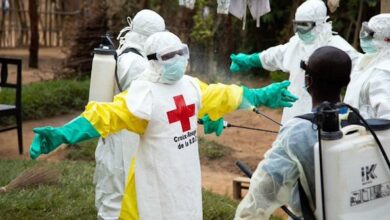



The Federal Ministry of Health and Social Welfare has directed ministries, agencies, health institutions and other relevant stakeholders to enforce strict compliance with approved Ebola Virus Disease (EVD) entry protocols at all designated points of entry into Nigeria.
Assistant Director, Information and Public Relations of the Ministry, Ado Bako disclosed this in a statement on Friday.
Bako said the directive was issued following concerns raised by the Office of the National Security Adviser (ONSA) over reported non-compliance with the approved measures.
The circular, dated October 22, 2026, was signed by the Permanent Secretary of the ministry, Daju Kachollom, on behalf of the Coordinating Minister of Health and Social Welfare, Prof. Muhammad Pate.
The ministry said consistent and non-discriminatory enforcement of the protocols was necessary to minimise the risk of cross-border transmission and protect public health and national security.
Under the directive, relevant institutions are required to ensure strict adherence to prescribed screening procedures, health declaration requirements, surveillance measures and other applicable entry protocols.
The ministry also called for stronger coordination, communication and information-sharing among responsible agencies to improve surveillance, facilitate early detection and ensure prompt responses to potential public health threats.
To strengthen accountability, institutions have been directed to promptly document and report actual or attempted violations of the approved protocols through established channels.
They are also required to provide necessary support to enforcement officials and establish monitoring mechanisms to identify and address lapses in the implementation of the measures.
The ministry further stressed that personnel responsible for enforcing the protocols must be allowed to discharge their duties professionally without undue interference.
It directed the immediate and widespread circulation of the directive to relevant departments, units, field offices and personnel to ensure that all concerned institutions understand their responsibilities and take prompt action.
The government said effective implementation of the protocols, inter-agency collaboration and accountability remained critical to strengthening Nigeria’s preparedness against cross-border health threats.
The directive comes amid heightened public health vigilance following the confirmation of an Ebola case in the Federal Capital Territory, involving a woman who recently arrived in Nigeria from Uganda.
Consequently, the Federal Government urged all relevant institutions to accord the directive the highest priority and sustain compliance with the approved entry protocols to safeguard the health and safety of Nigerians.