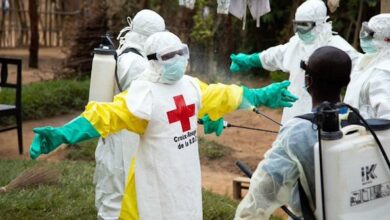



The Federal Government has said the woman infected with Ebola virus disease in the Federal Capital Territory (FCT) is showing signs of recovery, as health authorities intensify efforts to prevent the outbreak from spreading.
The Coordinating Minister of Health and Social Welfare, Prof. Muhammad Pate, disclosed this on Thursday during a press briefing in Abuja, saying laboratory results indicated significant improvement in the patient’s condition.
Pate, however, said the government remained vigilant and would continue working to ensure the patient’s recovery and prevent further transmission.
He explained that the woman, who arrived in Nigeria from Uganda, was asymptomatic on arrival but developed symptoms a few days later.
The minister said health authorities immediately commenced contact tracing following confirmation of the case, identifying people who had contact with the patient at the hospital, a private clinic she visited and within her domestic environment.
He disclosed that 44 contacts had been identified and categorised according to their exposure levels, with high-risk contacts placed in a designated quarantine facility and others isolated and monitored in line with public health guidelines.
Pate said the government had activated its incident management system, with the Nigeria Centre for Disease Control and Prevention (NCDC) coordinating the response alongside the FCT authorities.
He added that all state governments had been informed of the development, while states were directed to strengthen their preparedness and complete outstanding Ebola response plans.
According to him, additional resources had been mobilised to support containment efforts, while relevant ministries, agencies and development partners were working together to prevent further spread.
The minister said Nigeria’s public health authorities diagnosed and confirmed the case within 24 hours of being notified and subsequently informed the World Health Organisation (WHO).
He added that the government was working with genomic expert, Prof. Christian Happi of Redeemer’s University, Ede, alongside the NCDC and international partners, to strengthen investigations and understand the virus.
Pate assured Nigerians that there was currently no evidence that the infection had spread into the wider community, adding that the government had not recommended restrictions on public gatherings, political campaigns or conferences.
He warned, however, that the situation would be reviewed if new evidence emerged, stressing that any decision on gatherings would be based on scientific assessments and public health considerations.
The minister urged Nigerians to practise regular handwashing, avoid contact with other people’s body fluids and promptly report symptoms such as fever, headache and muscle aches, particularly where there was a relevant travel history. He also directed hospitals to strengthen isolation facilities and infection prevention measures.
Pate called on private healthcare providers to promptly notify public health authorities of suspected cases and urged Nigerians to disregard misinformation, warning that rumours could undermine containment efforts if people refused to comply with quarantine and isolation instructions.
He expressed confidence that Nigeria could contain the case, citing the country’s previous experience managing Ebola, and appealed to the public to cooperate with health authorities, insisting that there was no need for panic but that vigilance remained essential.