

Nigeria has recorded gains in macroeconomic stability, but poverty and hunger remain severe for millions of households.
About 63 per cent of Nigerians are projected to live below the national poverty line in 2026, and roughly 35 million people are expected to face acute food insecurity, according to the latest World Bank assessments.
The Federal Government says it is responding with a mix of cash support, food and farm programmes, job schemes, loans and cost relief measures, even as it argues that its reforms are laying the base for lasting recovery.
The World Bank says the share of Nigerians living below the national poverty line rose from 40.1 per cent in 2019 to 56.2 per cent in 2023, and is estimated at 63 per cent in 2025 and 2026. That translates to about 139 million people, with poverty concentrated especially in northern Nigeria.
Measured against international benchmarks, the picture is just as stark. In 2025, an estimated 69.6 per cent of Nigerians lived below the lower middle income poverty line of $4.20 per day, while 50.8 per cent, about 123 million people, lived in extreme poverty. Multidimensional poverty, which captures poor access to basic services and infrastructure alongside low incomes, rose from 43.5 per cent to 47.4 per cent between 2019 and 2023.
HUNGER AND FOOD SECURITY
The World Food Programme estimates that about 35 million Nigerians will face acute food insecurity in 2026, up from 33.1 million in 2025. Nearly 5.8 million of them are in the North East.
The World Bank’s Country Partnership Framework states that 33 per cent of the population is ultra poor, meaning food insecure by age weighted caloric intake, a share described as more than 60 million people.
Poor households spend up to 70 per cent of their income on food, and the cost of a basic food basket rose about fivefold between 2019 and 2024, making food inflation a central driver of hardship.
The Bank attributes the deterioration to high food inflation, weak real income growth, past policy missteps and external shocks, compounded by the adjustment costs of recent reforms such as fuel subsidy removal and exchange rate changes.
It acknowledges that Nigeria has made progress on macroeconomic stabilisation, but says those gains have not yet translated into materially better livelihoods for most households.
Its recent Nigeria Development Update recommends people centred actions: reducing food inflation and improving food availability, using public resources better, strengthening social safety nets, promoting inclusive private sector led growth that creates more and better jobs, and investing in public services and early childhood development.
The most relevant publications are the October 2025 edition, “From Policy to People: Bringing the Reform Gains Home,” and the October 2026 edition, “Beyond the Federal Purse: How Higher Revenues Shaped State Priorities.”
CASH AND HOUSEHOLD SUPPORT
The Federal Government has deployed several instruments to cushion the impact. Conditional Cash Transfers provide regular payments to poor and vulnerable households to help them meet basic needs and build resilience. The National Social Investment Programme serves as an umbrella for cash transfers, youth employment, micro loans and school feeding.
After the removal of the fuel subsidy, the government introduced palliatives that included cash support to states and vulnerable households, food distribution and transport related interventions. Temporary wage awards and salary support allowances were also introduced for federal civil servants to offset rising living costs.
On food, the government provides inputs, grants and financing to farmers to raise production and improve availability. Rice and other food items have been distributed to states as emergency relief, particularly after subsidy removal. These efforts follow earlier initiatives such as Operation Feed the Nation and the Green Revolution, which also aimed to raise domestic food production.
JOBS, SKILLS AND LOANS
For young Nigerians, N-Power offers paid work placements, training and skills development, while the National Directorate of Employment provides training, guidance and finance related support for the unemployed.
The National Youth Talent Export Programme builds skills to help young people access work and export opportunities, and the iDICE programme, implemented through the Bank of Industry, supports technology and creative sector growth for those aged 15 to 35.
On enterprise support, the Government Enterprise and Empowerment Programme offers collateral free micro loans to traders, farmers, small businesses and enterprising youths. The Micro Enterprise Directorate provides low interest loans to micro enterprises in the informal, semi formal and formal sectors. The Nigerian Consumer Credit Corporation, known as CREDICORP, seeks to expand affordable credit for working Nigerians, alongside wider financing and business support for micro, small and medium enterprises.
EDUCATION AND HUMAN CAPITAL
The Student Loan Initiative, now the Nigerian Education Loan Fund, provides interest free or low cost loans to eligible students to reduce financial barriers to higher education. The Home Grown School Feeding Programme supplies meals to schoolchildren, supporting nutrition, attendance and local food producers.
Longer term strategies such as the Economic Recovery and Growth Plan and the National Development Plan have emphasised infrastructure, diversification, healthcare, education and social protection as routes out of poverty.
TRANSPORT AND ENERGY COST RELIEF
To ease transport costs after subsidy removal, the government launched the Presidential CNG Initiative, promoting compressed natural gas vehicles and buses. More than 550 CNG buses have been supplied. Import duties and taxes have also been removed on items such as CNG kits, electric vehicles, tricycles and solar energy equipment.
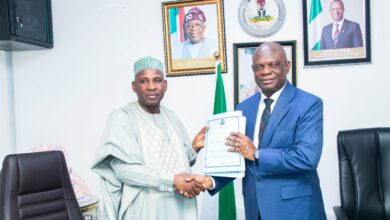
The latest push came at the 161st meeting of the National Economic Council (NEC), held virtually and chaired by Vice President Kashim Shettima, which endorsed a 90 day economic action plan proposed by the Federal Ministry of Finance.
The plan focuses on cutting the cost of living, improving food affordability, attracting investment and speeding up projects with direct benefits to citizens. It identifies five priority areas: food affordability, tax harmonisation, completion of high impact projects, resolution of investment bottlenecks and regulated household support.
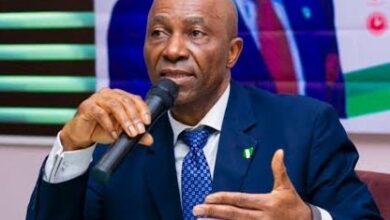
Presenting the economic outlook, Finance Minister and Coordinating Minister of the Economy, Mr. Taiwo Oyedele, named the reduction of headline inflation and interest rates to single digits by 2027 as key policy objectives. He said the next phase of reforms would need coordinated action across federal and state institutions.
Shettima urged governors to ensure that the gains of the reforms translate into affordable transportation, better healthcare, jobs and greater financial security.
“The first dividend of prosperity should be the confidence to plan a life. Our task is to make such confidence less dependent on fortune,” he said. On the CNG programme, he said success should be judged by affordability and access rather than the number of vehicles deployed.
In a related resolution, the Federal Executive Council (FEC) agreed to set up a joint financing framework between the Federal and State Governments to speed up the deployment of CNG and electric vehicles.
It directed that the programme must deliver lower transport costs to citizens, and that transport unions and operators be engaged so that savings from the new vehicles are passed on to commuters through lower fares. A committee will coordinate the arrangement.
FUEL PRICES AND INFLATION
Oyedele has also addressed the cost of fuel. Since 1 October 2026, motorists have paid less for petrol at NNPC Retail Limited stations following a discount on the company’s retail margin.
The minister rejected suggestions that this amounts to a return of the fuel subsidy, saying the cost is borne by the retailer alone and no public money is involved.
He said NNPC Retail buys petrol from the Dangote Refinery and other suppliers at market prices, and that the discount comes out of a retail margin that is less than 5 per cent of the pump price.
He added that the discount should not encourage smuggling, since petrol in neighbouring countries already costs 20 to 40 per cent more.
The government says the discount is one of several measures that also include CNG transport expansion, tax and duty waivers on petrol, and the removal of illegal levies that inflate transport costs.
A new coordination agreement between fiscal and monetary authorities adds a whole of government approach to inflation, combining disciplined spending with measures on food, energy and logistics costs.
These include strategic grain reserves, farmer support, rural road investment and engagement with state governments on road levies and farm access infrastructure.
WHAT THE GOVERNMENT POINTS TO
Officials cite improving macroeconomic indicators as evidence that the reforms are working. Inflation has fallen to 14.63 per cent, external reserves are above $55 billion, and real GDP grew by 4.43 per cent in the second quarter of 2026, up from 4.23 per cent in the same quarter of 2025 and 3.89 per cent in the first quarter of 2026.
Manufacturing grew by 3.24 per cent, agriculture by 4.39 per cent and services by 4.60 per cent. The government says the naira appreciated by more than 12 per cent between the first half of 2025 and the first half of 2026.
Investor confidence has also improved. FTSE Russell has reclassified Nigeria from Unclassified to Frontier Market status, effective 21 September 2026, while J.P. Morgan has included selected FGN bonds in its GBI-EM Edge index, with Nigeria carrying a weighting of 7.40 per cent.
The Central Bank of Nigeria was also named 2026 Central Bank of the Year. Oyedele said the task now is to reform credibility into investment, investment into jobs, and growth into incomes that rise faster than prices. “Stability is the foundation, not the destination,” he said.
THE CHALLENGE OF DELIVERY
The gap between these headline gains and household experience is the central test. Analysts note that the effectiveness of poverty programmes has often been limited by implementation gaps, targeting problems, funding constraints, corruption risks, inflation and weak monitoring.
The government is still expanding cash transfers, vocational training, farmer grants and collateral free loans as it manages the cost of living effects of reform. For the millions of Nigerians still struggling to afford food, whether those measures reach them quickly enough will determine if stability finally becomes prosperity.