
Ministry Seeks Seven-Year Ban On Establishment Of New Tertiary Institutions
By Alice Etuka, Abuja


The Federal Ministry of Education has appealed to the National Assembly to stop approving bills for the establishment of new federal universities, polytechnics and colleges of education for seven years.

The appeal was contained in a Federal Ministry of Education’s memo dated November 2, 2026, and addressed to the President of the Senate, Senator Godswill Akpabio.
In the leak memo, marked FME/DUE/NASS/153/Vol.1/147 and sighted in Abuja on Thursday, the ministry urged the Senate leadership and other lawmakers to exercise legislative restraint in considering bills seeking to establish additional federal tertiary institutions in support of the Federal Government’s seven-year moratorium.
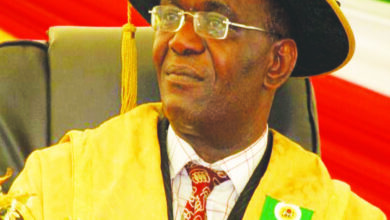
According to the memo, the minister of education, Dr Tunji Alausa, disclosed that the Federal Executive Council (FEC), at its meeting of August 13, 2025, approved the moratorium as part of efforts to address what he described as the growing proliferation of public tertiary institutions, duplication of academic programmes, under-utilisation of existing facilities and the government’s declining capacity to adequately fund the sector.
According to him, the immediate challenge facing Nigeria’s tertiary education system is no longer simply the expansion of access but the need to strengthen existing institutions through improved funding, infrastructure, personnel and modern teaching and research facilities.
“The Federal Government’s position is that the immediate challenge confronting the tertiary education sector is not merely the expansion of access, but the urgent need to strengthen existing institutions,” the minister stated.
He added that the moratorium would provide an opportunity to “consolidate existing investments and improve the quality and carrying capacity of institutions already established.”
The memo expressed concern that legislative proposals for additional federal tertiary institutions continued to receive attention despite the government’s policy direction.
While acknowledging the constitutional powers of the National Assembly to initiate and enact legislation, Alausa maintained that such initiatives should be guided by prevailing national education policies, demonstrable educational needs and the financial implications of establishing new institutions.
He warned that spreading limited resources across more institutions without addressing the challenges confronting existing ones could further weaken the quality of tertiary education.
“Existing Federal Universities, Polytechnics and Colleges of Education are confronted with serious funding and infrastructure deficits, including inadequate lecture halls, overcrowded classrooms, insufficient laboratories, shortages of qualified personnel, accommodation deficits and deteriorating facilities,” he said.
The minister argued that creating more institutions under such circumstances could compound the difficulties facing the sector rather than improve access to quality education.
One of the major concerns raised in the letter was the Federal Government’s outstanding financial commitments to the revitalisation of public universities.
Alausa disclosed that under the 2013-2018 Federal Government-ASUU revitalisation commitment of ₦1.3 trillion, only ₦250 billion was reportedly released between 2013 and 2021.
He also revealed that of the additional ₦150 billion approved in 2025 for Needs Assessment Intervention, only ₦50 billion was initially released, leaving a substantial outstanding commitment.
“These funding gaps demonstrate the difficulty of meeting existing obligations and raise legitimate concerns about the capacity to sustain additional institutions without corresponding and guaranteed budgetary provisions,” he stated.
The minister further cited the experiences of Ekiti and Imo states as examples of the financial and administrative difficulties associated with establishing multiple tertiary institutions without sustainable funding arrangements.
He recalled that three state-owned universities in Ekiti State were consolidated into a single institution, Ekiti State University, Ado-Ekiti, in 2011.
Similarly, he said Imo State had undertaken institutional reviews and integration following the establishment of several tertiary institutions under previous administrations.
Alausa also noted that some state governments had approached the Federal Government to take over their universities because of their inability to sustain the institutions financially.
According to the memo, such experiences demonstrate the dangers of establishing public tertiary institutions without adequate consideration of their long-term funding requirements.
“The institutions established without sustainable funding arrangements may subsequently require costly restructuring, merger or integration by successor administrations,” he warned.
The minister also drew attention to international experiences, citing Australia, Finland, Japan, the United States and South Africa as countries that had undertaken institutional mergers and consolidation to address financial constraints, duplication of programmes and administrative inefficiencies.
He said such reforms were designed to achieve economies of scale, improve governance, strengthen research capacity and ensure more efficient utilisation of public resources.
Alausa argued that Nigeria should adopt a similar approach by prioritising institutional viability and academic quality over the continuous increase in the number of tertiary institutions.
He further identified competing funding priorities within the education sector as another reason lawmakers should support the moratorium.
According to the memo, the Federal Government is already committing substantial resources to interventions such as Tertiary Education Trust Fund (TETFund) infrastructure development, the Nigerian Education Loan Fund (NELFUND), vocational and skills acquisition programmes, as well as the implementation of the Consolidated Academic Tools Allowance (CATA) and Consolidated Tertiary Institutions Tools Allowance (CONTTA) for academic and non-academic personnel.
The minister warned that these interventions required sustained funding and should not be undermined by the creation of additional institutions without clearly identified sources of financing.
He stressed that establishing a tertiary institution involved much more than passing an enabling law, as it imposed long-term financial obligations on government.
“Such obligations extend beyond the administration that initiates the establishment and become continuing liabilities for successive governments,” he stated.
He listed take-off grants, land acquisition, infrastructure, recruitment of personnel, procurement of equipment, utilities and recurrent expenditure among the financial responsibilities associated with establishing new institutions.
Alausa cautioned that passing establishment bills without comprehensive feasibility studies, demonstrable national educational needs and credible long-term funding arrangements could result in institutions that exist only in law but lack the resources and capacity to function effectively.
“Such institutions may eventually become financial liabilities, compelling future administrations to undertake costly mergers, restructuring or outright closure, with attendant consequences for students, staff, public investments and the national education system,” he warned.
However, the minister clarified that the seven-year moratorium was not intended to permanently deny Nigerians access to tertiary education or prevent future expansion where compelling national needs existed.
Rather, he said the policy was designed to give the government time to consolidate existing investments, address institutional deficiencies, improve academic standards and ensure that any future expansion was properly planned and financially sustainable.
He therefore appealed directly to Akpabio and the leadership of the National Assembly to support the policy.
“In view of the foregoing, I respectfully appeal to Your Excellency and the distinguished leadership of the National Assembly to support the Federal Government’s seven-year moratorium by exercising restraint in the consideration and passage of Bills for the establishment of additional Federal Universities, Polytechnics and Colleges of Education during the period,” the memo stated.
Alausa maintained that the success of Nigeria’s tertiary education system should not be measured by the number of institutions established but by their ability to provide quality education, produce competent graduates and contribute meaningfully to national development.
The memo was also copied to the Senate Majority Leader, Senator Michael Opeyemi Bamidele.