
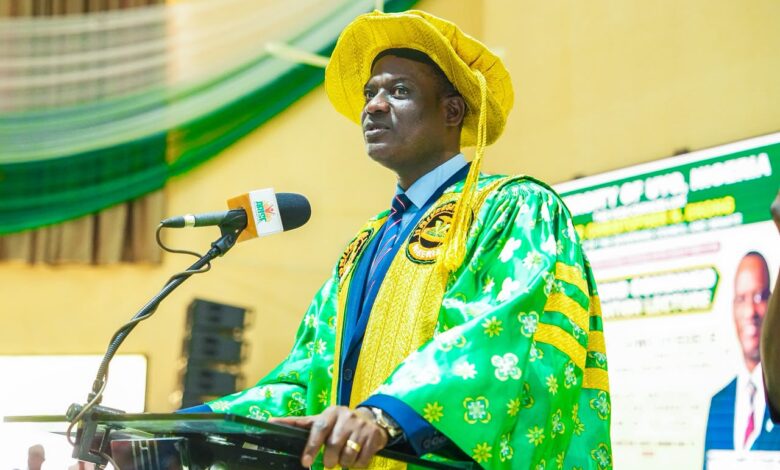


More than 90 per cent of Nigeria’s data is hosted abroad, and Minister of Finance and Coordinating Minister of the Economy, Taiwo Oyedele, says the country risks repeating the costly mistakes of its oil economy if that does not change.

Oyedele spoke on Wednesday in Uyo, Akwa Ibom State, while delivering the convocation lecture at the University of Uyo, titled “Digital Sovereignty and Ethics: Guarding the Economy for the Next Generation.”
In a statement made available on Thursday by the Head, Information and Public Relations Unit of the Ministry, Efe Ovuakporie, said the Minister recalled that exporting crude oil and importing refined petroleum products cost Nigeria substantial domestic value, expertise and jobs.
The country, he said, must not allow a similar pattern to take hold in the digital economy.
The scale of the opportunity is already clear, he noted, citing Nigerian Communications Commission (NCC) figures showing more than 157 million active internet subscriptions as of May 2026.
The 90 per cent estimate on foreign data hosting comes from the Nigeria Data Protection Commission.
According to the Minister, this dependence carries a heavy price: foreign exchange outflows for offshore hosting and processing, lost opportunities for local businesses and professionals, and the exposure of Nigerian data to foreign laws and jurisdictions.
He explained that digital sovereignty is a country’s ability to decide, under its own laws, how its data is collected, stored, accessed and used. It does not mean shutting Nigeria out of the global digital economy, he said, but making sure its participation serves national interests.
To turn the situation around, Oyedele called for deliberate investment in domestic digital infrastructure, stronger regulatory institutions, and local expertise and businesses able to turn data into valuable products and services at home.
On artificial intelligence, he said the technology is increasingly reshaping employment and the skills the emerging economy demands.
He urged graduates to embrace AI and other new technologies while holding on to independent judgement, critical thinking, creativity, empathy and integrity.
He also asked young Nigerians to be deliberate about their conduct online, since their digital footprints increasingly shape their personal and professional identities.
Posts, comments and reactions, he said, can influence how employers, institutions and society see them.
The Minister advised graduates to disagree respectfully and to challenge ideas rather than attack people.
He reminded them that online attention is not the same as respect, popularity does not equal credibility, and virality does not equal value creation.
He added that AI can amplify misinformation, impersonation and dishonesty, which makes ethical conduct and public trust more important.
Turning to universities, Oyedele urged them to go beyond awarding certificates and become centres of innovation, entrepreneurship, ethical leadership and practical problem-solving.
Their relevance, he argued, should also be judged by the problems their graduates solve, the businesses they build and what they contribute to their communities.
He named agriculture, energy, healthcare, marine resources, environmental management and digital services as sectors with major opportunities for innovation and enterprise, and called on universities to equip students with the practical skills to develop solutions in those areas.
Oyedele set out five responsibilities for the graduating students: lifelong learning, value creation, integrity, responsible digital citizenship and active participation in nation-building.
Nigeria’s digital future, he stressed, will depend not only on technology and infrastructure but also on the values, choices and capabilities of the people driving its development.
He urged the graduates to see themselves as active contributors to that future, quoting management thinker Peter Drucker: “The best way to predict the future is to create it.”