

SPECIAL REPORT: From Delayed Cheques To 48 Hour Payments: How Nigeria’s Pension Sector Is Rewriting Its Story
By Sunday Etuka


For decades, the word “pensioner” in Nigeria carried a picture that most citizens knew well. An elderly man or woman, a faded file under one arm, queuing at a verification centre under the sun, hoping this would be the year the arrears were finally cleared. Some died waiting. Others were reduced to begging relatives for transport money to get back home.
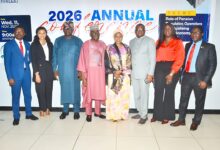
Last week in Abuja, that picture was the subject of an uncomfortable and hopeful conversation. Regulators, fund managers, fintech founders and journalists gathered for the annual conference of the Pension Correspondents Association of Nigeria (PenCAN), a day after the National Pension Commission (PenCom) launched a package called the Presidential Pension Security Initiatives. The package covers pension care, recovery, health insurance and a minimum pension guarantee.
The speakers made a bold claim. The old story, they said, is changing. To understand why the claim matters, it helps to look back. Nigeria’s current pension architecture rests on the Pension Reform Act of 2004, which replaced the old pay as you go arrangement, where the government paid retirees directly from its budget, with a contributory system. Under the new model, workers and employers contribute to individual retirement savings accounts managed by licensed operators and overseen by PenCom.
The old system collapsed under its own weight. Arrears piled up, record keeping was poor, and retirees were left to chase their entitlements for years. The 2004 law was meant to end that cycle. It created a framework in which every contributor owns an account and benefits are funded in advance rather than promised and postponed.
The law also contained a safety net that never actually functioned. It provided for a minimum pension guarantee, a floor below which no pensioner’s income should fall. But the guarantee was never activated, because the national pension fund that was meant to support it lacked the money. For more than twenty years, the promise sat on paper.
That is the backdrop against which this year’s conference took place, under the theme “The Role of Regulator, Operators in Actualising Nigeria’s $1 Trillion Economy Target.”
The Launch Of The Minimum Pension Guarantee
The Director General of PenCom, Ms Omolola Oloworaran, was represented at the conference by the Head of Corporate Communications, Mr Ibrahim Buwai. He placed the minimum pension guarantee at the centre of his message.
According to Buwai, the President unveiled the guarantee at the launch the previous day, and it is now set at N52,000 monthly. Pensioners receiving less than that figure will see their pensions upgraded automatically. He acknowledged that many retirees live on far less. Some, he said, receive as little as N20,000 a month, a sum he described as a recipe for a hard life.
What he wanted the audience to notice was speed. Nigerians, he said, have grown used to announcements that never become payments. “In Nigeria we are used to initiatives being announced, and then nothing follows,” he told the gathering. “I am happy to tell you that this guarantee actually took off yesterday.” He asked the audience to applaud, saying beneficiaries had already received their first payments even as the launch ceremony was under way.
The claim, if borne out, would be a significant moment. A provision dormant since 2004 has become an operating programme, at least according to the regulator.
Payments In 48 Hours
Buwai also spoke about one of the most painful features of the old system, which is delay. He said the issue of late payment of retirement benefits “has now become history,” with pensions now paid within a maximum of 48 hours of retirement.
He added that the retirement savings accounts of serving federal government employees are funded and ready. “The retirement savings account is what I like to call locked and loaded,” he said, describing money sitting in waiting for the day each worker retires, with no queue and no uncertainty.
For a country where retirees once waited months or years for gratuities, the change in tone is striking. Whether it holds across every agency and state is a question journalists in the room will no doubt keep asking.
The Launch Of The PenCare
The second pillar of the new package is health insurance for retirees, which Buwai said is delivered through the PenCare initiative. His reasoning was practical. Medical expenses take the largest share of a retiree’s spending, so covering them works as an indirect increase in pension income. Money that would have gone to hospital bills can instead go to food, rent and family needs.
He also anticipated a question that haunts every Nigerian reform, which is what happens when the people behind it leave office. “Somebody can say, what about tomorrow? What if somebody comes and changes things?” he said. “There is no fear of that, because PenCare has been designed to be independent.”
He explained that the scheme is run by an independent board of trustees made up of experts, including professionals from the health sector, so that it does not depend on the officials in office today.
Buwai further addressed a long running complaint that the contributory scheme took away workers’ benefits. He said it did not. Under Section 4 of the pension reform law, employers remain free to pay additional benefits on top of the pension. He also pledged that the regulator would stand behind what it announces. “We must be sure that it is something that is actually happening,” he said.
The DBS Pensioners Were Not Left Out
Not every retiree sits in the new contributory system. Many belong to the older Defined Benefit Scheme (DBS), which is managed by the Pension Transitional Arrangement Directorate (PTAD). The Executive Secretary of the agency, Ms Tolulope Odunaiya, was represented by the Head of Corporate Communications, Olugbenga Ajayi.
Ajayi spoke of the human side of the problem. In the past, he said, retirees were sometimes handed small sums just to get home. Today, he said, payments are being made, and with support from the federal government the issue of long standing arrears has been settled. “Before you can contribute to any economy, you must be paid,” he told the audience.
He announced three initiatives designed to improve pensioners’ welfare. The first is what PTAD calls “accreditation without borders.” Under the old rules, a pensioner had to appear in person at a particular office for verification and data capture, a journey that was costly and exhausting for the elderly. Now, pensioners in Europe, in distant villages or anywhere else can log on to a platform, submit the necessary documents, certify themselves and be enrolled on the payroll as qualified pensioners.
The second concerns the way the agency keeps its records. Ajayi said the agency used to rely on unions and family members to report a pensioner’s death, which was slow and unreliable. Now pensioners are required to renew their details every six months, so the agency knows when someone has passed on without waiting for anyone to come forward.
The third is a health insurance platform for DBS pensioners, formally launched at the same time. Ajayi said it will give them free, accessible and quality healthcare.
Operators And The Trillion Dollar Question
If the regulators spoke about protection, the operators spoke about growth. The Chief Executive Officer of the Pension Fund Operators Association of Nigeria (PenOp), Anthonia Ifeanyi Okoro, was represented by Olajumoke Akinwa, the Head of Business Development, Media, Brands and Communications.
The association’s address reminded the audience of how large the pension pool has become. Pension assets now run into trillions of naira, making them one of the largest pools of long term domestic capital in the country.
“A $1 trillion economy is not an abstract ambition,” the address read. “It is a goal that demands deliberate capital formation, long term investment, and strong institutions working in step.”
The argument was that retirement savings should do two jobs at once. They must protect the benefits of contributors, and they can also finance infrastructure, housing, energy and other productive sectors.
The balance depends on a working partnership. “The regulator provides the framework, oversight, and confidence that keep the system safe and credible,” the address said. “Operators bring innovation, discipline, and prudent investment decisions.”
But the association was careful not to place the entire burden on its own members. The ambition, it said, is a shared national project that needs businesses, entrepreneurs, development partners and government agencies at the table. “The $1 trillion ambition belongs to all of us, and its actualisation must be a collective effort,” it said. It also invited participants to speak plainly about what is working and what is not.
The Workers The System Has Missed
One of the most sobering contributions came from outside the traditional pension industry. The Chief Executive Officer and co-founder of Awabah, Tunji Andrews, described a population the formal system has barely reached.
About 80 percent of Nigerians, roughly 160 million people, work in the informal sector, he said, and earn less than $5 a day. They are exposed to illness and accidents, and most have no retirement plan. “That leads to financial crises and poverty,” his company’s statement said.
Awabah was set up in 2021 and says more than 50,000 informal and semi formal workers now have access to its financial wellness services, including micro pensions. Andrews credited PenCom for a change that he said has transformed his work. Enrolling a person into the Personal Pension Plan (PPP) once required about 35 fields of information. It now requires four. That simplification has made it possible to onboard market traders, artisans and other informal workers quickly, including through agent networks and partnerships with banks.
The remaining obstacle, he said, is not technology but awareness. “We have the infrastructure,” he told the correspondents. “What we do not have is enough people who know that it exists.” He appealed to journalists to help close the gap and said his team’s door was open to anyone willing to collaborate.
The Role Of The Press
The journalists in the room were not only an audience but a stakeholder. In her welcome address, the PenCAN President, Dr Nana Musa, thanked PenCom for providing the platform and described the conference as a chance for knowledge sharing and a deeper understanding of pension policy.
She also reminded her colleagues of their duty. “As pension correspondents, we recognise our responsibility to inform, educate and hold stakeholders accountable through accurate, balanced and responsible reporting,” she said. She called on the media to bridge the information gap and to help Nigerians understand the importance of pension savings and retirement security.
What Comes Next
The speeches at the conference were full of confident statements. Payments are fast, guarantees are active, and enrolment is easy. The test now moves from the conference hall to the lives of retirees.
A pensioner in a rural community will judge the reforms by whether the N52,000 floor reaches his account, whether his health card is accepted at the hospital, and whether the next payment arrives on schedule.
A market woman will judge the Personal Pension Plan by whether it is simple enough to join and trustworthy enough to keep. And the regulators will be judged by whether, as Buwai put it, what they announce is actually happening.
For now, the pension sector has made its promises in public, in front of the journalists whose job is to check them. That is, in itself, a form of accountability, and for millions of Nigerians waiting on the other side of the retirement line, it may be the beginning of a different story.