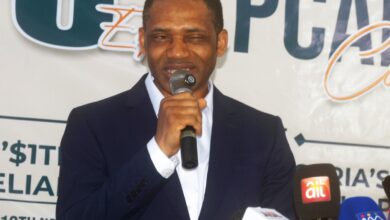
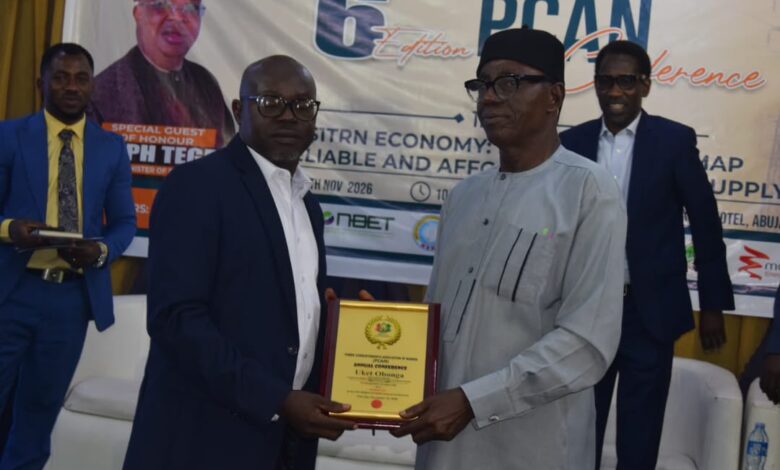


The National Secretary of the Nigeria Electricity Consumer Advocacy Network (NECAN), Uket Obanga, has accused players in the power sector of profiting from poor service, claiming that the less electricity is generated and delivered, the more money operators make from consumers.
Speaking at the Power Correspondents Association of Nigeria’s (PCAN) workshop in Abuja, Obanga said the very name “Nigerian Electricity Supply Industry” reveals a basic flaw: it recognises supply but ignores demand, which is driven by the consumers who keep the sector alive.
He said his records from 2013 to August 2026 show that installed generation capacity has remained the same or even fallen, particularly between 2019 and 2021.
Citing the Nigerian Electricity Regulatory Commission’s (NERC) second quarter report, he argued that operators earn more as less power is generated, transmitted and distributed. “Selling darkness. Exploiting Nigerians,” he said.
Obanga noted that the Electricity Act 2023, the customer protection regulation and the customer service standards of performance all exist to safeguard consumers, yet many people wrongly assume that those in the governance space act in consumers’ interest. Without customers, he stressed, there is no electricity business.
He lamented that Nigeria has yet to appreciate the role of power in national development, recalling that the Soviet Union once defined communism in terms of electricity.
According to him, well-written and well-presented papers on the sector routinely end up unimplemented.
Although he described himself as an incurable optimist, he said that as a veteran of the 1980s advocacy movement, he cannot recall a single government vision in Nigeria that was fully realised.
Obanga also questioned the proposed Energy and Power Company Limited, which he said he was hearing of for the first time despite years in the sector.
He was told it emerged from the Presidential Power Initiative. In his view, the government often creates new agencies on the strength of untested ideas from people with access to those in power, which compounds existing problems rather than solving them.
He asked whether a federal government power company was needed when the Transmission Company of Nigeria (TCN), the Nigerian Independent System Operator (NISO) and NERC already exist.
Turning to the $2 billion to $2.5 billion grant secured from Germany’s Angela Merkel in 2019, he recalled that consumer advocates warned television stations at the time against handing the funds to government agencies, including TCN and the Ministry of Power. Consumers, he said, are the ones left at the receiving end.
Reacting to claims of a N10 trillion federal investment in the sector, he cited a national survey on electricity supply quality his group conducted between 2018 and 2021.
It found that 72 percent of transformers installed by the distribution companies (DisCos) nationwide were bought and paid for by consumers. He asked who has documented this, and whether any official data exists on it.