

The World Trade Organization (WTO) has warned that failing to modernize the global trading system could shrink world output by as much as 10%, even as it found that strengthening the system could add roughly 3% or USD 3 trillion to global GDP by 2050.
The findings come from the 2026 edition of the World Trade Report, released on Tuesday, which reviews what the multilateral trading system has achieved over its 80-year history and the pressures now testing it. The WTO Secretariat’s flagship publication is intended to inform ongoing discussions on keeping trade rules relevant.
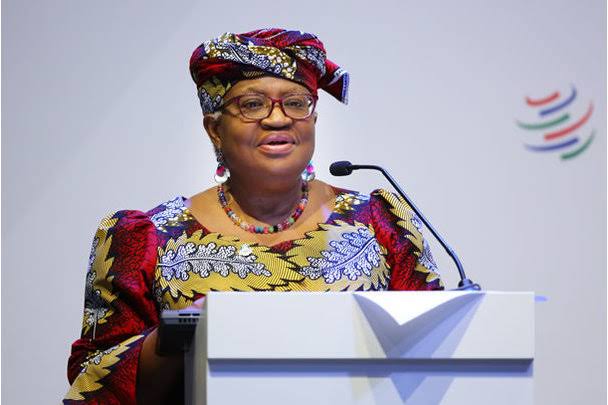
WTO Director-General, Ngozi Okonjo-Iweala, said the system had produced substantial gains over the decades, noting that around 72% of global merchandise trade still takes place under the WTO’s most-favoured-nation terms, while WTO-led trade cooperation has supported economic growth, helped narrow income gaps between developing and advanced economies, and contributed to peace among members.
She added that while the global trading landscape has changed significantly, the founding logic behind the system, that economies benefit more from cooperating than acting alone, remains just as relevant today, and that members are actively pursuing reform because they recognize the status quo cannot hold.
Titled “World Trade Report 2026: A Critical Juncture for the World Trading System,” the publication lays out three possible paths forward. Under a scenario where the multilateral framework is strengthened, through broader market-opening commitments, new multilateral disciplines in digital trade and services, wider membership, and a calibrated framework balancing openness with security concerns, global GDP could rise 2.9% and exports could climb 17.9% by 2050 relative to current trends.
Least-developed countries, which together account for less than 1% of world trade, stand to gain the most proportionally, with GDP projected to rise 7.7% from lower tariffs and trade costs. Wealthier economies would also benefit substantially in dollar terms, with gains estimated near US$1.7 trillion in 2023 dollars, driven largely by cheaper services trade.
By contrast, the report’s two “erosion” scenarios paint a bleaker picture. A “geo-fragmented world,” where trade splits along geopolitical lines, would see GDP fall 5.1% and exports drop 18.6%. A world reliant on a patchwork of free trade agreements instead of multilateral cooperation would fare worse still, with GDP down 6.9% and exports down 26.9%. Together, these scenarios point to a swing of roughly 5 to 10% of global real GDP between strengthened cooperation and eroded trading rules.
The report suggests that much of the strain on the system today stems from its own success. Over the past eight decades, the system helped cut trade barriers, expand global trade nearly fiftyfold, and build a more open, integrated, rules-based economy, while also strengthening trade ties, resilience during crises, and peace among members. That same growth, the report notes, has made continued cooperation harder to manage.
It points to four forces driving this complexity: shifts in economic power, growing use of tools like industrial policy alongside level-playing-field concerns, changes in trade patterns from digitalization, global value chains and environmental shifts, and heightened geopolitical tension.
Rather than offering a specific reform roadmap, the report flags areas where trade rules may need updating, concluding that protecting the gains of the multilateral system does not mean keeping things as they are — the task for WTO members is to adapt rules-based cooperation to a more multipolar, diverse global economy while holding onto the openness, predictability and fairness that made the system work.