

Three years ago, Nigeria’s monetary authorities faced a credibility crisis. Foreign exchange obligations sat unpaid, an opaque web of intervention programmes had blurred the line between development agency and central bank, and investors watched from a distance, wary of a system they no longer trusted.

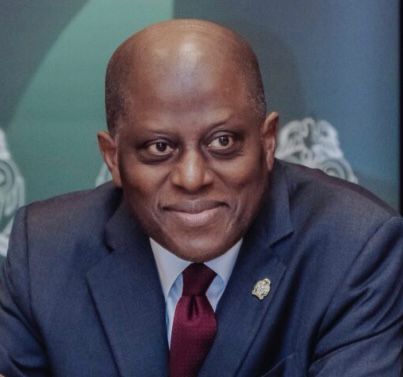
Into that landscape, President Bola Tinubu appointed Yemi Cardoso as Governor of the Central Bank of Nigeria (CBN) on September 15, 2023, betting that a technocrat’s steady hand could pull the institution back from the brink.
Three years on, the results of that bet are visible in the CBN’s balance sheet, its policy architecture, and its standing among global investors. It is a story of an institution stripped down to its core mandate and rebuilt, sector by sector, promise by promise.
When Tinubu made the appointment, he framed it as more than a routine personnel decision. He described Cardoso as a partner capable of steering the country out of its economic difficulties, someone who could stabilise the monetary system and align Nigeria’s practices with global standards.
Industry watchers, for their part, welcomed the news with cautious optimism, hoping for a return to technocratic, rules-based policymaking after years of improvisation.
That optimism was not misplaced, though it would be tested almost immediately. Cardoso inherited a central bank that had drifted far from its traditional responsibilities, entangled in agricultural financing schemes, subsidised lending programmes, and a foreign exchange backlog that had eroded confidence among both local and foreign players. His first major move signalled the direction he intended to take.
Ending the Anchor Borrowers Scheme
One of Cardoso’s earliest and most consequential decisions was to wind down the Anchor Borrowers Programme, a signature intervention scheme of the previous administration that had directed billions of naira into agricultural lending through the central bank rather than commercial institutions. Cardoso’s reasoning was structural rather than ideological.
He argued that a central bank has no business acting as a direct lender to farmers and small businesses, a role better suited to deposit money banks and specialised development finance institutions.
Retiring the scheme was, in Cardoso’s telling, part of a larger project of institutional discipline.
He committed publicly to improving corporate governance at the CBN, increasing transparency in its operations, and restoring the independence that a central bank needs to function credibly.
That meant building a compliance-oriented culture within the institution itself, not just issuing policy statements from the top.
The scale of what had gone wrong became clear once auditors were let loose on the CBN’s books.
An internal audit uncovered a total intervention portfolio of N10.93 trillion, with an outstanding balance of N4.69 trillion still unpaid by borrowers across the various schemes the bank had run over the years.
Faced with numbers like that, the CBN moved to recover what it could, clawing back roughly N2 trillion from legacy intervention programmes.
Those figures explained, in stark terms, why Cardoso believed the central bank could no longer function as a direct lender.
The audit did not just embarrass the institution; it validated Cardoso’s push to return the CBN to what economists call orthodox monetary policy, focused on price stability and financial system oversight rather than dispensing credit directly to favoured sectors.
Undoing the Damage of Past Interventions
Cardoso has been candid about the collateral damage caused by years of central bank intervention in credit markets.
By stepping into roles traditionally reserved for commercial banks and development finance institutions, the CBN had effectively crowded out the private sector from its core responsibility of extending credit to agriculture and other productive sectors.
Worse, the flood of subsidised, below market credit discouraged banks and fintechs from innovating in financial products, since there was little incentive to compete with cheap government backed loans.
His corrective, rather than another intervention scheme, was to focus on strengthening the institutions and systems that allow credit to flow sustainably to farmers and businesses over the long term.
That is a slower, less headline grabbing approach than launching a new lending programme, but it is one aimed at fixing incentives rather than papering over them.
Clearing the FX Backlog
Perhaps the most closely watched test of Cardoso’s tenure came in the foreign exchange market, where a backlog of unmet obligations had become a symbol of Nigeria’s credibility problem.
In March, the CBN announced it had fully settled all outstanding FX obligations, a milestone Cardoso would later describe as central to rebuilding trust in the country’s financial system.
Speaking at the CBN Governor’s Annual Lecture Series at the Lagos Business School, Cardoso recalled the scale of the challenge he faced on assuming office.
He said he had promised to clear the verifiable backlog of monies Nigeria owed to third parties, an amount estimated at the time at more than seven billion dollars.
He admitted he had no ready blueprint for how to accomplish it, only a conviction that the debt had to be paid if the country’s integrity was to mean anything.
Before releasing any funds, the CBN carried out a forensic audit to verify which obligations were genuine, a process Cardoso called a significant sacrifice given how many competing priorities the bank faced for its resources.
He acknowledged that some voices within government and industry questioned why the current administration should shoulder debts incurred under previous leadership. His answer was that Nigeria’s ability to attract future investment depended on honouring past commitments, regardless of who had made them.
For Cardoso, the episode illustrated a broader principle about how economies gain or lose credibility. An economy that fails to keep its word, he argued, loses public trust and scares off the very investment it needs.
Capital flows toward jurisdictions where commitments are honoured and funds are safe. He credited the often-overlooked work of clearing that backlog with playing a meaningful role in the subsequent rise in Nigeria’s foreign reserves, even though it rarely generated the kind of headlines that dramatic new policies attract.
Five Pillars of Reform
Taken together, Cardoso’s three years at the helm of the CBN can be organised around five broad areas of reform. The first is recapitalisation of the banking sector, an effort to ensure Nigerian banks hold enough capital to absorb economic shocks and finance an economy of Nigeria’s scale and ambition.
The second is reform of the foreign exchange market, moving the country toward a more market driven exchange rate system, clearing legacy backlogs, and introducing greater transparency into how the market operates.
The third pillar is an inflation targeting framework, giving the central bank a structured, rules-based method for managing inflation rather than relying on ad hoc interventions.
The fourth is a renewed emphasis on financial governance and transparency, intended to strengthen the mechanisms through which monetary policy decisions translate into real economic outcomes.
The fifth looks ahead to 2026, with plans to deepen financial inclusion, strengthen the national payments ecosystem, and lean more heavily on technology to improve efficiency and transparency across the financial system.
An Institution Rebuilding Its Architecture
None of these reforms have delivered instant transformation, and Nigeria’s economic challenges remain substantial. But taken as a whole, the reforms credited to Cardoso’s tenure have been instrumental in stabilising the exchange rate, curbing inflation, and expanding the banking sector’s capacity to support broader economic growth.
What emerges from Cardoso’s three years is less a story of dramatic gestures than one of institutional discipline: retiring interventionist schemes that had outlived their usefulness, auditing the bank’s own books even when the findings were uncomfortable, and honouring foreign exchange obligations even when doing so meant hard trade-offs.
The CBN’s commitment to these initiatives, officials say, is part of a longer project of rebuilding Nigeria’s economic architecture, one meant to serve not just the current moment but generations to come.
Whether that architecture holds will depend on choices still to be made, particularly as the bank moves into its 2026 agenda of financial inclusion and technology driven reform. But the foundation Cardoso has laid, built on transparency, credibility, and a return to orthodox central banking, has already reshaped how Nigeria’s apex bank operates and how the world perceives it.