

As the nation begins to experience torrential rains, the Federal Government has alerted on possible flash floods in 14,118 communities, 266 Local Government Areas, 33 States and the Federal Capital Territory (FCT).
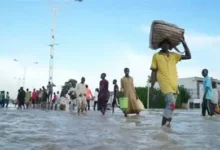
The states with high flood risk include Abia, Adamawa, Anambra, Bauchi, Bayelsa, Benue, Borno, Cross River, Delta, Ebonyi, Edo, Enugu, Gombe, Imo, Jigawa, Kaduna, Kano, Kebbi, Kogi, Kwara, Lagos, Nasarawa, Niger, Ogun, Ondo, Osun, Oyo, Plateau, Rivers, Sokoto, Taraba, Yobe, Zamfara and the FCT.
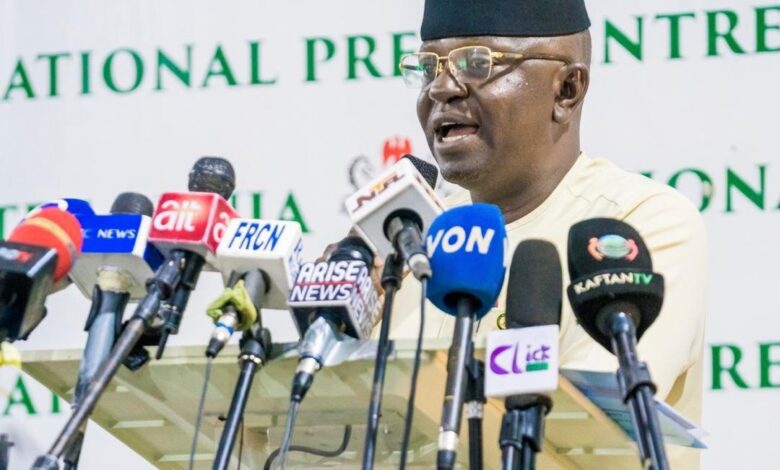
This was contained in the 2026 Annual Flood Outlook (AFO) released by the Minister of Water Resources and Sanitation, Prof. Joseph Utsev, on Wednesday at the State House, Abuja.
The outlook also projected a moderate flood risk in 15,597 Communities, 405 LGAs, and 35 States except Ekiti State, while incidences of minimal flood is expected in 923 communities, 77 LGAs and 24 States.
The States are: Adamawa, Anambra, Bauchi, Bayelsa, Benue, Borno, Cross River, Delta, Ebonyi, Edo, Jigawa, Kaduna, Kano, Kebbi, Kogi, Nasarawa, Niger, Ogun, Ondo, Osun, Oyo, Sokoto, Taraba and Zamfara.
Speaking, the Minister said flash and urban flooding are projected in major cities in the country due to high rainfall intensities, low attention to management of water facilities including drainage systems, waterways and lack of flood resilience structures.
He said cities such as Abakaliki, Abeokuta, Abuja, Asaba, Benin City, Birnin–Kebbi, Calabar, Ibadan, Kaduna, Kano, Lagos, Makurdi, Nguru, Onitsha, Oshogbo, Port Harcourt, Sokoto, Warri and Yola, among others are to experience these categories of flood incidence.
Prof. Utsev said Bayelsa, Cross River, Delta, Lagos, Ogun, Rivers and Ondo are to experience coastal flooding due to rise in sea level and tidal surge and this, according to him, would impact on fishing, wildlife habitation and river navigation.
Stating that the government alone cannot achieve the goals, the Minister said the success of the initiatives depends on collaboration.
“We must continue to work closely with development partners, research institutions, civil society organizations and the private sector to strengthen innovation, expand investments and build flood resilient Nigeria,” Prof. Utsev added.
He therefore called on state governments, local authorities, disaster management agencies, farmers, and community leaders to carefully study the findings and advisories contained in this document and take the necessary steps to prepare for the coming flood season.
“Furthermore, we are encouraging state governments to integrate flood risk considerations into land-use planning, urban development, and infrastructure design. Floodplains must be properly managed, drainage systems must be improved, and communities must be empowered to adapt to changing climate conditions.
“Preparedness remains the most effective strategy for reducing flood risks. When we plan ahead, we protect lives, safeguard infrastructure, and preserve economic gains,” he noted.
Earlier, in his Welcome Address, the Director General/CEO of the Nigeria Hydrological Services Agency (NiHSA), Umar Ibrahim Mohammed, said the Annual Flood Outlook is a critical tool in the agency’s effort to support management of the nation’s water resources and climate resilience initiative for mitigating flood risks, protection of lives and livelihoods in Nigeria.
Mohammed said the AFO has evolved into an important national planning instrument that provides early scientific prediction of flood risks in the country, evidence-based guide for decision-makers and platform for emergency coordination among stakeholders.
He explained that in producing this year’s forecast, the Agency undertook a comprehensive and data-driven process to provide tailored information for high-risk flood zones and flash floods in urban cities and towns.
He disclosed that the agency has upgraded from reporting flood forecast to Flood Risk Intelligence Architecture and from the traditional modelling to Hybrid AI-Integrated Modelling system to improve forecast reliability, reduce false alarms and improve the lead time accuracy.
“Not these alone, the modelling for the 2026 forecast has been conducted in-house. This marks a strategic shift toward enhancing capacity building, manpower development and institutional resilience,” he noted.
The NiHSA boss announced that the Agency’s Flood Dashboard has been upgraded to full-scale Decision-Support Geo-Intelligence System that enables real-time visualization and impact-based flood scenarios.
He said the Dashboard was integrated with a dedicated Flood Mobile App to enhance accessibility and dissemination of flood information and alerts.
“We have the team of NiHSA’s flood marshals at the back end who are on hand to provide assistance and respond to queries,” he added.