


At a one-day conference recently in Abuja, the nation’s capital, water stakeholders and government officials made a case that the fight against climate change runs through something as basic as a tap and toilet.
There was a phrase that surfaced again and again at the conference hall, spoken in different voices but carrying the same weight: “the climate crisis is a water crisis.”
It was the animating idea behind this year’s Annual National Climate Change and Water, Sanitation and Hygiene (WASH) conference, where government ministers, civil servants, and international development officials gathered under a theme: “Water, Sanitation and Hygiene (WASH) Systems at the Frontline of Climate Change: Aligning NDC 3.0 with National Adaptation Priorities.”
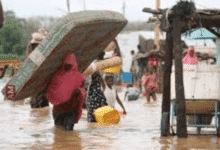
Strip away the acronyms, and the message was simple. Across Nigeria, floods are swelling, droughts are lingering, rainfall patterns are shifting beneath farmers’ feet, and water quality is deteriorating, and the systems meant to deliver clean water and safe sanitation to ordinary Nigerians are being asked to absorb the shock.
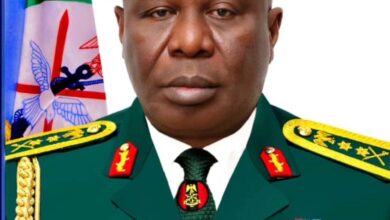
The Minister of Water Resources and Sanitation, Prof. Joseph Utsev, opened proceedings with a declaration that framed WASH not as a peripheral social service but as climate infrastructure in its own right. Without water security, he argued, there can be no climate resilience. Without sanitation, no public health resilience. Without resilient WASH systems, the country’s adaptation efforts remain, in his word, incomplete.
It was a continuation of last year’s gathering. The 2025 conference, themed around strengthening policies and investment for climate-resilient WASH services, had produced recommendations on financing, infrastructure design, and cross-sector coordination. This year’s task was to translate those recommendations into Nigeria’s newly updated Nationally Determined Contribution (NDC 3.0), the nation’s formal commitment under the Paris Agreement framework, now due for revision.
Utsev laid out six priorities his ministry wants included into that plan: strengthening climate-resilient water infrastructure, expanding integrated water resources management, deploying climate-smart sanitation solutions, building out early warning and hydrological monitoring systems, mobilising climate finance, and deepening community participation, and gender inclusion, in adaptation planning.
The ministry, he said, intends to keep working with the National Council on Climate Change, state governments, river basin authorities, development partners, academia, and civil society to make sure WASH does not get sidelined in Nigeria’s broader climate architecture.
Environment and Water: Two Ministries, One Message
If Utsev’s address set the agenda, the goodwill message delivered on behalf of the Minister of Environment, Balarabe Lawal, read by Chief Environment Officer, Chika Okpala, reinforced it from a different institutional angle.
The Ministry of Environment, as the lead coordinator of Nigeria’s climate change response, tied WASH resilience directly to a wider basket of environmental priorities: pollution control. Solid waste management, biodiversity conservation, watershed protection, supporting antimicrobial resistance surveillance through improved wastewater management, and advancing a One Health approach that connects human, animal, and environmental health.
It was a reminder that in Nigeria’s policy landscape, a blocked drain and a contaminated river are not just sanitation problems. They are entangled with disease surveillance, food security, and biodiversity loss, all threads of the same climate fabric.
A Sector At The Heart Of The Storm
The Acting Permanent Secretary of the Ministry, Engr. Ali Ibrahim, welcomed the delegates, and noted that Nigeria’s WASH sector sits at the heart of both the challenge and the solution when it comes to climate change, a sector tested daily by flooding and erosion in some regions, and drought and water scarcity in others.
Ibrahim used the opportunity to set concrete goals for the day: review how far the 2025 communique’s recommendations were implemented, deepen understanding of where WASH fits inside NDC 3.0, provide practical solutions for resilient service delivery, and develop an actionable roadmap rather than another set of aspirations.
He was candid that WASH does not operate in isolation. It intersects with health, agriculture, food security, ecosystems, urban planning, disaster response, and economic productivity, meaning that progress, or failure, in water and sanitation ripples outward into nearly every other development goal Nigeria has set for itself.
The Youth Are Already At The Table
Perhaps the most striking intervention came from UNICEF’s Obinna Uche, standing in for the agency’s Nigeria Chief. He pointed to a National Youth Summit held roughly three weeks earlier, where young Nigerians examined NDC 3.0 directly and identified five concrete actions for their own.

His framing cut through some of the day’s formality: integrating WASH into Nigeria’s climate commitments, he said, is not a box-ticking exercise. It is about protecting public health, safeguarding the livelihoods of the country’s most vulnerable people, and easing a burden that falls disproportionately on women and girls, who bear the brunt of water scarcity, and unsafe sanitation in households and communities across the country.
Uche pointed to the growing network of Young Climate Councils spreading across Abuja and other parts of Nigeria as evidence that the next generation isn’t waiting to be invited into these conversations, it is already building toward climate-smart communities from the ground up.
Beyond The Communique
What distinguished this year’s conference from a routine policy talk shop was the specificity of its ask: not simple to acknowledge that WASH matters to climate adaptation, but to have that recognition written into NDC 3.0 itself, the document that will shape how Nigeria allocates climate finance, sets adaptation targets, and report its progress to the international community for years to come.
Whether that translates into pipes laid, boreholes drilled, and toilets built in the communities most exposed to flood and drought will be the real test. For now, the message from Abuja was unambiguous: in Nigeria’s climate story, water is not a footnote. It is the frontline.