

Lagos State has emerged as Nigeria’s best-performing state in fiscal terms, according to BudgIT’s 11th State of States Report, which also shows Enugu’s internally generated revenue (IGR) surging by almost 126 per cent in 2025.

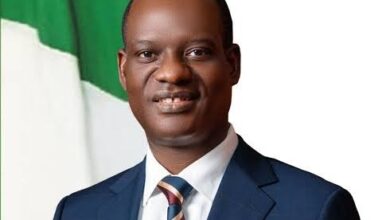
The report, Signed by Vahyala Kwaga, Country Director, BudgITthemed “From Allocation to Impact: Rethinking State Spending Priorities”, was launched by BudgIT, the civic-tech organisation that promotes fiscal transparency and accountability.
It reviews how states performed in 2025 on revenue mobilisation, expenditure efficiency, fiscal viability, debt sustainability and spending on health, education, agriculture and water, sanitation and hygiene (WASH).
This edition uses a substantially revised methodology that looks beyond revenue growth and spending volumes to the quality of spending and its likely developmental impact.
States were scored on four pillars: Revenue Performance (40 per cent), Fiscal Viability (30 per cent), Debt Sustainability (15 per cent) and Selected Critical Sectors Spending (15 per cent).
Rivers State was left out for the second year running because it has not published its audited financial statements and budget implementation reports. Data from the state became inaccessible after the 2025 declaration of a state of emergency. In all, 35 states were assessed.
Lagos placed first, backed by a diversified revenue base and IGR of N1.71trillion. Kebbi came fifth after its total revenue rose 59.54 per cent to N228bn. Zamfara ranked 19th, as gains in IGR and heavy capital spending were offset by falling aggregate revenue and rising foreign debt exposure. Ondo and Oyo placed 21st and 22nd.
At the lower end were Yobe (25th), Ekiti (26th), Sokoto (27th), Kaduna (29th), Adamawa (30th) and Osun (32nd), which showed varying mixes of weak domestic revenue, spending pressures and debt vulnerabilities. The report singled out Kaduna’s growing debt burden and Sokoto’s poor revenue mobilisation and critical-sector spending as particularly worrying.
Lagos’s IGR climbed 35.67 per cent from N1.26tn in 2024. Enugu’s rose 125.91 per cent, from N180.5bn to N407.76bn, placing it second nationally. Oyo and Gombe grew by 112.79 per cent and 111.28 per cent respectively, Abia by 64.48 per cent and Akwa Ibom by 45.11 per cent. Kano, the top IGR earner in the North West, raised N102.6bn, up 35.78 per cent.
BudgIT cautioned that revenue growth alone is a weak measure of fiscal strength. In Enugu, non-tax receipts made up 90.79 per cent of the increase in IGR, raising questions about how sustainable the gains are. Yobe (N13.35bn) and Ebonyi (N21.9bn) remain constrained by low domestic revenue.
Dependence on Federation Account Allocation Committee (FAAC) transfers also remains a defining feature of state finances. FAAC made up about 90 per cent of Akwa Ibom’s recurrent revenue, 86.47 per cent of Anambra’s, 82.90 per cent of Abia’s and 79.28 per cent of Kano’s. Lagos recorded total revenue of N2.68tn.
Lagos’s total expenditure rose 33.24 per cent to N3.16tn, while Oyo’s jumped 118.71 per cent to N978.64bn. Enugu’s grew 84.80 per cent to N880.57bn and Abia’s 44.37 per cent to N458.95bn.
In some states, spending grew faster than revenue, raising concerns about fiscal discipline.
Operating costs also rose sharply. Lagos spent N1.29tn on operations, up 23.89 per cent, and Oyo’s rose 88.85 per cent to N372.68bn.
In Abia, operating expenses nearly doubled from N64.19bn to N126.68bn, partly because overheads grew 197.07 per cent to N70.87bn.
As a result, IGR covered just 53.56 per cent of Abia’s operating expenses in 2025, down from 64.28 per cent a year earlier.
On capital spending, Lagos raised outlays 46.69 per cent to N1.58trillon, Enugu more than doubled its to N693.88billon, and Akwa Ibom’s rose about 85 per cent to N970.83billon.
Abia and Anambra spent N319.91billon and N290.74billon, while Oyo more than doubled to N423billon.
The report noted that higher capital spending does not automatically produce better outcomes. What counts is what is prioritised, how projects are executed and whether they meet citizens’ needs.
Lagos carried a total debt of about N2.90trillon at the end of 2025. Ogun’s N538.92billon made it the fourth most indebted state assessed.
Enugu’s debt rose 18.98 per cent to N300.95billion, alongside a fiscal deficit of N110.95billion.
Abia and Anambra cut their debt stocks by 8.86 per cent and 15.49 per cent respectively.
Foreign-currency exposure remains a concern, making up 76.06 per cent of Abia’s debt, 92.73 per cent of Anambra’s and 93.48 per cent of Ondo’s.
Osun spent N100.17billon on debt service, equal to 28.60 per cent of its total revenue.
Ebonyi paid N42.51billion, or 15.99 per cent of revenue, almost twice its IGR, and also owes N43.32billon in contractor arrears.
Abia reported N41.16billon in combined pension, gratuity and contractor arrears, while Kwara owes N15.96billon to contractors and N23.87billon in pensions and gratuities.
By giving 15 per cent of the overall score to spending on agriculture, health, education and WASH, BudgIT says it aims to tie fiscal sustainability more closely to human development. The previous methodology leaned on the relative priority given to capital expenditure without examining what that spending was for.
Engr. Adejoke Akinbode, BudgIT’s Head of Research and Policy Advisory, said states now have much larger revenue envelopes, but questions remain over spending priorities, budget execution, debt management and the quality of investment in critical sectors.
She said the real test of fiscal responsibility is whether public money improves healthcare, education, infrastructure and other essential services, and urged states to show measurable returns on spending rather than celebrate revenue growth.
BudgIT urged state governments to resist expanding administrative spending at the expense of productive investment.
It called on them to strengthen domestic revenue institutions, adopt conservative revenue forecasts, improve budget credibility, prioritise high-impact programmes and direct borrowing towards investments that can deliver lasting economic and social returns.
The organisation said the report reinforces the need to shift the debate on state finances from allocation to impact, so that the benefits of fiscal reforms reach the communities they are meant to serve.