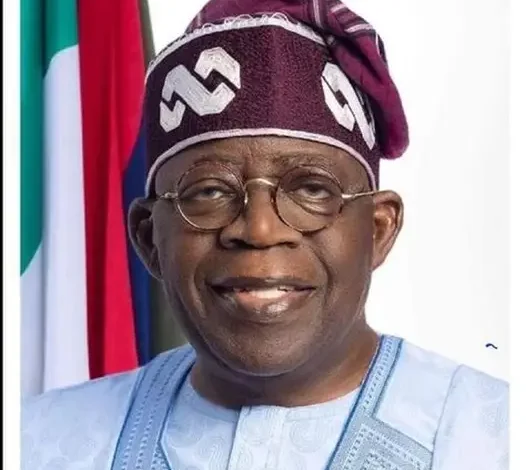


President Bola Tinubu has declared that the nation’s economy has stabilized after the introduction of painful reforms in the first year of his administration.

In a statement marking his Third Anniversary on Friday, the President acknowledged that the removal of the fuel subsidies and unification of the foreign exchange windows had imposed severe hardship on ordinary Nigerians but insisted the measures were unavoidable.
“The easy choices would have been politically convenient,” Tinubu said. “But leadership demands courage, especially when the right decisions are difficult.”
The President cited the cost of inaction, noting that Nigeria was spending as much as N18.4billion daily to sustain petrol subsidies at the height of the regime -more than N4trillion in 2022 alone.
He also said that forex arbitrage had cost the country over N8trillion in three years.
On the current state of the economy, the President Tinubu pointed to the Nigerian Stock Exchange’s All Share Index, which he said had risen from 53,000 points with a market capitalisation of N30trillion in 2023 to a record 250,000 points and N160trillion this year.
He also highlighted the disbursement of over N282billion to more than N1.5million students through the Nigerian Education Loan Fund (NELFund).
However, he said that the benefits of reform had yet to reach ordinary citizens. “We have not solved every problem, and we are not yet where we want to be,” he said, pledging to keep food prices, which he said had “largely come down from their peak” on the downward trend and to reduce transportation costs through conversion of commercial vehicles to CNG and electric power.