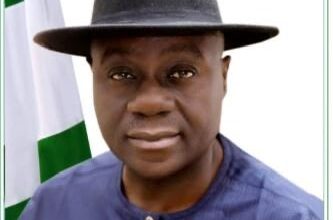



Former Anambra State Governor, Peter Obi, has called on the Federal Government to adopt the transparency South Africa applied to a recently approved $1billion infrastructure loan, saying that Nigeria’s own borrowing has ballooned without a clear public account of how the funds are being spent.

In a statement titled “Accountable Borrowing: The South Africa Example,” Obi said borrowing is not bad for any nation, but how the funds are deployed and whether citizens could see the impact in their daily lives.
He pointed to South Africa’s loan from the New Development Bank (NDB), China and South Africa, as an example of how the process should work. The NDB approved the facility, of up to $1billion, to fund upgrades to water supply, sanitation, electricity distribution, and waste management across eight metropolitan municipalities, including Johannesburg, Cape Town and Durban, as well as Buffalo City, Ekurhuleni, Mangaung, Nelson Mandela Bay and Tshwane.
The programme, which complements infrastructure grants from South Africa’s Treasury, is expected to benefit roughly 22 million residents in cities that account for a large share of the country’s economic output.
According to Obi, what made the South African approach worth emulating was that “the purpose is clear, the projects are identifiable,” and the benefits to citizens are measurable, allowing the public to monitor how the loan is used.
He juxtaposed this with Nigeria’s debt trajectory, claiming public debt has surged from about N87 trillion in 2023 to nearly N200 trillion under the current administration, without a corresponding level of disclosure on how the funds are being deployed in sectors such as education, health, power, security and infrastructure.
Official figures from the Debt Management Office (DMO) put the Nigeria’s total public debt at N159.28trillion as of December 31, 2025, the most recent published figure, up from N87.38 trillion in mid-2023; the DMO is yet to release updated figures for 2026.
Obi stated that loans obtained in the name of Nigerians should be tied to investments capable of generating economic value, creating jobs, reducing poverty, and improving citizens welfare, rather than becoming an end in themselves.
He said good governance required the government to clearly explain what was borrowed, where it was invested and what measurable outcomes had been achieved, insisting that “the ordinary Nigerian should be able to see and feel the benefits of every debt incurred on their behalf.”
Citing the rising cost of living, unemployment, insecurity and purchasing power facing many Nigerians, Oni said fiscal discipline and prudent management of public resources were no longer optional, but imperative.
He concluded by urging that every borrowing decision be tested against a single question: How does this improve the life of ordinary Nigerians? Without a convincing answer, he warned, the country risks merely transferring today’s burdens to future generations.