
Pledges To Curb Antimicrobial Resistance Must Urgently Translate Into Action -Experts
By Alice Etuka, Abuja


Global efforts to combat Antimicrobial Resistance (AMR) must move beyond policy commitments and translate into urgent, practical action through increased funding, stronger surveillance and improved disease prevention systems, experts have warned.

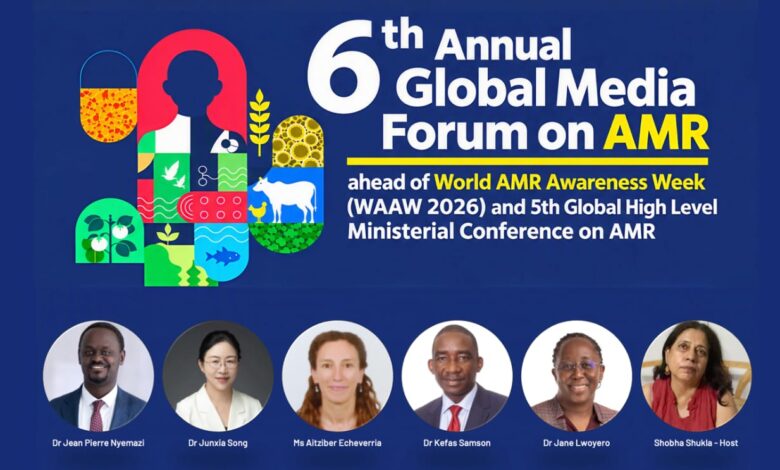
This formed the basis of discussion at the 6th Annual Global Media Forum on AMR held on Wednesday.
The experts stressed that without sustained investment and effective implementation of national action plans, the growing threat of drug-resistant infections could undermine human and animal health, food security and environmental sustainability.
They made the call while highlighting critical gaps in the global response to AMR, particularly in animal health, pharmaceutical pollution, environmental monitoring and access to preventive healthcare.
Shobha Shukla, Chairperson of the Global AMR Media Alliance (GAMA) and host of the Sixth Annual Global Media Forum on AMR ahead of World Antimicrobial Resistance Awareness Week 2026, said the major challenge was no longer getting countries to acknowledge AMR or develop national action plans, but ensuring that their commitments translated into measurable results.
According to her, countries must invest in funding, surveillance systems, laboratory capacity, effective interventions and accountability mechanisms to achieve meaningful progress.
Shukla warned that even everyday injuries, including cuts and needle pricks, could expose people to drug-resistant infections that might become difficult or impossible to treat.
She called for urgent measures to prevent the misuse and overuse of antibiotics, antifungals, antivirals and antiparasitic medicines, stressing that preserving their effectiveness was critical to protecting future generations.
She said the 2026–2036 AMR Global Action Plan provided a renewed international framework for tackling the challenge over the next decade, with greater emphasis on prevention, sustainable agrifood systems, environmental interventions and stronger national implementation.
Shukla also called for a balanced response that would prevent unnecessary antimicrobial use while ensuring that people who genuinely need effective medicines could access them.
On animal health, Dr. Jane Lwoyero, Programme Officer at the World Organisation for Animal Health (WOAH), called for increased investment in disease prevention, vaccination, farm biosecurity, surveillance and veterinary services to reduce infections and the need for antimicrobials.
She said such investments would deliver significant economic returns, noting that every one dollar invested in preventing animal diseases and strengthening animal health systems could generate a return of 28 dollars.
“For every US$1 that is invested in prevention of animal diseases and for better animal health systems, we are ensured of getting a return of US$28,” Lwoyero said.
She expressed concern that preventive measures remained inadequate globally, noting that fewer than 20 per cent of WOAH member countries vaccinate animals against notifiable diseases.
Lwoyero said animal diseases cause estimated annual global losses of up to US$300 billion, making stronger prevention systems essential to protecting livelihoods and food production.
She cited previous WOAH ANIMUSE reports showing that global antimicrobial use in animals declined by three per cent between 2019 and 2024.
However, she warned that antimicrobial use for growth promotion remained a major concern, with 19 per cent of countries reporting the practice, while seven per cent had not disclosed their position.
She explained that countries permitting antimicrobial growth promotion used 45 per cent more antimicrobials than those that prohibited it.
Lwoyero urged countries to end the practice, strengthen responsible antimicrobial use and integrate animal health more effectively into national AMR action plans.
She also called for sustainable financing, including through the AMR Multi-Partner Trust Fund, to strengthen veterinary services and disease prevention systems.
Similarly, Echeverria warned that environmental pollution was contributing to the spread of antimicrobial resistance, calling for urgent action across pharmaceutical manufacturing, agriculture and food systems, healthcare, and municipal waste and wastewater management.
She said reducing antimicrobial residues, resistant microorganisms and resistance genes released into the environment must become a priority in national and global AMR interventions.
Echeverria identified the adoption of a resolution on the environmental dimensions of AMR by the United Nations Environment Assembly in December 2025 as a significant milestone in strengthening the global mandate for coordinated action.
However, she said environmental authorities remained inadequately represented in many national AMR governance structures, limiting the effectiveness of the One Health approach.
“A truly effective One Health approach requires environmental actors to be involved from the outset,” she said, urging governments to incorporate adequately funded environmental objectives into their national action plans.
She identified investment in wastewater treatment, safe antimicrobial disposal, laboratory capacity and environmental surveillance as essential measures for translating commitments into action.
Echeverria added that tackling environmental AMR would also advance water security, biodiversity protection and pollution reduction.
The experts maintained that addressing AMR requires coordinated action across human health, animal health, agriculture and the environment, with stronger political commitment, sustainable financing and effective implementation of existing policies.