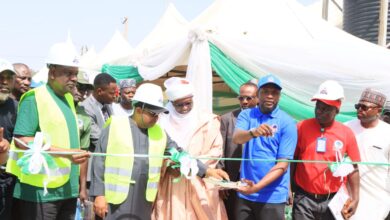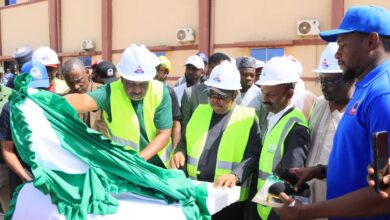
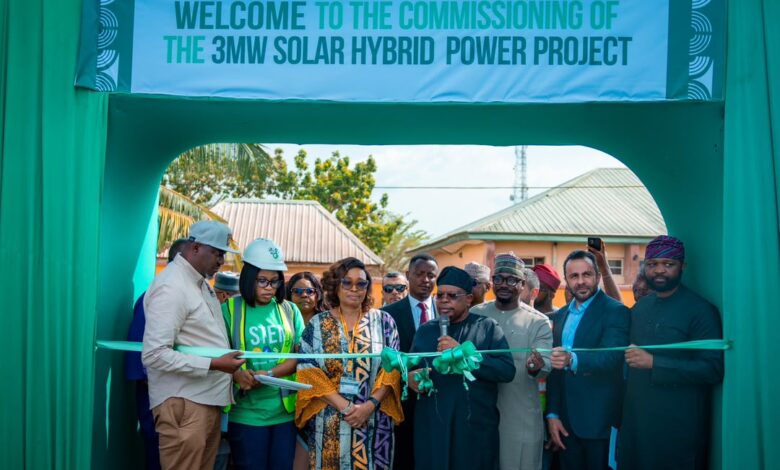


Minister of Power, Joseph Tegbe, has commissioned a 3 MW solar hybrid power plant at Michael Okpara University of Agriculture, Umudike (MOUAU), giving the university dependable electricity for teaching, research and administration under the Energizing Education Programme (EEP).
The facility pairs a 3.3 MWp solar array with 3 MW of AC output and 2.2 MWh of battery storage.
It also includes rehabilitated distribution infrastructure, 288 installed streetlights and a renewable energy training centre, which has trained 100 students in renewable energy generation.
The project was executed by the Rural Electrification Agency (REA) with World Bank support.
Earlier in the day, the Governor of Abia State, Dr Alex Otti, received the delegation in his office.
He commended the Federal Government for the project and spoke about its potential impact on learning, research and industrialisation in the state.
At the commissioning, Tegbe said the project reflects President Bola Ahmed Tinubu’s priority on education.
“Universities, healthcare facilities and productive centres require solutions that respond to their actual needs,” he said. Across its phases, the EEP now reaches 33 universities and 5 teaching hospitals nationwide.
The Minister urged students and host communities to protect the investment by reporting vandalism of solar systems, transformers and transmission towers.
He announced that the Ministry is setting up an anonymous reporting line, with substantial financial rewards for tip-offs.
The Managing Director/CEO of REA, Dr Abba Abubakar Aliyu, described the plant as “not simply an electrification strategy; it is an industrialization strategy,” linking the university’s research capacity to Aba’s manufacturing base.
He said he wants to see REA equipment manufactured in Aba and agricultural processing technologies developed in Umudike.
He challenged the university to measure the plant’s success in patents, commercialised research, businesses and jobs.
Aliyu also placed the project within a wider push that includes the $750 million DARES programme, which targets electricity access for 17.5 million Nigerians.
He urged the university to prioritise professional maintenance of the plant.