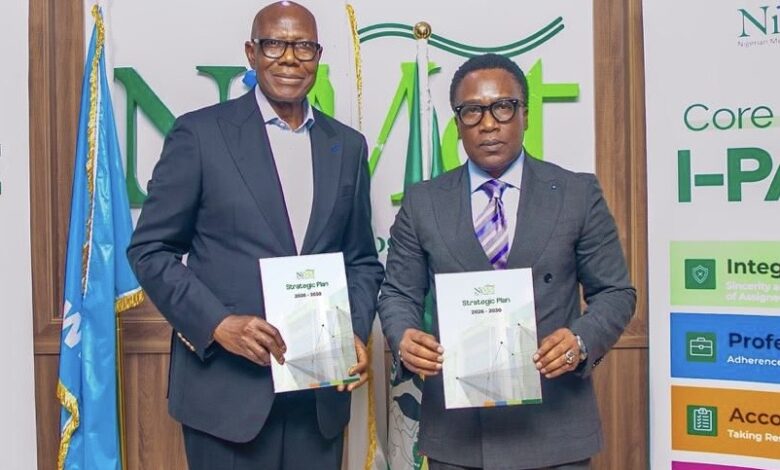

The Nigerian Meteorological Agency (NiMet) has set its sights on revenue diversification, technological advancement and institutional efficiency with the unveiling of its 2026–2030 Strategic Plan.

At the launch held in Abuja on Tuesday the agency outlined a reform focused blueprint anchored on the Balanced Scorecard framework, aimed at transforming its operations into a more results-driven and financially sustainable system.
Director General of NiMet, Professor Charles Anosike, said the plan represents a shift towards measurable performance outcomes.
He noted that the agency would leverage innovation and strategic partnerships to expand its service offerings and boost internally generated revenue.
Anosike disclosed that a key component of the strategy is the integration of technology and data-driven solutions to improve weather forecasting accuracy and service delivery to critical sectors such as aviation, agriculture and disaster risk management.
Professor Anosike added that NiMet’s adoption of the Balanced Scorecard positions it as a frontrunner in public sector reform within Nigeria’s aviation industry, with a structured approach to tracking performance across financial stewardship, stakeholder value, internal processes and organisational capacity.
The initiative aligns with the Federal Government’s performance management system coordinated by the Central Results Delivery Coordination Unit (CRDCU), introduced under President Bola Tinubu to ensure accountability and results-based budgeting across government institutions.
Also speaking, the Managing Consultant of Balanced Scorecard West Africa, Kayode Sufianu, said NiMet’s embrace of the framework would enable it to translate strategy into tangible outcomes, particularly in financial management and operational efficiency.
In addition, the agency unveiled its I-PACE core values — Integrity, Professionalism, Accountability, Commitment and Excellence, as guiding principles to drive staff performance and institutional culture.