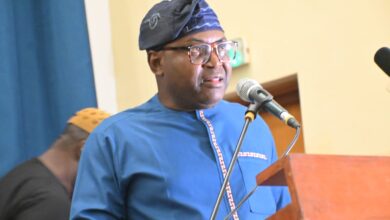


The Director General and Chief Executive Officer of the National Institute for Sports (NIS), Comrade Philip Shaibu, has advised journalists across the country, especially those in the Federal Capital Territory (FCT), to prioritise their health while carrying out their journalistic work.
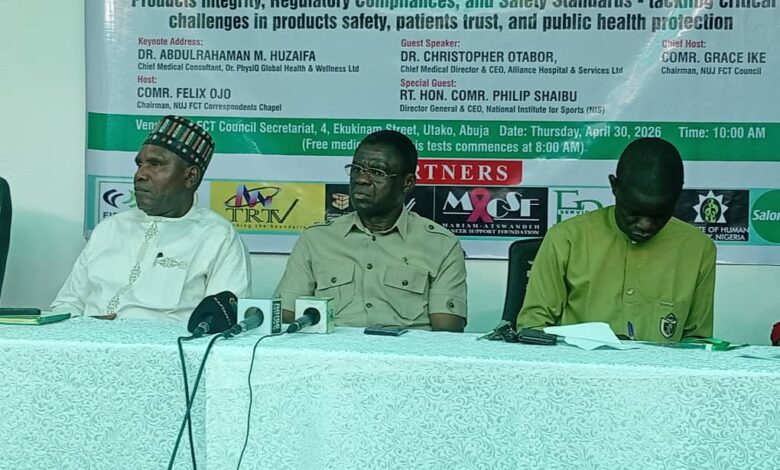
Shaibu gave the advice on Thursday at the Public Health Awareness and Wellbeing Conference 2026, organized by the Correspondents’ Chapel of the Nigeria Union of Journalists (NUJ), FCT Council, held at the NUJ Secretariat, Utako, Abuja.
The event with the theme “Products Integrity, Regulatory Compliances, and Safety Standards- tackling critical challenges in products safety, patients trust, and public health production,” was organised in collaboration with Alliance Hospital, and Dr. PhysiQ Global Health and Wellbeing Centre.
Speaking, Shaibu who was the former Deputy Governor of Edo State, said: “Our health is critical, owing to the situation we find ourselves in today. It demands regular medical check-ups because our mental health and stability are essential to our daily living. Whether you like it or not, health is wealth.”
He called on all partners involved in the initiative to sustain their collaboration, urging professional bodies such as the Nigerian Medical Association to take a cue from the Correspondents’ Chapel.
“All partners to this programme should not stop at this point. It is important that the Nigerian Medical Association and other professional bodies emulate what the Correspondents’ Chapel is doing today. You should also be part of it,” he added.
Also speaking at the event, the Chief Medical Consultant, Dr. PhysiQ Global Health and Wellness Centre, Dr. Abdulrahaman Huzaifa, identified corruption as the major factor fuelling health challenges in the country.
Dr. Huzaifa, who was represented by Yusuf Yunusa, urged the Federal Government to strengthen institutions like the National Agency for Food and Drug Administration and Control (NAFDAC) and the Pharmacy Council of Nigeria (PCN) to intensify the fight against fake, expired drugs and other products in the country.
On his part, the Chief Medical Director/CEO, Alliance Hospital and Services Limited, Dr. Christopher Atabor, stated that one’s lifestyle determines how long one lives.
For instance, he said that about 20 to 35 percent of Nigerian adults are overweight, about 8 to 22 percent are obese, about 30 have hypertension, while about 30.9 percent have pre-hypertension. This, he attributed to junk food and a sedentary lifestyle.
Earlier, the Chairman, Correspondents Chapel, NUJ-FCT Council, Comrade Felix Ojo, said the Conference was organised to create health awareness amongst journalists and to advance solutions to the existing challenges in the Nigeria healthcare systems.
”It is a renewed effort to tackle growing health concerns among media professionals and the wider public. It underscores the media role in informing and educating the public as a vital watchdog of the society,” the Chairman said.
He highlighted some of the challenges to include policy mispriority, poor funding, inadequate manpower, poor wages, lack of infrastructure – water and electricity, to meet our fast growing population, and failed institutions.
According to him, these and many more have crippled the nation’s Healthcare systems. Adding that the platform was to also reflect the experience of many who have been victims of fake medications and products, poor healthcare services, emergency service mismanagement, and high cost of healthcare.
Comrade Ojo commended the FCT Health Mandate Secretary, Dr. Adedolapo Fasawe, for enrolling several journalists in the Federal health insurance scheme (FHIS), urging other policy makers to take a cue from her, as a tree cannot make a forest.
He also thanked Alliance Hospital and Dr PhysiQ for the ongoing partnership, calling on all stakeholders and corporate organisations to collaborate with the NUJ in meaningful initiatives that would impact the people and collectively solve social problems.