

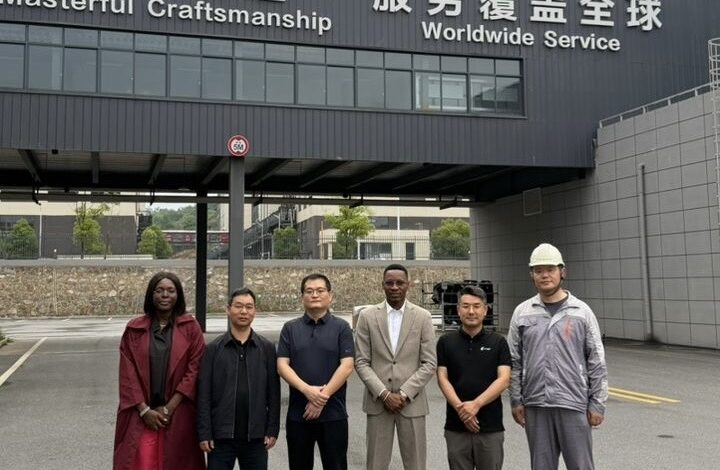

Nigeria’s drive toward cleaner transportation and local industrial growth received a boost as Hybrid Motors Nigeria and China-based Launch Design Shanghai signed a partnership agreement to establish electric vehicle manufacturing facilities in Lagos and Abuja.

The agreement, signed in Shanghai on May 8, is expected to deepen local automobile production, promote technology transfer and position Nigeria as a growing hub for electric vehicle manufacturing in West Africa.
The collaboration will focus on the production of “Acely,” Hybrid Motors Nigeria’s indigenous vehicle brand designed for the Nigerian market.
Executives of both companies described the partnership as a strategic move aimed at building a sustainable automotive ecosystem while reducing dependence on imported vehicles.
Chief Executive Officer of Hybrid Motors Nigeria, Mr. Jubril Arogundade, said the project would combine international engineering expertise with local innovation to create vehicles suited to Nigerian conditions.
“This partnership is more than a business agreement; it is a commitment to building Nigeria’s automotive future,” he said.
Arogundade noted that the initiative would demonstrate Nigeria’s capacity to design and assemble globally competitive vehicles locally.
“Our collaboration with Launch Design brings world-class engineering expertise directly into our operations, ensuring that Acely meets the highest international standards while remaining authentically Nigerian,” he added.
On his part, Chief Executive Officer of Launch Design Shanghai, Mr. Wang Xun, said the partnership would help accelerate industrial development within Nigeria’s automotive sector.
“Our turnkey engineering capabilities, combined with Hybrid Motors’ understanding of the Nigerian market, create a powerful formula for success,” Wang said.
Under the agreement, the Lagos plant, located along the Lekki-Epe axis, will serve as the primary production and assembly hub with a projected annual capacity of 50,000 vehicles.
The facility is also expected to support export activities to neighbouring West African countries through the Lekki Deep Sea Port.
The Abuja plant, to be situated within the Free Zone Business Area of Centenary Economic City, will operate as a secondary production and technology centre with an estimated annual capacity of 20,000 units.
The companies said the Abuja facility would target Northern Nigeria and regional markets within the Sahel corridor while taking advantage of available trade incentives.
Combined, both plants are projected to achieve an annual production capacity of 70,000 vehicles at full operational maturity.
The firms said the partnership would support job creation, local supply chain development and skills transfer in automotive engineering and manufacturing.
They added that the project aligns with Nigeria’s National Automotive Industry Development Plan and broader efforts to encourage environmentally sustainable transportation systems.
According to the companies, Acely vehicles will incorporate energy-efficient systems, advanced powertrain technologies and designs tailored to Nigerian roads and climate conditions.
Industry analysts say the initiative could strengthen Nigeria’s position in Africa’s emerging electric vehicle market while encouraging greater private sector investment in clean energy transportation.
The firms expressed confidence that the partnership would contribute to industrial diversification and help drive long-term economic growth in the country.