

The Federal Government says the removal of fuel subsidy and unification of exchange rate have mobilised a total sum of N15.8 trillion in resources for the federation, while acknowledging the reforms have driven up fuel prices, interest rates and living costs.
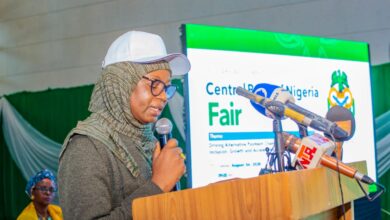
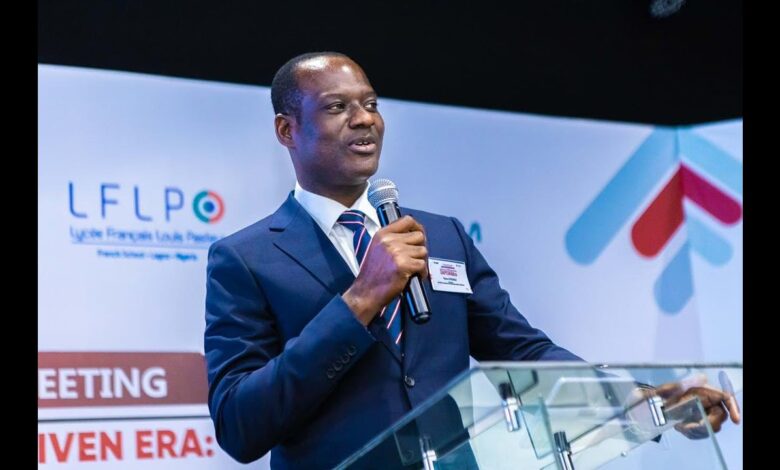
Minister of Finance and Coordinating Minister of the Economy, Prof. Taiwo Oyedele, disclosed this on Wednesday while presenting the administration’s “Reform Scorecard” at the Ministry of Finance Headquarters in Abuja.
Between June 2023 and December 2025, the government said, subsidy savings generated N15.8 trillion, of which N5.4trillion went to the Federal Government and N10.4 trillion was shared with States and Local Governments.
Disclosing that an additional N3.1 trillion came from independent revenue and N11.9 trillion from new borrowing, bringing total incremental federal resources to N20.4 trillion.
That funded N30.64 trillion in extra spending, led by N9.39 trillion on wage adjustments and allowances, N9.37 trillion on external debt servicing, and N6.5 trillion on infrastructure. Officials said borrowing accounted for 58% of the new resources, subsidy savings 27%, and other revenue 15%.
Giving the breakdown, the Minister said: “Between June 2023 and December 2025, subsidy savings mobilised ₦15.8 trillion in resources for the Federation. Of this, ₦5.4 trillion accrued to the Federal Government, while ₦10.4 trillion was shared to states and local governments.
“In addition, the Federal Government earned incremental independent revenue of ₦3.1 trillion – principally remittances from government-owned entities while ₦11.9 trillion came from incremental borrowing, a figure that would have been far higher, and economically destabilising, without the fiscal space the reforms created. Altogether, the Federal Government’s incremental resources over the period came to ₦20.4 trillion.
“That money did not sit idle – it partly funded incremental expenses of ₦30.64 trillion. Of this, ₦9.39 trillion went to wage adjustments, minimum wage increases and allowances for public servants; ₦9.37 trillion went to external debt service made necessary by exchange rate depreciation; and ₦6.5 trillion went into strategic infrastructure – making the top three expenditure lines. Every naira of this is accounted for, and the breakdown is in the scorecard we are releasing today.
“Put another way: of the ₦20.4 trillion, 58 percent came from borrowing, 27 percent from subsidy savings, and 15 percent from other revenue. Against total incremental spending of ₦30.64 trillion, two-thirds was funded by these new resources, while the remaining third – about ₦10 trillion – came from the existing revenue base, despite ending the excessive printing of naira.”
The government also presented a set of counterfactual estimates of where Nigeria would stand without the reform. Saying that 27 states could not reliably pay salaries in May 2023; today none cannot, against a projected 30 states under a no-reform scenario.
The government said the gap between official and parallel exchange rates has narrowed from over 60% to under 5%, versus a projected 150-plus without reform. Central Bank overdraft financing to the government, once N30 trillion, was curtailed rather than left to double, officials said.
Oyedele was direct about the costs. The Monetary Policy Rate (MPR) has risen from 18.5% to 26.5%, and petrol prices have climbed from about N185 a litre to between N1,100 and N1,400.
He argued that without reforms, petrol would likely be scarce at the official price and trading above N3,000 on the black market.
Food inflation eased from 24.82% to 17.52% by June 2026, but the government classified poverty and household welfare recovery as unfinished business rather than an achievement.
Other indicators cited: headline inflation fell to 15.91% from 22.41%; gross foreign reserves rose to $52.5 billion from about $35 billion; net reserves rose to $34.8 billion from roughly $3 billion; stock market capitalisation grew to about N150 trillion from N31 trillion; and real GDP growth strengthened to 3.89% from 2.31%.
S&P Global upgraded Nigeria’s Sovereign credit rating to “B” in May, its first upgrade in fourteen years, and the country exited the FATF grey list in October 2025 and the EU’s anti-money-laundering deficiency list in January 2026.
The government said minimum wage has more than doubled to N70,000, and pointed to the NELFUND student loan scheme, cash transfers, subsidised mortgages, agricultural support and a New Tax Act exempting low-income earners and small businesses from taxation as direct benefits to the households.
Earlier, in his opening remarks, the Minister of Information and National Orientation, Mohammed Idris, said the press briefing was necessary because Nigerians deserve an account of how subsidy-removal proceeds were used.
Oyedele closed by urging citizens to support constructive government policy, criticise government constructively, and seek facts over “populist views or sensational headlines,” adding that full underlying data has been published on the Ministry of Finance website for independent review.