
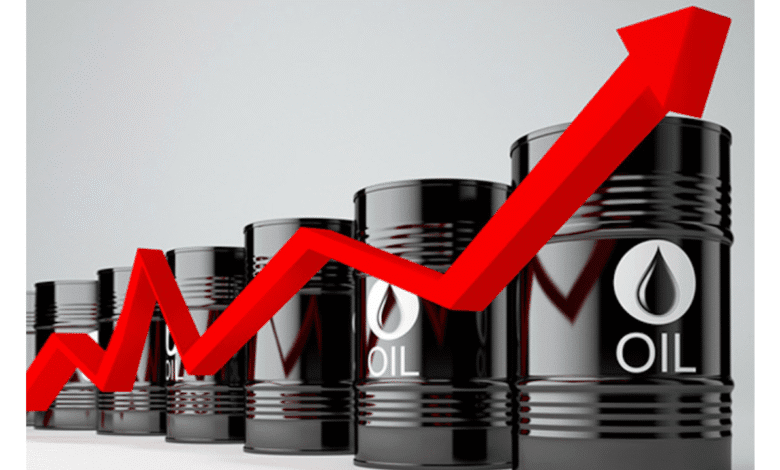


Crude prices climbed roughly 1% on Wednesday, touching their strongest levels in nearly three weeks, after the United Arab Emirates announced it was halting all financial and economic dealings with Iran — a move that added fresh fuel to investor anxiety over a widening regional conflict.

Compounding the unease, shipping traffic through the Strait of Hormuz stayed sluggish, with many vessel operators still steering clear of the corridor amid murky signals about whether it has fully reopened following a wartime blockade.
Brent crude gained 87 cents, or nearly 1%, to reach $91.89 by 11 a.m. ET, while U.S. West Texas Intermediate rose $1.17, or 1.4%, to $86.11 a barrel. During the session, Brent touched its highest mark since July 30, and WTI hit levels not seen since July 31.
Dennis Kissler, senior vice president of trading at BOK Financial, pointed to the UAE’s move as a key driver, noting that crude futures remain supported by the geopolitical tensions that remain in the Middle East, now with the UAE stating they have cut off all financial ties to Iran due to the latest missile attacks.
The diplomatic backdrop remains murky: President Trump said Tuesday that no negotiations with Iran were underway and asserted the Strait of Hormuz was open for traffic, while Tehran maintained the waterway is still closed. A short-lived ceasefire lapsed on Monday, and a senior Iranian official told Reuters the country was shifting toward a more confrontational posture given the stalled diplomacy, though neither side reported new strikes on Tuesday. The Financial Times, citing sources, also reported that Iran is weighing potential military action against targets in Europe should Trump escalate the conflict further.
Markets continue to fixate on the Strait of Hormuz, the passage that once carried roughly a fifth of the world’s combined oil and LNG supply before the U.S.-Israeli campaign against Iran began in late February. Pepperstone research strategist Ahmad Assiri said Brent’s climb past $91 signals traders are building in a heavier geopolitical risk premium, with the possibility that prices could eventually push back into triple digits.
Elsewhere, supply disruptions are mounting: Russian crude exports from its western ports slid to about 2.3 million barrels a day in the first half of August — 15% under planned volumes — due to ongoing problems at the Black Sea terminal of Novorossiysk. In the U.S., government data showed crude stockpiles unexpectedly grew by 4.4 million barrels to 428.8 million barrels last week, tempering some worries about supply tightness.
Kissler also noted that refiners worldwide have been aggressively buying crude given strong processing margins, as Ukrainian strikes on Russian refining infrastructure continue to squeeze global fuel availability. U.S. refinery utilization, meanwhile, ticked up a percentage point to 97.2% for the week, according to EIA figures. (Reuters)