The Niger Delta Power Holding Company (NDPHC) is laying the groundwork for a new phase of the National Integrated Power Project (NIPP) that would lean heavily on solar and mini-hydro investments to boost electricity supply in northern Nigeria.

Managing Director and Chief Executive Officer, NDPHC, Engr. Jennifer Adighije, revealed the plans in Abuja, during an oversight visit to the company’s headquarters by the House of Representatives Committee on Power, led by Hon. Victor Nwokolo.
Adighije, according to a made available on Thursday by the NDPHC’s Head, Corporate Communication & External Relations, Nazo Agim, explained that the current stage of the National Integrated Power Project (NIPP) relies on fossil-fuel-based generation, but the company is now moving toward a second phase aligned with Nigeria’s Energy Transition Plan, tapping into solar and tidal resources in the north.
Off-grid systems, mini-hydropower schemes, and other solar interventions are being explored to close persistent supply gaps nationwide.
She noted that NDPHC currently supplies roughly 4,000 megawatts, about 30 percent of Nigeria’s total installed capacity of around 12,000MW.
Of the ten power plants the company built under NIPP Phase 1, seven are commercially operational, two remain under construction, and one is being upgraded.
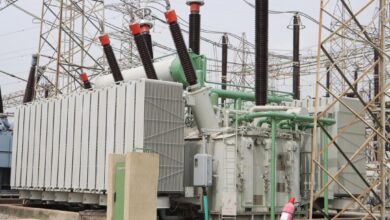
On infrastructure, Adighije said NDPHC has completed 120 transmission projects, including 60 330kV and 31 132kV substations along with 37 expansion works, pushing installed transformer capacity above 10,000MVA.
The company has also carried out numerous distribution projects, including new transformers and 33kV/11kV lines nationwide.
Highlighting achievements from her first 100 days in office, Adighije said the company recovered 110 abandoned containers and 216 packages, saving more than N30 billion.
Other gains included debt recovery, digitalisation efforts, improved procurement, asset restoration, and the recovery of several generation units, including turbines that restored about 470MW to the national grid.
She added that NDPHC recovered roughly $12 million from cross-border customers in Togo, part of a wider debt of over $50 million.
Despite the progress, Adighije flagged ongoing challenges: transmission bottlenecks, low tariffs, weak market settlements, gas supply shortages, unpaid debts, and vandalism.
She said NDPHC has over 1,500MW of mechanically available capacity but is dispatched only about 500MW hourly, leaving significant capacity stranded, a situation she estimated has cost the company more than N300 billion.
She urged the committee to push for a review of the dispatch merit order.
She also appealed for help recovering debts owed to NDPHC, including more than N400 billion owed by the Nigerian Bulk Electricity Trading Plc (NBET), and for settlement of obligations tied to NDPHC assets recognized in the Transmission Company of Nigeria’s regulated asset base.
In response, Committee Chairman Nwokolo praised NDPHC’s management for its efforts to strengthen power generation, calling the company’s role central to the entire power value chain.
He stressed that generation, transmission and distribution are interdependent, noting that a breakdown at any stage disrupts the whole system.
Nwokolo also commended Adighije’s handling of operational challenges, citing the Alaoji power plant as an example of how proactive management averted a worse outcome.
He assured NDPHC that the committee would review its concerns and work with stakeholders toward solutions, describing the visit as an effort to understand the company’s challenges and offer support rather than create friction between lawmakers and the agency.
He further praised NDPHC for welcoming legislative oversight, calling such visits valuable opportunities for public agencies to showcase progress and seek needed support.