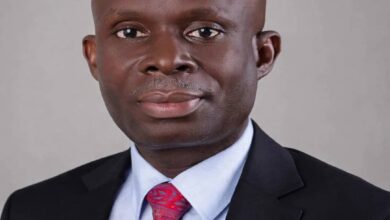
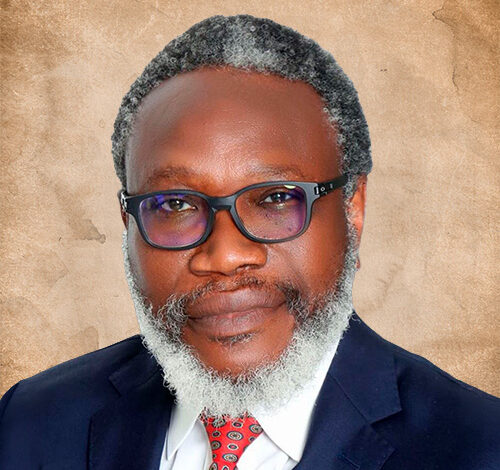


The First Deputy President of the Abuja Chamber of Commerce and Industry (ACCI), Prof. Adesoji Adesugba, has said the Federal Government’s target of a $1 trillion economy is best understood as a mobilisation target that will be won or lost on the quality of implementation rather than announcements.

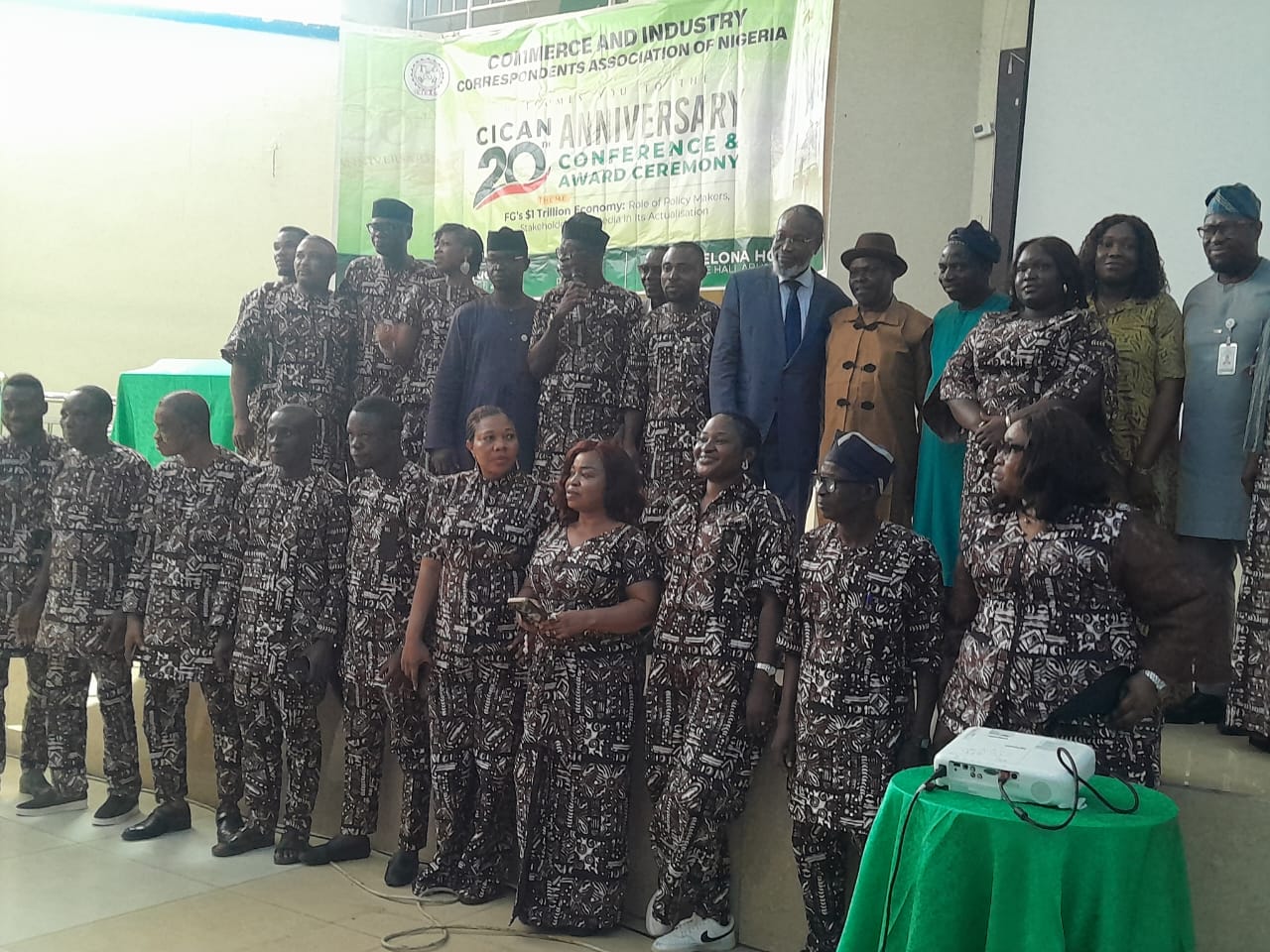
Adesugba spoke on Tuesday in Abuja while delivering the keynote address at the 20th anniversary lecture of the Commerce and Industry Correspondents Association of Nigeria (CICAN), themed “FG’s $1 Trillion Economy: Role of Policy Makers, Stakeholders and Media In Its Actualisation.”
He said the economy had stabilised but had yet to begin the kind of transformation the target requires. “Stabilisation has been substantially achieved. Transformation has not yet begun at the scale the target requires,” he said.
Adesugba said Nigeria’s 2025 nominal GDP was estimated at between $285 billion and $291 billion, meaning the economy would have to expand by about 28 per cent a year in dollar terms to reach $1 trillion by 2030.
He said that on the current trajectory, with real growth of about 4 to 4.5 per cent and gradual naira depreciation, independent analysts estimate the economy would reach about $450 billion by 2030 and cross the trillion-dollar mark around 2040. If reforms accelerate and real growth rises to between 6 and 7 per cent, the economy will reach about $585 billion by 2030 and a trillion dollars around 2034.
“On current real growth rates, the 2030 date is highly ambitious, and we serve the nation better by saying so plainly than by repeating it uncritically,” he said.
He cautioned against relying on the exchange rate to close the gap. “Any attempt to manufacture a trillion-dollar headline through an artificially strong naira would repeat the costly mistakes of the past,” he said.
The ACCI leader acknowledged improvements in the economy. Growth in the second quarter of 2026 reached 4.43 per cent, headline inflation fell to 14.63 per cent in September, and gross reserves stand at $55.25 billion, the highest in eighteen years. The naira has traded around ₦1,330 to the dollar.
However, he said the real economy remained thin. Capital importation reached $10.37 billion in the first quarter of 2026, but foreign direct investment contributed only $135.08 million, or 1.3 per cent. Average available grid capacity was 4,758 megawatts in August against installed capacity of 13,625 megawatts.
“No economy of 220 million people has ever approached a trillion dollars on five gigawatts of grid power,” he said.
He added that the World Bank estimates 63 per cent of Nigerians were living below the national poverty line in 2025.
“A trillion-dollar economy that leaves the majority poor would be neither stable nor legitimate,” he said.
Adesugba proposed interim targets to complement the 2030 headline, including a $500 billion economy, sustained real growth of at least 6 per cent, FDI above 10 per cent of capital inflows, grid availability of at least 8,000 megawatts and single digit inflation. “Milestones of this kind convert a slogan into a scorecard,” he said.
He identified energy and infrastructure, the composition of capital, productivity in agriculture and manufacturing, fiscal capacity, and security, logistics and human capital as the binding constraints on growth.
He urged policymakers to guarantee policy continuity through the 2027 elections. “The single greatest risk to the trillion dollar ambition is policy reversal,” he said.
He also called for treating power as the master reform, stronger fiscal and monetary coordination, fair implementation of the new Tax Acts, mobilisation of the states and a stronger National Bureau of Statistics.
For stakeholders, he said the organised private sector must “move from complaint to evidence-based advocacy,” while banks should extend long term credit to manufacturing, agriculture and infrastructure as interest rates fall.
Adesugba said journalists had seven responsibilities: to explain, verify, track, investigate, balance, report markets responsibly and amplify the real economy.
He said the press must resist “uncritical cheerleading of official targets and reflexive pessimism that sees nothing but failure.”
He invited CICAN to establish a quarterly CICAN $1 Trillion Tracker, an independent scorecard of key indicators.
He also proposed an Economic Reporting Fellowship and an annual Real Economy Forum.
In return, he called on government to protect journalists and honour the Freedom of Information Act 2011. He noted that Nigeria ranked 112th of 180 countries in the 2026 World Press Freedom Index.
“A free, safe and well-informed press is not a concession to journalists; it is part of the investment climate,” he said. “Nigeria will not report its way to a trillion dollars. But it cannot get there without being reported honestly.”
Earlier, the CICAN Chairman, Gabriel Kuma, explained that the anniversary was “a celebration of courage, perseverance, professional commitment and the enduring power of journalism to shape national conversations, influence policy and contribute to economic development.”
Kuma recalled that CICAN was registered in June 2006 as a modest association. He said the work of the media in advancing commerce, industry, investment and national development mattered, and that national development was best achieved when government, industry and the media work together with mutual respect and shared purpose.