

The Minister of Marine and Blue Economy, Dr Adegboyega Oyetola, has secured a $200m World Bank-backed funding commitment to boost fish production across states and reduce Nigeria’s annual fish import bill of nearly $1bn.

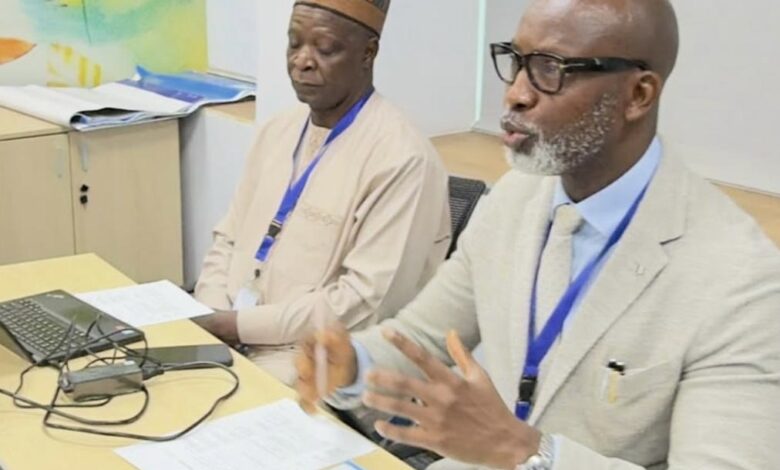
Oyetola, disclosed this at an executive training on Aquaculture Investment Guide in Abuja, according to a statement made available by his Special Adviser Dr Bolaji Akinola on Sunday.
The initiative, which will provide concessional loans to state governments, is aimed at addressing the country’s fish supply deficit of more than 2.2 million tonnes and strengthening domestic aquaculture production.
Oyetola, who was represented by the Senior Special Assistant to the President on Marine and Blue Economy, Prof. Busayo Fakinlede, said achieving fish sufficiency required stronger participation from state governments.
He urged states to move beyond policy commitments and develop viable investment projects capable of increasing local production.
“Fish is a pillar of food security, household nutrition and rural livelihoods. No nation can call itself food secure while it imports most of the fish it eats.
Our ambition is to produce more, import less and, in time, become a net exporter. That ambition can be achieved only when every state plays its part,” he said.
Nigeria currently produces about 1.4 million tonnes of fish annually against an estimated national demand of 3.6 million tonnes, leaving a shortfall of approximately 2.2 million tonnes.
The deficit is largely covered through imports, which gulp close to $1bn in foreign exchange annually.
Under the proposed framework, states are expected to identify priority fisheries and aquaculture value chains, assess their investment readiness and develop bankable projects that can attract private sector participation.
The training, organised by the Federal Ministry of Marine and Blue Economy in collaboration with the World Bank Group, brought together policymakers and technical officials, including commissioners from Rivers, Bayelsa, Delta and Cross River states, as well as permanent secretaries and directors of fisheries and aquaculture.
It focused on equipping state officials with the skills to develop commercially viable aquaculture projects, manage investment risks, meet environmental and social safeguards and establish public-private partnerships.
The minister said the $200m financing would provide states with the resources to expand production capacity, unlock investment opportunities and contribute to a coordinated national fish security strategy.
He commended the World Bank for its support through analytical studies, cluster-based development, capacity building and the development of the Aquaculture Investment Guide.
Oyetola also disclosed plans to convene a stakeholders’ roundtable after the training to strengthen collaboration with state governments, investors and development partners and ensure the initiative translates into actual investments.
Fakinlede, who attributed recent developments in the sector to Oyetola’s leadership, said the ministry had inaugurated a Technical Committee on Accelerating Fish Production in August 2026 and digitised fish import licensing.
He added that national fish production had increased from 1.1 million tonnes to 1.4 million tonnes.
According to him, Nigeria has also secured certification for shrimp exports to the United States through compliance with Turtle Excluder Device requirements, while investment portfolios for Fish City and Fish Terminal projects have been developed to attract private capital.
“Through strategic collaboration, contributive support and shared commitment, we will close the fish deficit, create jobs, raise household incomes and secure Nigeria’s place as a fish-sufficient nation,” Fakinlede said.