

The Federal Government has recorded a 60 per cent reduction in facility-based maternal deaths across 172 local government areas under its Maternal Mortality Reduction Innovation Initiative (MAMII).

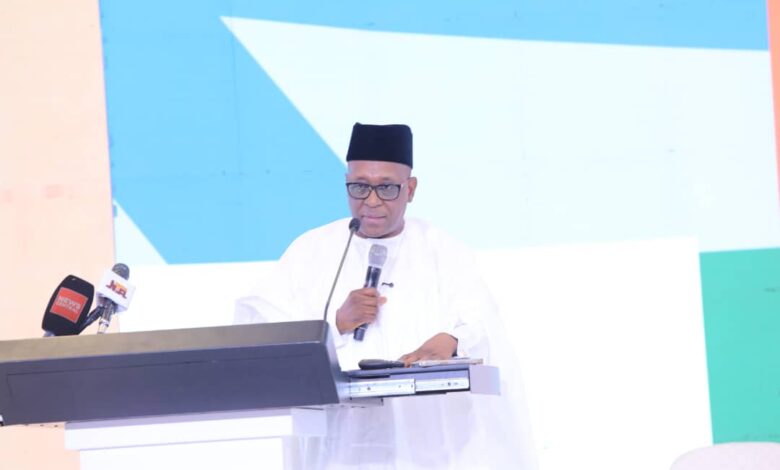
Minister of Health and Social Welfare, Prof. Muhammad Pate disclosed this at the
2026 Joint Annual Review (JAR) of the health sector in Abuja on Tuesday.
Pate explained that the gains recorded followed reforms undertaken by the Tinubu administration aimed at improving access to skilled birth attendants and emergency healthcare services.
He attributed the improvement to ongoing health sector reforms, including the revitalisation of primary healthcare centres, recruitment of skilled birth attendants, improved emergency transportation and expanded access to maternal and newborn healthcare services.
He said skilled deliveries in facilities supported by the Basic Healthcare Provision Fund (BHCPF) increased from 4.8 million in 2023 to 7.9 million in 2026, while the number of women completing four antenatal care visits rose from six million to 8.7 million.
According to him, outpatient visits also increased from 32.4 million to 43 million, while the number of children receiving the third dose of the pentavalent vaccine doubled from 1.2 million to 2.4 million within one year.
Pate said the improvements followed the revitalisation of 3,500 primary healthcare centres nationwide, with work ongoing at another 900 facilities to expand access to essential health services.
He disclosed that nearly 20,000 skilled birth attendants had been recruited across 22 states, while 4,747 community health workers had been employed in 10 states to address critical manpower shortages.
The minister said staffing had improved considerably in MAMII local government areas, with 91 per cent of BHCPF-supported facilities now having at least two midwives or community health extension workers, compared with just 12 per cent at the commencement of the reforms.
On emergency medical response, Pate said 171 of the 172 MAMII local government areas had commenced emergency transportation services, which had conveyed 168,000 patients, including 62,000 women and newborns.
He explained that the initiative was aimed at reducing delays in accessing emergency medical attention, particularly for pregnant women and newborns requiring urgent interventions.
On financial protection, the minister disclosed that nearly 100,000 free emergency maternal and newborn services had been provided under the Comprehensive Emergency Obstetric and Newborn Care programme.
He listed the interventions to include 80,900 caesarean sections, 9,100 newborn care services and more than 6,000 fistula repairs.
Pate added that deaths arising from obstetric emergencies had declined by more than 20 per cent in participating facilities, while facility-based maternal case fatalities in MAMII areas had dropped by 60 per cent.
He said the reforms were guided by three major objectives: saving lives, reducing physical and financial hardship, and ensuring that Nigerians had access to quality healthcare.
The minister added that the government was strengthening transparency, governance and accountability through improved use of health data and citizens’ feedback to monitor service delivery.
Also speaking, the Minister of State for Health and Social Welfare, Dr. Iziaq Adekunle Salako, said the theme of the review, “Make the Data Count”, underscored the importance of translating health information into measurable improvements in people’s lives.
Salako stressed the need to track patients beyond initial hospital visits, noting that women registered for antenatal care should be followed through delivery, while children documented at birth should be monitored through their immunisation schedules.
He said reported maternal deaths had declined, while neonatal and other reported deaths had also recorded reductions of 22 and 25 per cent, respectively.
Salako said the review assessed progress in reproductive, maternal, newborn, child and adolescent health, emergency transportation, free maternal and newborn services, MAMII implementation and health financing.
He disclosed that the Federal Government was targeting at least 90 per cent functional primary healthcare centres by 2031, alongside direct quarterly financing of at least 17,000 primary healthcare facilities through the BHCPF.
Other targets, he said, included expanding health insurance coverage to 40 per cent of Nigerians, extending MAMII to all 774 local government areas and reducing out-of-pocket health expenditure to below 50 per cent.
The minister urged stakeholders to move beyond collecting data for reporting purposes and ensure that available information was used to identify gaps, improve healthcare delivery and prevent avoidable deaths.
In his remarks, the Chairman of the Nigeria Governors’ Forum (NGF), AbdulRahman AbdulRazaq, said state governments had increased their financial commitments to healthcare despite competing demands on limited resources.
He disclosed that combined health sector releases by states rose to N681bn in the first half of 2026, compared with N542bn in the corresponding period of 2025, representing an increase of about 26 per cent.
AbdulRazaq said states had committed to increasing investments in primary healthcare, immunisation and public health under the health sector compact, while ensuring timely release of approved funds.
He added that enrolment in state health insurance programmes increased from 14 million in the first quarter of 2026 to 15.75 million in the second quarter and 16.95 million in the third quarter.
According to him, the increase represented more than 2.8 million additional enrollees, with state health insurance agencies targeting 20 million beneficiaries by the end of December 2026.
On workforce development, the NGF chairman said Jigawa and Borno had recruited more than 2,000 health workers each, while Kebbi employed 1,582 personnel, including 520 nurses and midwives.
He also listed Kwara, Cross River, Anambra and Ondo among states that had recruited additional health professionals, with Cross River employing more than 2,200 workers.
AbdulRazaq commended the Federal Government, through the National Primary Health Care Development Agency, for training more than 78,000 frontline health workers across the 36 states.
However, he identified malnutrition as a major challenge requiring urgent intervention, citing the 2024 Nigeria Demographic and Health Survey, which indicated that 40 per cent of children under five were stunted.
He said state governments were committed to increasing investments in nutrition programmes, particularly interventions targeting mothers and children at the community level.
Also speaking on behalf of the United Nations and development partners, the World Health Organisation Country Representative, Dr. Pavel Ursu, commended Nigeria for demonstrating ownership of its health sector transformation agenda.
Ursu said the sector-wide approach was gaining momentum because the Federal Government was providing leadership, while development partners were aligning their technical and financial support with Nigeria’s identified priorities.
He described the framework as one built around a common platform, involving one budget, one conversation and one accountability framework.
According to him, the Joint Annual Review had evolved beyond an annual assessment into a continuous process of monitoring, implementation and accountability.
He said the use of local data would help governments identify service delivery gaps, understand implementation challenges and mobilise the resources and partnerships needed to address them.