The Nigeria Centre for Disease Control and Prevention (NCDC) says that the ₦10 billion emergency fund approved by President Bola Tinubu in June was meant for all of Nigeria’s epidemic-prone diseases, not Ebola alone.
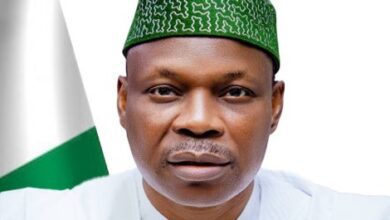
Director-General of the NCDC, Dr. Jide Idris made the clarification through a statement issued on Monday.
According to the DG, the money was requested to strengthen prevention, preparedness, early detection and response for Ebola, Lassa fever, cholera, cerebrospinal meningitis, diphtheria, measles, mpox and antimicrobial resistance.
Dr. Idris explained that the task force, chaired by the President’s Chief of Staff, was set up mainly to coordinate the national response and did not receive the funds. He criticised “political actors” who, he said, fail to tell responsible opposition from “calumny” and urged politicians and commentators not to fuel an “infodemic.”
NCDC said its laboratory confirmed the case, caused by the Bundibugyo strain, on Oct. 20, within 24 hours of an alert in Abuja. “Every contact is under daily watch and Nigeria currently has no active case. The agency said it would keep monitoring until the last contact completes 21 days with no new cases”, it added.
It said the situation does not justify postponing elections, banning mass gatherings or campaigns, or restricting travel, and that it has issued guidelines for organisers of large events instead.
Furthermore, the agency said its allocation rose from ₦4 billion in 2024 to ₦7 billion in 2025, supplemented by a ₦5 billion intervention fund that year. The 2026 appropriation provides ₦22 billion. The ₦10 billion was approved in June after the outbreak in the Democratic Republic of the Congo became a global emergency.
Idris said the amount was still inadequate, citing the the cost of Nigeria’s National Action Plan for Health Security (2025–2029) at about ₦522 billion over five years, or ₦104.4 billion a year. He also cited the Global Preparedness Monitoring Board’s estimate that countries need US$1 to US$2 per person annually, which for Nigeria’s roughly 240 million people means US$240 million to US$480 million a year.
“The ₦10 billion should be understood within this broader context not as excess funding,” the statement said, urging calls for “sustainable, adequate and accountable funding” for NCDC and the wider health security system