
SPECIAL REPORT- Power: Promises And The Trillion Dollar Question
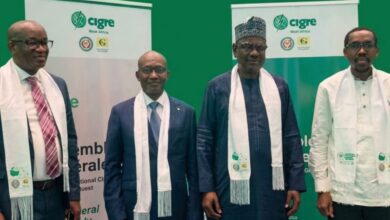
At the Power Correspondents Association of Nigeria’s (PCAN) Conference in Abuja last week, government officials, financiers and consumer advocates agreed on what is wrong with Nigeria’s electricity supply, but parted ways on how to fix it, writes Sunday Etuka.


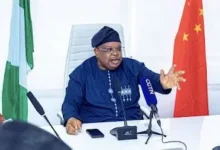
In the hall at the Nicon Luxury Hotel in Abuja, the Minister of Power, Joseph Tegbe, made a frank statement. Every serious conversation about Nigeria’s industrial future, he told delegates, eventually arrives at the question of power. Electricity is not the only constraint on enterprise, but it multiplies the effect of almost every other one. Factories produce more when the lights stay on, and investors grow confident when supply is dependable.
That idea sat at the centre of the conference, whose theme asked how reliable and affordable power can underpin a one trillion-dollar economy, the figure the Federal Government wants to reach by 2030. Over several hours of speeches and panel discussions, the room heard a record of real spending, a catalogue of stubborn problems, and a pointed challenge from the people who pay the bills.
Nigeria’s electricity industry was long run by a single state utility. Privatisation broke that monopoly apart. Power stations were sold to generation companies, distribution passed to private distribution companies known as DisCos, and the high voltage grid stayed with the state owned Transmission Company of Nigeria (TCN).
A market operator, now the Nigerian Independent System Operator (NISO), schedules and settles transactions, while the Nigerian Electricity Regulatory Commission (NERC) sets the rules.
The Electricity Act 2023 pushed the arrangement further by decentralising the market, opening the door for states and private players to take a larger role.
PCAN Chairman Obas Esiedesa welcomed the change but cautioned that it must come with coordination, clear regulation and real infrastructure. Otherwise, he said, the reforms will not translate into tangible benefits for consumers.
The result is a crowded field. Kenny Anuwe, managing director of FGN Power Company, listed the players in his keynote: generation companies, distribution companies, the transmission system, the market operator, the regulator, government ministries and agencies, financiers, gas suppliers, state governments and development partners. Each adds a layer of contracting and approval.
He admitted that the arrangement is too complex, and that a simpler industry would be easier for investors to understand and therefore easier to fund.
What Government Says It Has Delivered
The Minister, represented by his Special Adviser on Administration and Projects, Martins Olajide, presented a list of achievements over the past three and a half years.
According to him, President Bola Tinubu approved a ₦3.3 trillion plan to settle verified legacy debts owed to generation companies, and ₦1.23 trillion has so far been raised under it. The aim is to ease pressure on generators so they can pay for gas and maintain their plants.
He also disclosed that more than 2.8 million customers have been metered under the Presidential Metering Initiative, intended to close gaps in revenue collection. The Rural Electrification Agency has connected universities, hospitals and rural communities to solar power. Work has also started on a new National Grid Control Centre in Osogbo to replace one built more than 60 years ago.
On the grid itself, the Minister said more than 15,000MVA of transmission capacity was added between 2023 and October 2026. In the last two months alone, he commissioned substation equipment in places including Kumbotoso, Dankata, Mashi, Dan-Agundi, Apapa, Ijora, Ikeja, Biliri and Walalambe, adding over 1,300MVA. He added that the President has approved a coordinated campaign against vandalism, backed by a stronger legal framework to protect power assets.
Looking ahead, the Minister described a four pronged roadmap: grid stabilisation, sector liquidity and sustainability, asset optimisation, and expansion of the grid. A technical audit has been commissioned to set a diagnostic baseline.
The plan follows a corridor approach that prioritises three economic zones: Lagos and Ogun; Benin, Enugu and Port Harcourt; and Abuja, Kaduna and Kano. The Lagos and Ogun axis and the Abuja franchise area together account for over 50 percent of national demand. They will pilot the proposed 24 hour energy zones, depending on technical readiness and commercial viability.
Inside The Presidential Power Initiative
Mr Anuwe gave the most detailed account of work on the ground. The government, he said, has put more than ₦10 trillion into the sector since privatisation. Without that money the industry would not be standing, he argued, yet he also called the sum frustratingly limited against the scale of national ambition.
His company coordinates the Presidential Power Initiative (PPI), which structures commercial deals, secures financing and delivers additional power. The pilot phase is complete, he said, and phase one, covering transmission substations and lines, is underway.
Some delays have occurred, but most projects are expected to finish in the first quarter of 2027. A flagship 480MW transmission substation is due to begin tests in December, with commissioning concluding in February 2027.
A second batch of 12 substations is expected to start once financing approvals come through, with a target of the fourth quarter of 2026. Together with special projects, the pipeline will deliver just under 3,400MW. On the transmission side, about $237 million has gone into 16 lines covering roughly 606 kilometres, with capacity gains of just over 7,000MW. By 2029, the initiative targets 5,540MW of impact, a reliability improvement of at least 60 percent, and the return of about 2,000 industries to the grid.
Financing came up repeatedly. Mr Anuwe described a $2.3 billion programme, with $1.3 billion from Europe and $1 billion from China, and said the government’s counterpart contribution has been 15 percent in each deal. Partners include export credit agencies and banks such as China Exim Bank, Standard Chartered, KfW and Deutsche Bank.
Looking forward, he said the company should be capitalised with at least $1 billion, which the Africa Finance Corporation has promised to match, while other financiers would need to bring in about $18 billion across the sector.
He also made a notable admission. The government still provides more than 95 percent of new infrastructure investment in the sector, which is not why Nigeria privatised. He urged a shift from the current sovereign guarantee model to approaches such as viability financing and blended finance, which could draw institutional and private capital.
The Gas Challenge Still Persist
Roughly 80 percent of Nigeria’s power plants burn gas, so the sector lives or dies by the fuel. A gas industry panellist told the conference that Nigeria is rich in reserves, but that availability alone guarantees nothing. Pipelines, transport and plant readiness all matter.
He named two major problems. The first is the absence of cost reflective tariffs. Gas makes up between 60 and 75 percent of generation cost, yet payments from the market fall short of what is owed to suppliers.
Government interventions to clear debts have come every few years, he said, and arrears start building again soon after. Without a lasting payment mechanism, the cycle will continue.
The second is a shortage of equity investment in non-associated gas, which does not depend on oil production. Relying on associated gas leaves supply hostage to oil output. The state, he argued, cannot leave this entirely to private investors and international oil companies, and must commit its own resources.
The moderator sharpened the point by noting that about 60 percent of the country’s gas is export driven, so more drilling does not automatically mean more gas for local power plants. Mr Esiedesa had earlier flagged the recurring slump between November and March, when low water levels cut hydropower output and gas constraints hit thermal plants. That season is now beginning.
A Fragile Grid
A TCN official reminded the hall that the grid can only carry what generators supply. If generation is short, he said, there is little to transmit. He described work to build in redundancy, known in the industry as N-1, so that the loss of one component does not bring down the system.
A new transformer was commissioned earlier this year, and procurement is under way for more. Reinforcement of lines continues in Abuja and Lagos, including new lines in Lagos supported by JICA and the Omotosho corridor.
Asked how scattered projects would be integrated so that none stands idle, he said the Minister’s office is coordinating rather than taking over the work of TCN or anyone else. The aim is to avoid lapses between agencies.
The Consumer’s Verdict
The most uncomfortable moment came from Uket Obanga, National Secretary of the Nigeria Electricity Consumer Advocacy Network (NECAN). He began with the name of the industry. It is called the Nigerian Electricity Supply Industry, he noted, and there is supply in it but no demand, though consumers are the ones who create demand.
Drawing on records from 2013 to August 2026, he said installed generation capacity is the same as before, or even lower, particularly around 2019 to 2021. Citing a NERC quarterly report, he argued that operators make more money when less power is generated and delivered. His phrase was blunt: selling darkness, exploiting Nigerians.
He questioned the need for a federal government power company when TCN, NISO and NERC already exist, and said he was hearing of it for the first time. The government, he suggested, often creates new agencies from untested ideas that add to existing problems instead of solving them.
He also challenged the ₦10 trillion figure. A survey by his group between 2018 and 2021 found, he said, that 72 percent of transformers installed by DisCos were bought and paid for by consumers. Who, he asked, has documented that?
These are his claims, and they were not independently verified at the conference. The Minister’s office and the DisCos did not respond to them in the sessions covered here. They nonetheless capture a mood outside the hall, where many Nigerians spend heavily on generators and alternative energy and do not see the benefit of the billions invested.
The Test Of Delivery
The conference ended with broad agreement on the diagnosis and open disagreement on the cure. The government and its agencies argue that coordinated infrastructure, new financing models and simpler institutions will deliver reliability.
Mr Anuwe himself conceded that infrastructure alone is not enough, and that the industry needs clearer responsibility, predictable regulation and bankable projects. Consumer advocates reply that years of well written plans have ended on paper.
A representative of the National Electricity Management Services Agency added a reminder that new infrastructure must be safe and compliant, and urged journalists to give more attention to electrical safety and public education.
For ordinary Nigerians, the verdict will not come from speeches. It will come from whether supply improves through the difficult months ahead, whether the Osogbo control centre and the new substations make a visible difference, and whether the corridor pilots in Lagos, Ogun and Abuja produce the promised round the clock power.
Mr Tegbe asked the press to give citizens the facts so they can form their own judgements. Over the coming months, those facts will decide whether the roadmap leads to a trillion-dollar economy or becomes one more plan to be presented again next year.