

The Federal Government has committed ₦150 billion to the revitalisation of tertiary institutions nationwide as part of efforts to address infrastructure deficits and improve the quality of higher education in the country.
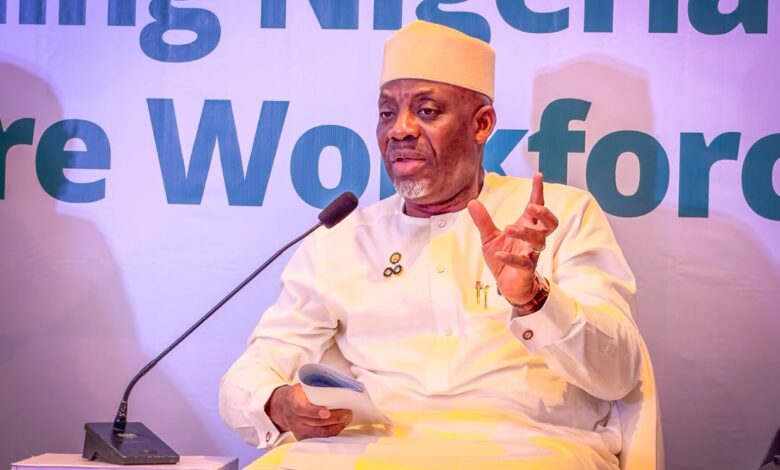
The Minister of Education, Dr Tunji Alausa, disclosed this at the Ministerial Session of the 70th National Council on Education (NCE) meeting in Maiduguri, Borno State.
Alausa said the investment was part of the Federal Government’s broader education reforms under President Bola Tinubu’s Renewed Hope Agenda, aimed at strengthening educational infrastructure, expanding access and improving learning outcomes.
He further disclosed that the government had committed ₦55 billion to medical education infrastructure and ₦32 billion to needs-assessment projects in public colleges of education.
According to the minister, an additional ₦39 billion had been released to 166 public tertiary institutions under the Needs Assessment programme to address critical infrastructure requirements.
He said the interventions demonstrated the government’s commitment to improving the learning environment and strengthening the capacity of tertiary institutions to deliver quality education.
Beyond infrastructure, Alausa highlighted ongoing efforts to improve teacher professionalism, disclosing that more than 80,000 teachers were undergoing certification and licensing through the Teachers Registration Council of Nigeria (TRCN).
He said the government was targeting 75 per cent teacher certification by the end of 2027, while all senior secondary school teachers were expected to be certified by 2028.
The minister also disclosed that 34 solar mini-grid installations had been completed in tertiary institutions, with plans to extend independent solar power to all federal tertiary institutions by 2028.
On digital education, he said the Federal Government had committed more than ₦11 billion to digital skills development, while over 40,000 geo-located schools had been integrated into digital education management systems to improve planning, monitoring and school safety.
Alausa urged members of the Council to ensure that deliberations translated into measurable improvements, stressing that infrastructure development must be matched with teacher welfare, professional development, accountability and quality learning.
In his remarks, Borno State Governor, Babagana Umara Zulum, commended the Federal Government’s education reforms, particularly initiatives aimed at expanding access, improving teacher motivation and addressing the mismatch between graduates’ skills and labour market demands.
Zulum disclosed that his administration was establishing 27 high-skilled colleges, 15 of which had been completed, while the remaining facilities were expected to be ready by the end of the year.
He said the institutions were designed to promote skills acquisition and provide pathways connecting non-formal education with formal learning through literacy, numeracy and digital education.
The governor reaffirmed his administration’s commitment to expanding educational infrastructure, recruiting teachers and providing incentives for hardworking educators.
Also speaking, the Minister of State for Education, Prof. Suwaiba Said Ahmad, commended the Borno State Government for investing in modern school infrastructure, particularly in communities affected by conflict.
She said such investments would help restore dignity, opportunities and hope to children whose education had been disrupted.
The 70th National Council on Education meeting brought together ministers, commissioners, permanent secretaries, heads of education agencies and other stakeholders to deliberate on policies and strategies for strengthening education delivery, infrastructure and learning outcomes nationwide.