

The Federal Government has unveiled a new National Land Transport Policy (NLTP) aimed at ending Nigeria’s heavy dependence on road transportation by creating an integrated system that links road, rail and water transport.
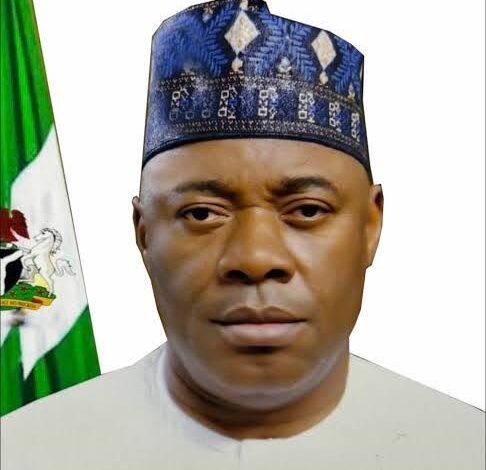
Permanent Secretary, Federal Ministry of Transportation, Engr. Olufunso Adebiyi, disclosed who this on Monday at the 19th National Council on Transportation (NCT) in Abuja, said the policy would provide Nigerians with alternative means of moving people and goods across the country.
At the event four-day event themed “Developing an Effective Transport System for Nigeria: The Role of Integrated Transportation,” Adebiyi said the overwhelming dependence on roads had placed enormous pressure on existing infrastructure, resulting in congestion, road deterioration and avoidable accidents.
“98 per cent of Nigerians depend absolutely on road as a means of transport as of today,” he said.
According to him, even Nigerians who travel by air eventually depend on roads to access airports, underscoring the need to urgently develop other transport modes.
The Permanent Secretary said the government’s renewed investment in rail was therefore designed not only to improve passenger movement but also to remove heavy freight from highways.
He explained that the movement of containers by rail had already demonstrated the benefits of an integrated transport system.
“I was in the port, and I watched a train being loaded. They loaded 33 40-feet containers on the train to move it from the port to Ibadan Dry Port. You have technically removed 33 trailers from Lagos-Ibadan Road. You have also decongested that sector. The accident rate has significantly reduced,” he said.
He said extending rail freight services to additional dry ports would further reduce the burden on highways and improve the lifespan of road infrastructure.
“The risk on our roads will be reduced. Even the lifespan of the road pavement will be extended,” he said.
Adebiyi said the government was also moving towards a transport system where commuters would be able to choose between road, rail, waterways and air depending on their destination and circumstances.
“Nigeria deserves the right to choose at any time their preferred transport mode when planning to take a trip from point A to point B, People should not be compelled to travel by road only,” he added.
The Permanent Secretary said the new land transport policy was not intended to remain a policy document but would be backed by implementation and enforcement.
“The policy is not just in demonstration, it is not just in declaration, it is a call to duty,” he said.
Adebiyi also announced plans to standardise bus terminals across the country, beginning with six terminals, as part of efforts to improve safety and passenger experience.
He said the terminals would have minimum operational standards, including waiting rooms, information screens, police posts and mechanic facilities where vehicles would be inspected before departure.
He further disclosed plans to strengthen regulation of commercial transport operators, warning that operating licences would no longer be treated as permanent privileges.
On transport data, Adebiyi said the Federal Executive Council had approved the Smart National Transport Data Project to address the shortage of reliable information required for effective planning and enforcement.
“We need to know how many Nigerians are actually having a driver’s licence in their hands. How many Nigerians have cars? How many cars do we even have in Nigeria?” he asked.
He said the proposed data system would also help authorities identify vehicles, drivers and passengers in the event of accidents and improve road safety enforcement.
The Permanent Secretary said the government was equally expanding the railway network, noting that several corridors were already operational while others were nearing completion.
He listed Port Harcourt-Aba, Warri-Itakpe, Lagos-Ibadan and Abuja-Kaduna among the operational routes, while saying work was progressing on other corridors.
“Efforts are seriously ongoing to ensure that the railway system comes back to life,” he said.
Adebiyi said the government was also planning high-speed rail infrastructure capable of significantly cutting travel time between major cities.
“If you are sure that you join train in Abuja and in three hours you are in Lagos, why would you go on road?” he asked.
Meanwhile, the Head of the Civil Service of the Federation Mr. Abel Enitan, represented by Dr. Ishaku Musa, said infrastructure alone would not deliver the desired transformation in the transport sector.
He said Nigeria must develop transport systems that are “climate resilient, sustainable, technology-enabled, and responsive to the changing needs of our population and economy.”
According to him, “Transportation is the lifeblood of modern economy,” as it connects communities, facilitates trade and supports economic growth.
He called for stronger institutional coordination, effective regulation, reliable data and a skilled workforce to support the government’s transport reforms.
“A high-performance transport sector therefore requires not only infrastructure and investment, but also strong institutions, effective regulation, intergovernmental coordination, reliable data, innovation and a skilled public service,” he said.
He urged participants to ensure that the council’s resolutions were translated into practical policies and programmes.
“The success of this Council will ultimately be measured not only by the quality of its resolutions, but by the extent to which these resolutions are translated into policies, programmes and reforms that deliver tangible results,” he said.