

The Federal Government has said integrating Nigeria’s road, rail, ports and other transport systems was critical to reducing transportation costs, improving productivity and strengthening economic growth.
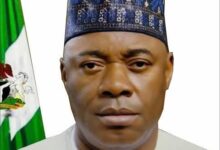
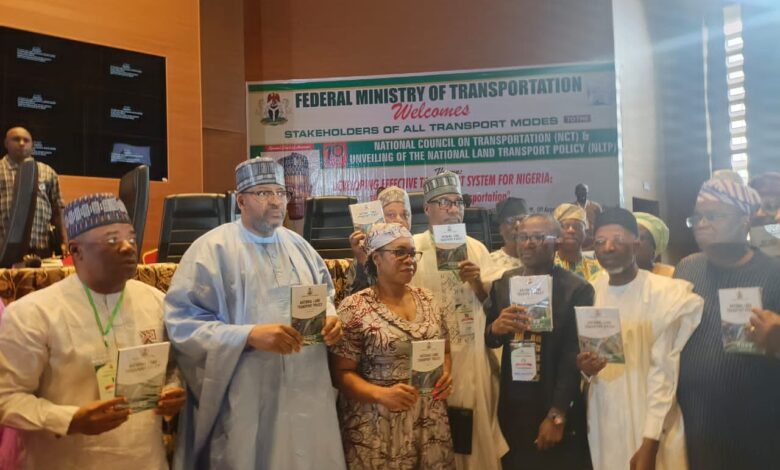
Vice President Kashim Shettima, represented by his Special Adviser on General Duties, Aliyu Umar, stated this at the special session of the 19th National Council on Transportation and unveiling of the National Land Transport Policy on Thursday in Abuja.
Shettima said the government was shifting focus from isolated infrastructure projects to interconnected transport corridors that would facilitate the movement of people and goods.
“Transportation is the link between economic potential, prosperity and the circulation system of production,” he said.
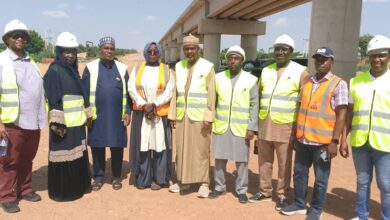
He said the government’s railway modernisation programme was aimed at restoring connectivity across the country, while linking production centres, markets and ports.
“Rail must connect to roads; rail to production centres and markets, while roads provide first- and last-mile access. Ports must connect to rail and roads,” Shettima said.
The Vice President said the administration was also pursuing the Kaduna-Maradi railway project to deepen domestic connectivity, cross-border trade and regional integration.
He urged stakeholders to ensure that approved transport projects moved rapidly from planning to implementation, stressing that integration required effective regulation, technology and institutional cooperation.
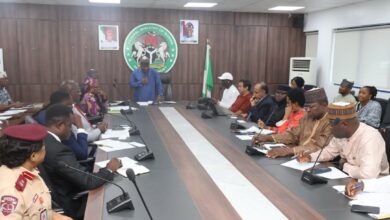
Earlier, the Permanent Secretary, Federal Ministry of Transportation, Engr. Olufunso Adebiyi, said Nigeria was making progress towards creating a unified transport network.
Adebiyi disclosed that the Kaduna-Zaria-Kano railway would be commissioned in December, while the Kaduna-Daura-Katsina route was also expected to be ready before the end of the year.
“I’m glad to inform you that the Kaduna-Zaria-Kano railway will be commissioned in December this year,” he said.
He also disclosed that efforts were underway to link rail services with ports, saying freight rail would reduce dependence on trucks for long-distance cargo movement.
“I watched the train loading 30, 40-foot containers to our port and bringing them as far as the dry port,” he said.
According to him, the ministry’s objective was to progressively connect production centres to markets, communities to economic opportunities and Nigerian ports to national and international transport corridors.
He said the government was equally promoting CNG and electric mobility to reduce transportation costs and support cleaner transportation.
“Our ambition is to move from isolated projects to connected corridors, from segmented modes to an integrated system,” Adebiyi said.
Also, Chairman of the House Committee on Land Transport, Blessing Onuh, said greater use of rail for heavy-duty and bulk cargo would reduce pressure on Nigeria’s highways.
“We must give the same attention given to the rehabilitation of roads to our rails,” Onuh said.
She added that moving more freight by rail would extend the lifespan of roads, improve safety and reduce long-term maintenance costs.
Onuh said the National Land Transport Policy must be judged by its impact on Nigerians rather than its contents alone.
“The real test of this document will be in its implementation. It must translate into safer journeys, lower transport costs and more efficient movement of goods,” she said.
She called for stronger coordination among federal, state and local authorities and urged greater private-sector participation in developing Nigeria’s transport infrastructure.