


For decades, a Nigerian cancer diagnosis often came with the same grim calculus: fly abroad for treatment, or hope local options were good enough. Thousands of families drained savings, sold property, or simply went without care they could not access at home.

The Nigeria Sovereign Investment Authority (NSIA) set out to change that equation, betting that world-class oncology, diagnostics and specialised medicine could be built inside Nigeria’s own borders rather than sought overseas.
That bet is anchored in NSIA’s broader mandate to deploy patient capital: investing in sectors capable of delivering both long-term commercial returns and measurable national impact. Few sectors embody this dual imperative more clearly than healthcare.
NSIA’s entry into the sector was guided by a straightforward but ambitious proposition: that high-quality healthcare services, many of which were previously inaccessible in Nigeria or available primarily through overseas treatment, could be made more accessible and affordable within the country.
This ambition led to the establishment of NSIA Advanced Medical Services Limited (“MedServe”), the Authority’s wholly owned healthcare subsidiary, with a strategic focus on advancing oncology, diagnostics and, subsequently, other specialised medical services across Nigeria.
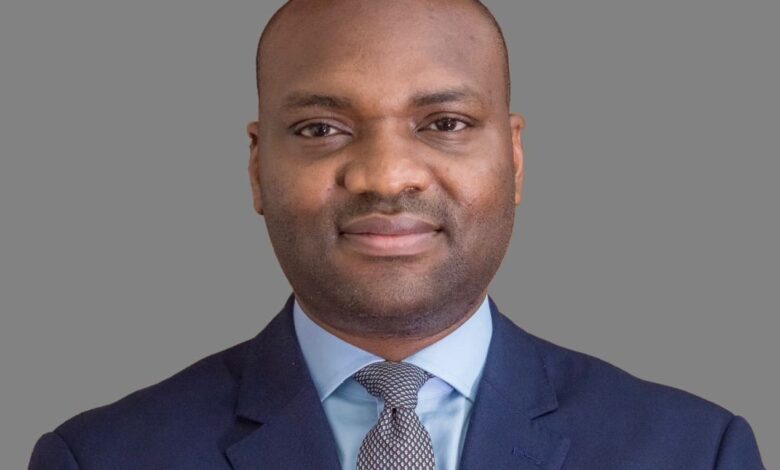
Building on this foundation, Aminu Umar-Sadiq, Managing Director & Chief Executive Officer at NSIA, has placed healthcare investment within a broader institutional framework, one that goes beyond the development of individual facilities to building sustainable healthcare capacity, strengthening local expertise, and creating platforms capable of delivering measurable outcomes over the long term.
From Concept To Infrastructure
Through MedServe, NSIA has translated this strategic vision into operational healthcare infrastructure with national significance.
The MedServe–LUTH Cancer Centre (MLCC) in Lagos, commissioned in May 2019, became the first oncology centre in Nigeria to offer 3D Conformal Radiotherapy and today houses the largest concentration of radiotherapy equipment in West Africa.
The centre’s strategic value became particularly evident during the COVID-19 pandemic, when international travel restrictions significantly constrained access to overseas medical treatment.
At a critical moment for patients requiring specialised care, MLCC provided continuity of advanced cancer treatment within Nigeria, demonstrating the importance of resilient domestic healthcare capacity.
This investment has been complemented by the MedServe Kano Diagnostic Centre (MKDC) and the MedServe Umuahia Diagnostic Centre (MUDC), which introduced advanced radiology and pathology services to regions where such capabilities had previously been limited or unavailable.
The results are both substantial and measurable. Since inception, MLCC has delivered more than 25,000 radiotherapy sessions and 10,000 chemotherapy treatments to approximately 15,000 unique patients.
The centre has also recorded instances of reversed medical tourism, with Nigerians being referred from overseas providers on account of the quality and cost-effectiveness of services available locally.
Treatment costs remain significantly below comparable international services, in many cases at less than half the cost of treatment abroad.
It is estimated that these interventions have prevented more than US$200 million in foreign exchange outflows that would otherwise have been associated with overseas treatment and related expenses.
Across Kano and Umuahia, more than 410,000 patients had received pathology and radio diagnostic services by December 2025, supporting earlier detection, contributing to improved clinical decision-making and patient outcomes.
These figures represent more than service volumes. They demonstrate healthcare capacity built locally, specialised skills retained within the country, and tangible value delivered to Nigerians.
Building A Sustainable Oncology Ecosystem
Sustainable healthcare transformation requires more than physical infrastructure. It depends on an ecosystem in which infrastructure is supported by human capital development, clinical research, knowledge transfer and integration with leading international institutions.
Recognising that oncology remains an emerging specialty in Nigeria, NSIA, through MedServe, adopted a holistic approach centred on three priorities: developing a pipeline of skilled oncology professionals; strengthening clinical research and trial capacity tailored to African populations; and establishing partnerships with leading global medical institutions.
As part of this effort, MedServe instituted an annual Oncology Summit to bring together clinicians, researchers, regulators and academics, creating a platform for knowledge exchange, professional development and collaboration.
MedServe has also established partnerships with globally respected institutions, including Memorial Sloan Kettering Cancer Center, the University of Maryland Medical Center and Bio Ventures for Global Health. These collaborations are helping expand access to clinical trials and innovative approaches in oncology, radiology and pathology.
To date, MedServe has participated in two global cancer trials focused on prostate and breast cancer, an important step towards strengthening Nigeria’s role in international clinical research and ensuring that evidence generated through global healthcare innovation is increasingly relevant to African populations.
This ecosystem-led approach reflects the broader investment philosophy championed under Aminu Umar-Sadiq’s leadership: that sustainable impact is achieved not simply by deploying capital into assets, but by creating the institutional, technical and human-capital foundations required for those assets to deliver value over generations.
Expanding National Access: The Next Phase
Building on the outcomes achieved to date, MedServe has embarked on a structured expansion of its healthcare footprint across 13 states.
The expansion is designed to balance established urban centres, including Lagos, the Federal Capital Territory and Kaduna, with other participating states such as Oyo, Sokoto, Delta and Yobe.
The objective is to bring specialised diagnostic and treatment capabilities closer to more Nigerians while creating a more geographically diversified healthcare network.
The next phase comprises the development of 13 new diagnostic centres, three additional oncology centres and three cardiac catheterisation laboratories, introducing cardiology as a new service line within the MedServe platform.
Scale, however, must be accompanied by operational resilience. To this end, MedServe has established long-term partnerships with global equipment manufacturers Siemens and GE. These partnerships cover equipment supply, maintenance, training and bulk procurement efficiencies, supporting high service uptime, consistent quality and the long-term sustainability of the expanding network.
The financing structure supporting this expansion is equally significant. In line with NSIA’s mandate to mobilise capital and catalyse foreign investment, MedServe secured up to US$24.3 million in blended financing from the International Finance Corporation (IFC) and the International Development Association (IDA).
The financing represents an innovative approach to healthcare investment, helping to lower the cost of capital while supporting affordability and demonstrating growing multilateral confidence in Nigeria’s healthcare sector.
Looking Ahead
With the commissioning of new centres scheduled to commence from mid-2026, NSIA, through MedServe, remains focused on expanding equitable access to high-quality healthcare services across Nigeria.
The country’s healthcare narrative must continue to evolve. It should no longer be defined predominantly by outbound medical tourism, but increasingly by domestic resilience, expanding capacity and measurable national capability.
The ambition is not simply to build more healthcare facilities. It is to demonstrate that world-class, dignified and accessible healthcare can be developed, operated and sustained in Nigeria.
The journey remains ongoing, but the direction is clear. Through disciplined capital deployment, strategic partnerships, long-term institutional commitment and strong execution, NSIA will continue to support the
development of healthcare infrastructure capable of serving both the current and future generations of Nigerians.
For NSIA, the measure of success ultimately extends beyond the infrastructure delivered. It lies in the capacity created, the patients served, the expertise retained, the investment attracted and the extent to which Nigeria’s healthcare system becomes stronger, more resilient and increasingly capable of meeting the needs of its people at home.