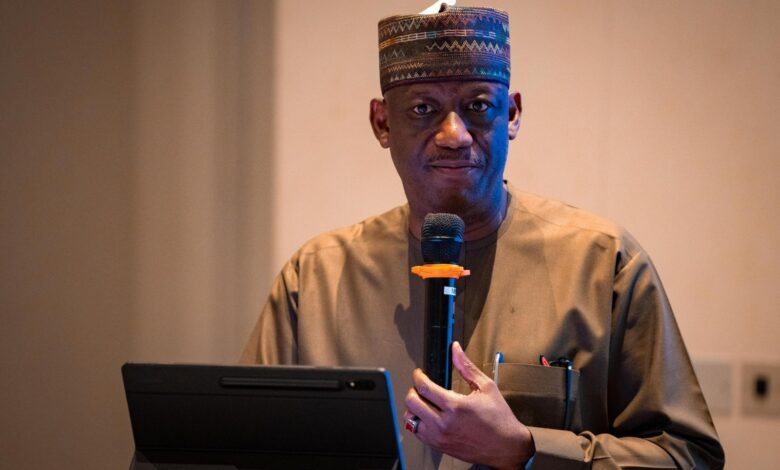


Nigeria’s push to decentralise its electricity sector risks producing scattered infrastructure and uncoordinated development unless stakeholders work together, the Managing Director and Chief Executive Officer of the Nigerian Independent System Operator (NISO), Engr. Abdu Bello Mohammed, has said.
Mohammed spoke at the ongoing Africa Energy Leadership Summit 2026, which is being held at the Landmark Centre, Lagos, from October 27 to 29.
He said decentralisation should open up more room for investment and growth in the Nigerian Electricity Supply Industry (NESI) instead of fragmenting it.
He noted that as more states set up their own electricity markets and regulatory bodies under the Electricity Act 2023, the country needs a more coordinated approach to infrastructure planning, system operations and information management.
According to him, the rise of multiple electricity markets, independent transmission infrastructure providers, decentralised generation and new distribution networks is changing what is expected of the national electricity system.
Mohammed said NISO is widening its role beyond conventional grid operations to act as a neutral technical integrator, system coordinator and market facilitator.
In that capacity, he said, it will provide the planning, operational and market coordination interfaces that allow different institutions and market participants to work efficiently within the wider electricity ecosystem.
He clarified, however, that this evolving role does not make NISO a regulator of state electricity markets, nor does it reduce the statutory responsibilities of the Nigerian Electricity Regulatory Commission (NERC) and State Electricity Regulatory Authorities.
Speaking on why coordination matters, he said it becomes more important as state electricity networks connect to the national transmission grid, trade power across state boundaries or rely on shared transmission infrastructure.
In his words, poorly coordinated investments could erode the benefits of decentralisation.
To tackle these challenges, Mohammed said NISO is promoting the use of Integrated Resource Planning methodologies so that investments in generation, transmission and distribution complement one another, are technically compatible, make economic sense and fit the long term needs of the industry.
He described digitalisation and access to reliable industry data as essential for better coordination, greater transparency and stronger investor confidence.
He disclosed that NISO is working on a centralised NESI data infrastructure to consolidate, validate, manage and share critical industry information.
“Our vision is a Nigerian electricity industry that is decentralized in its development opportunities, integrated in its infrastructure planning, coordinated in its operations, transparent in its market administration and attractive to sustainable private investment,” he said.
Mohammed urged state governments, regulators, investors, development partners and technology providers to partner with NISO to turn the opportunities created by the Electricity Act 2023 into measurable gains in electricity access, reliability, affordability and economic development.