

The world is on course to add almost 4,800 gigawatts (GW) of renewable capacity between 2026 and 2031, as governments rush to cut their exposure to costly imported fuels in the wake of disruptions to energy flows through the Strait of Hormuz, according to a new report by the International Energy Agency (IEA).
The figure is 57% higher than the capacity added in the previous six years. For the first time, growth in emerging and developing economies outside China is expected to match that of advanced economies.
India is projected to become the world’s second-largest growth market after China.
The agency said the Middle East conflict has pushed up oil and gas prices and increased market volatility, putting renewables at the top of the policy agenda in many countries.
It noted that every country has domestic renewable potential that can be developed competitively, and that governments need not choose between security, affordability and sustainability when policies are well designed.
Renewables are already delivering security gains, the report said. Without their growth since 2010, global fossil fuel demand would have been about 8% higher in 2025, equal to India’s total energy consumption.
Renewables have also displaced natural gas use equivalent to 11% of global demand, which helped limit wholesale electricity price increases during the crisis in many countries. Biofuels and other renewables have displaced 2.4 million barrels of oil equivalent per day, comparable to Canada’s total oil demand.
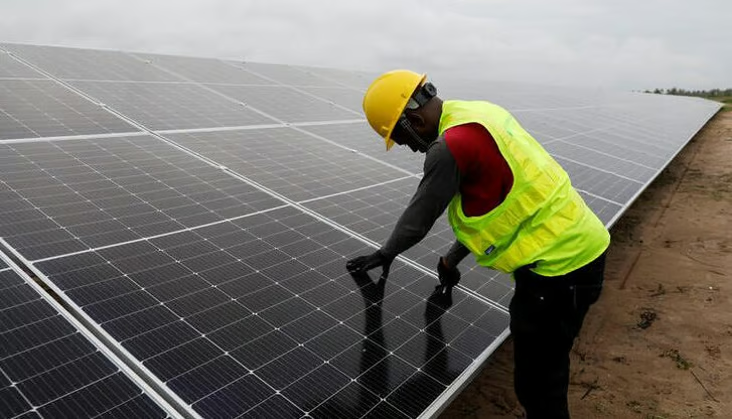
Global renewable electricity capacity is expected to grow by almost 85% between 2025 and 2031, with solar PV accounting for over three quarters of that growth. Onshore wind capacity is forecast to rise by more than 70% to 2,040 GW.
Renewables are projected to generate almost 45% of global electricity in 2031, up from 33% in 2025, while solar PV is set to overtake hydropower in 2029 to become the largest source of renewable electricity.
China’s share of global capacity growth is expected to fall from over 60% in 2025 to 53% over the forecast period.
The IEA attributed this to China’s shift from fixed tariffs to competitive auctions, which led to an almost 55% year on year drop in solar PV additions in the first nine months of 2026.
It cut its forecast for China by 5%, or almost 116 GW, but said the country would still exceed the targets in its 15th Five-Year Plan.
That reduction is more than offset by stronger outlooks elsewhere. The forecast for the United States was raised by almost 40%, driven by solar and battery storage meeting fast-growing demand, including from data centres.
The outlook for sub-Saharan Africa was revised up by 54%, with solar PV making up over 80% of new capacity.
Renewable capacity across Southeast Asia, the Middle East and Africa is set to almost triple over the period, and capacity in the Middle East and North Africa is expected to more than double.
The report highlighted a shift in consumer behaviour, with households and small businesses facing high fuel prices and unreliable grid power increasingly turning to affordable solar PV.
The agency estimates that additional rooftop solar has improved electricity access and services for at least 70 million households since 2022. Off-grid solar capacity is expected to grow 2.5 times to around 80 GW by 2031, led by Pakistan, sub-Saharan Africa and Southeast Asia.
As wind and solar expand, the IEA said system flexibility becomes a key challenge. In 17 countries, variable renewables will exceed 50% of the power mix by 2031. Technical curtailment of wind and solar output reached almost 200 terawatt-hours in 2025 and could surpass 800 terawatt-hours by 2031. Hours of negative electricity prices continue to rise across Europe.
Battery storage is helping, but not fast enough, the report said. Hybrid projects combining solar, wind and batteries can already generate electricity at below USD 75 per megawatt-hour in many regions. Behind-the-meter battery storage is forecast to grow almost sixfold to over 670 gigawatt-hours by 2031.
Higher oil prices have led the agency to lift its forecast for liquid biofuel production growth by 40% compared with last year’s report. Global biofuel demand is expected to expand by nearly 30% by 2031, though the IEA stressed that robust sustainability frameworks are essential to avoid harm to land, water and biodiversity.
Renewable energy use in transport is forecast to rise by 60%, lifting its share of transport energy demand to 6%. The share of modern renewables in meeting heating demand is expected to climb from 15% in 2025 to 19% in 2031, putting heat related carbon dioxide emissions into decline for the first time. Global biogas production is forecast to grow by almost a fifth, driven entirely by biomethane, with India’s output set to grow almost ninefold.
China’s dominance of solar supply chains persists despite financial strain, with over 90% of major Chinese solar manufacturers reporting losses in 2026 and more than 70 companies filing for bankruptcy since 2024. By 2031, India is expected to be the only country besides China able to manufacture every major component of the solar PV supply chain at scale.
In its main case, global renewable capacity reaches around 9,710 GW by 2030, which is 2.6 times the 2022 level and short of the COP28 goal of tripling. In an accelerated case, with faster auctions, grid investment, storage expansion and permitting reforms, growth would be 20% higher, allowing the world to hit the tripling target in 2031.