

The Transmission Company of Nigeria (TCN) has disclosed that its transmission relay capacity has risen to 8,700 megawatts, even as it blamed Distribution Companies (DisCos) for limiting the amount of power delivered to consumers across the country.
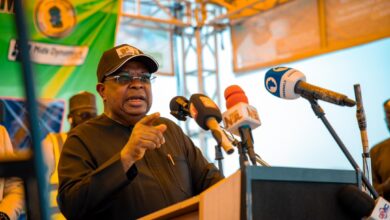
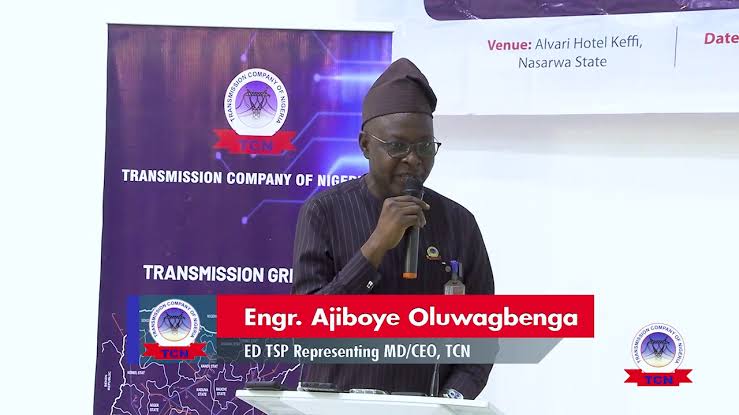
Executive Director, Transmission Service Provider (TSP), TCN, Engr. Oluwagbenga Ajiboye, disclosed this on Thursday, at a Three-Day Media Workshop for Power Correspondents Association of Nigeria (PCAN) in Keffi, Nasarawa State, where he presented an update on the company’s milestones and challenges over the past year.
“When I’m telling you about 8,700 plus megawatts, this has not been physically tested. It has been simulated. So presently, that is where we are,” Ajiboye said, explaining that the figure was arrived at through a static simulation and that the company had added more capacity in the last six months but was being conservative in its projection.
He said that while TCN had the infrastructure to wheel that much power, distribution companies were often reluctant to take up allocations in certain areas.
“Distribution companies have this problem with us. They claim that where they want power is not where we have the capacity. But I keep on asking one question. Who in Nigeria doesn’t deserve to have power?” he queried.
Ajiboye disclosed that the highest amount of power ever wheeled across the national grid was 5,801.84 megawatts, achieved in 2025, adding that the figure could have been higher but for the reluctance of some Discos to draw power due to revenue concerns. “If they are not getting their revenue, they are not ready to take the power. So that is limiting us,” he said.
On infrastructure investment, the TCN chief said the company’s transformation capacity across its substations now stood at over 8,500 megavolt-amperes (MVA), and that about 1.4 billion dollars had been mobilised from multilateral and development financing partners for network expansion in the last 12 months.
He said the company had commissioned about 89 new power transformers since its last engagement with journalists, including a new 300MVA transformer at Katangwa substation in Abuja, which he said had raised the substation’s capacity from 450MVA to 750MVA.
Ajiboye also dismissed claims by some Discos, including the Abuja Electricity Distribution Company, that TCN was constraining supply to their networks. “Nothing has gone bad in our network. All our lines to Abuja are on. They find it very easy to blame TCN for everything,” he said, adding that as a federal government agency, TCN often became a convenient target when Discos underperformed.
On regional power distribution, he explained that although the Lagos corridor alone could absorb 60 percent of national generation if allowed, political and equity considerations required that investment be spread across other regions of the country. “It’s not even fair for a country that we just concentrate in one area,” he said, citing recent investments in Damaturu, Ebonyi and Rivers states as evidence of TCN’s spread.
He further disclosed that Nigeria currently exports about 240 megawatts of power to the West African Power Pool, though the figure fluctuates depending on generation levels and agreements with buyer countries.
On workforce development, Ajiboye said TCN continued to invest in training engineers and technicians, describing the sector as delicate and hazardous. “Electricity is like a fire. It’s a very good servant. But the moment you turn your master, it’s a very terrible master,” he said, urging companies in need of skilled electrical and mechanical engineers to look towards TCN-trained personnel.
He said the company remained committed to reforms following the unbundling of its market and system operations into the Nigerian Independent System Operator (NISO), describing the move as necessary for transparency in the electricity market.