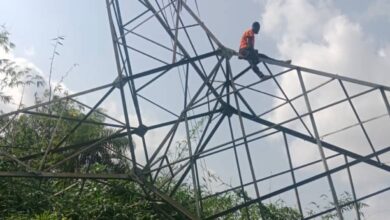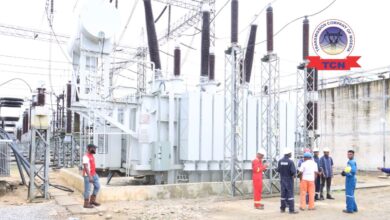



Multiple transmission line failures across the country, not a lack of available electricity, triggered the wave of power cuts that hit Lagos, Abuja, and northern states over the past week, the Nigerian Independent System Operator (NISO) said on Sunday.

In a statement, the grid operator explained that even when power plants generate enough electricity, that power cannot always reach consumers if the transmission network lacks the capacity or proper configuration to carry it.
NISO said it had to repeatedly curtail allocations to distribution companies in order to keep the national grid operating safely.
“In Lagos, a series of outages hit the Olorunsogo to Ayede, Benin to Egbin, and Benin to Omotosho 330kV lines, compounded by a long running fault on the Osogbo to Ikeja West circuit,” it said. “The combined loss of transmission capacity forced NISO to cut supply to Eko Electricity Distribution Company, Ikeja Electric, and the Sakete international export line.”
It said the north was hit even harder, explaining that the Shiroro to Mararaba line went down from August 24 to 26, cutting a key supply route to Abuja and the north.
“Then, at 6:47 a.m. on August 27, two more lines, Shiroro to Mando and Mando to Jos, tripped at the same time.
Because backup circuits linking Apir and Lafia had already been out of service for an extended period due to faults, the failure left Jos and the North East with almost no transmission supply,” NISO said.
The System Operator added that a bus separation at the Mando substation further disrupted the network, prompting cuts to Kano, Kaduna, Jos, Yola, and other northern areas.
It said Abuja saw a shorter disruption on August 29, when the Shiroro to Katampe and Gwagwalada to Katampe lines tripped simultaneously around 3:55 a.m. Supply was restored within about three and a half hours.
NISO said the incidents illustrate how tightly connected Nigeria’s power grid is, since a single transmission failure can ripple far beyond its immediate location.
The operator said it would continue to redispatch generation and adjust allocations as needed to protect the wider network from bigger disturbances.