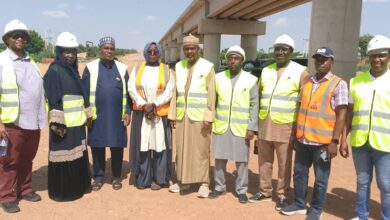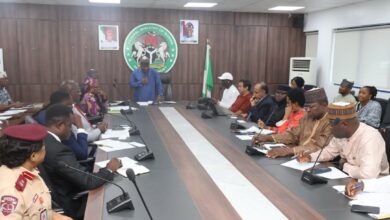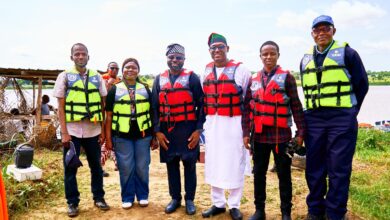



The Federal Government has tightened railway infrastructure handover requirements, directing contractors to transfer critical technical knowledge to Nigerian engineers before projects are taken over by the Nigerian Railway Corporation (NRC).
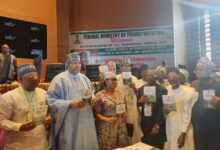
The Permanent Secretary, Ministry of Transportation, Engr. Funso Adebiyi, announced the policy during an inspection of the ongoing Kano Railway Station project, according to a statement made available on Sunday by Gift Seddon for Deputy Director, Press and Public Relations.
He said contractors must ensure that facilities are not only properly constructed but can also be sustainably maintained by Nigerian professionals.
Adebiyi directed the NRC to assemble young engineers for an intensive, locally conducted month-long practical training programme covering facility operations, consumables replacement and maintenance procedures.
He said Priority should go to engineers aged 35 and below, particularly those with at least 20 years remaining in service, to promote continuity and long-term institutional knowledge.
Participants will take computer-based examinations after the training, and Adebiyi warned that those who fail could face consequences under relevant Civil Service regulations.
The ministry also raised concerns about infrastructure lifecycle costs.
Adebiyi rejected short-life bulbs and light fittings at the Kano station, insisting on a minimum three-year lifespan, and called for customised lamp holders and mobile motorised equipment to simplify replacement and maintenance.
Contractors were directed to provide mechanised equipment for cleaning the terminal’s glass structures and account for thermal expansion and contraction in the facility’s design and maintenance.
He further cautioned against excessive reliance on diesel generators and other costly energy arrangements that could make long-term station operations financially unsustainable.
Adebiyi said railway projects must deliver value beyond physical construction by providing durable, maintainable infrastructure supported by competent Nigerian professionals.
He added that technology transfer and local capacity building must be integral to the Federal Government’s infrastructure delivery strategy, making technical knowledge, maintenance capability and long-term sustainability essential elements of project completion rather than post-handover concerns.
The inspection was conducted with senior ministry officials, agency leadership and the Senior Special Assistant to the President on Transportation and Mobility, Prince Ademola Adetokunbo Ade-John.