Tegbe Commissions TCN’s 2x60MVA Kankia Transformers, Breaks Ground For 120MVA Mashi Substation
By Sunday Etuka


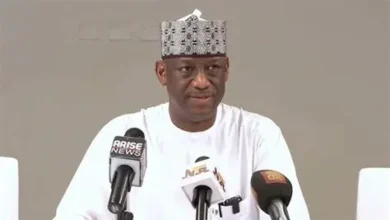
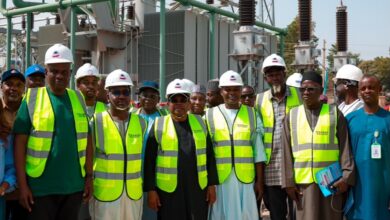
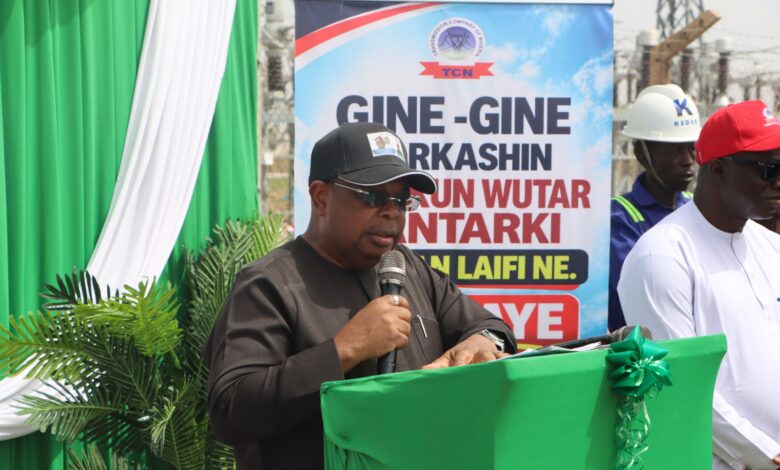
Residents of Kankia and Mashi in Katsina State are set to enjoy improved electricity supply after the Minister of Power, Joseph Tegbe, commissioned two new transformers at the Kankia Transmission Substation and flagged off construction of a new substation in Mashi.
At Kankia, the Transmission Company of Nigeria (TCN) installed two 60MVA, 132/33kV transformers in place of one existing 30MVA unit.
The upgrade lifts the substation’s installed capacity by 150 per cent, from 60MVA to 150MVA, or roughly 120 megawatts.
Tegbe said the added capacity would accommodate previously suppressed load demand and strengthen bulk supply to the Kano Electricity Distribution Company (KEDCO) for onward delivery to consumers.
He described the project as practical progress under President Bola Tinubu’s Renewed Hope Agenda, adding that investment in critical infrastructure should support production, create opportunities and improve daily life.
The project was funded by the World Bank and delivered through the Federal Ministry of Power and TCN, with China Energy Engineering Group Jiangsu Power Design Institute as contractor.
TCN Managing Director, Engr Sule Ahmed Abdulaziz, explained that the substation was originally equipped with two 30MVA transformers, giving a combined 60MVA, or about 48MW. As demand within KEDCO’s network grew, he said, that capacity became inadequate, leading to suppressed load and limiting the substation’s ability to take on additional demand.
He said the works also covered expansion of the control room to house digital control and protection panels, which replace the old analogue systems.
The 33kV busbar system was expanded, and additional outgoing feeders were installed. According to Abdulaziz, the improvements should ease supply constraints in Kankia, Dutsinma, Danbatta and Musawa.
At the Mashi site, Tegbe performed the groundbreaking for a new 2 x 60MVA, 132/33kV transmission substation. When completed, it will provide 120MVA of transformation capacity, equivalent to about 96MW.
The facility is expected to strengthen the network serving Mashi and neighbouring communities, where residents have long dealt with inadequate supply and poor voltage levels.
“Today, we break ground in Mashi with a clear purpose: to build electricity infrastructure that supports livelihoods and gives this community greater room to grow,” Tegbe said.
The Minister disclosed that wayleave and compensation issues had been resolved satisfactorily, with completion scheduled for March 31, 2027. He urged TCN, the contractor and supervising engineers to comply strictly with quality standards, safety requirements and the project timeline.
“Our focus must be disciplined execution,” he said, calling for delivery on schedule with safety and quality upheld throughout.
Tegbe also commended Katsina State Governor, Dikko Umar Radda, for his support and partnership with the Federal Government on infrastructure development.
Abdulaziz said the Mashi substation was TCN’s response to longstanding challenges affecting households, farm produce preservation, small businesses and essential public services in the area.
He noted that the facility would bring bulk supply closer to residents through KEDCO and provide room for future growth in demand.
He appealed to community leaders and residents to support the project and protect the infrastructure from vandalism, adding that its true value would be measured by its impact on people’s lives, including stimulating economic activity, creating jobs and expanding opportunities for young people.
The Minister also inspected the ongoing 2 x 100MVA, 132/33kV Gas-Insulated Switchgear (GIS) transmission substation in Katsina town.
On completion, it will provide 200MVA of installed capacity, about 160MW, to strengthen bulk power delivery to KEDCO for distribution across Katsina town and adjoining communities.
The project includes two 100MVA power transformers, gas-insulated switchgear, protection and control systems, and associated civil and electrical works.
The GIS technology was designed to optimise space while supporting safe and reliable substation operations.