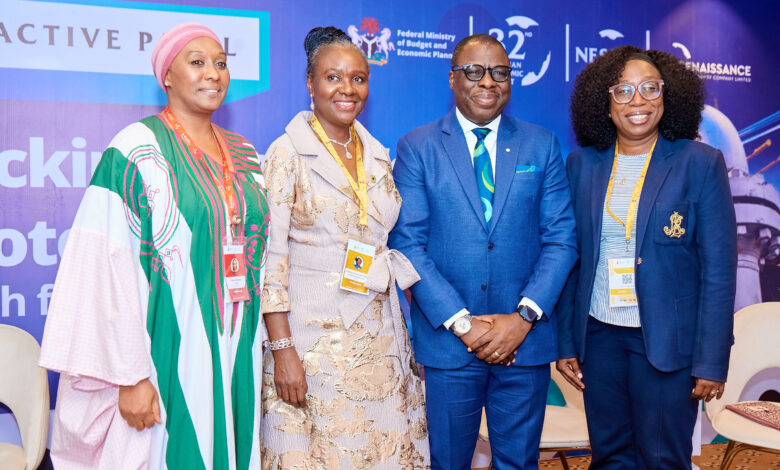


Nigeria’s oil and gas reserves will not attract the funding needed to develop them unless investors are sure that agreed terms will hold, that buyers will take the output and that operators will deliver, the Managing Director and Chief Executive Officer of Nigeria LNG Limited (NLNG), Adeleye Falade, has said.
Falade made the remarks in Abuja at the 32nd Nigerian Economic Summit (NESG), using the company’s Train 7 expansion to show how these conditions can open the door to major energy financing.
According to a statement on Wednesday by NLNG’s General Manager, External Relations and Sustainable Development, Sophia Horsfall, he spoke during an interactive panel titled “Unlocking Nigeria’s Oil Potential: The Push for More Oil.”
He said the country’s problem is not a shortage of resources but the ability to convert them into projects lenders are ready to fund.
“Certainty itself is the product. Investments require substantial upfront capital, and recovery periods of 20 to 30 years depend on confidence that the terms underpinning them will hold throughout their life,” Falade said.
He noted that lenders look beyond the quality of a resource. They also weigh how durable the investment framework is, how predictable earnings will be and whether the parties can honour their commitments. Consistent implementation, he stressed, is key to keeping investors confident.
Falade described the financing of Train 7, secured in 2020 during the COVID-19 pandemic, as proof of what a credible proposition can achieve. The project is being funded from internally generated cash flows and US$3 billion in external financing from 31 local and international institutions.
He attributed that outcome to a record built over earlier expansions. NLNG has developed six operating trains and repaid the loans used to finance them, which gave lenders evidence that it can deliver projects and meet its obligations.
“Track record compounds,” he said, adding that each successful development strengthened the company’s credibility and helped it raise later financing on more competitive terms. By the time Train 7 funding was sought, lenders could study a long history of performance instead of a promise of future potential.
Falade said financing capital intensive projects ultimately comes down to three questions: “Who buys the product? Who carries the risk? Who stands behind the project?”
For NLNG, long term sales and purchase agreements, including contracts running for 20 years, set the commercial foundation before a final investment decision is taken. These agreements turn projected production into cash flows that lenders can assess and fund.
He explained that bankability also requires risks to be assigned to those best able to manage them. Buyers are better placed to handle market risks, while the company and its contractors manage technical risks.
Operational reliability is another test, he said. NLNG’s plant utilisation has reached 81 per cent so far this year, after about two years at roughly 60 per cent because of feedgas constraints.
The recovery, he said, shows the plant can perform when enough gas is available, and links reliable operations and predictable production to lender confidence.
Beyond raising capital, Falade said large projects must leave behind businesses and skills that can support the next wave of investments. Local participation should be deliberately developed, not left to chance or judged only by the amount of money spent.
“Capability has to be deliberately built into what you do,” he said.
He cited the construction of NLNG’s six vessels, for which Nigerian manufacturers supplied items such as furniture and cables. Some of those suppliers kept doing business with the overseas companies after NLNG’s orders were completed, showing how one project can open access to international markets.
Falade identified the use of such capabilities on later projects as the next opportunity to keep Nigerian suppliers engaged, deepen their experience and prepare them for more complex work.
He urged policy makers to support growing local capacity and provide an enabling environment for businesses to thrive.
The 32nd Nigerian Economic Summit offered a platform to discuss policies that could unlock Nigeria’s oil potential.
The panel highlighted the need for investment certainty, bankable projects and stronger local capabilities, and underscored the importance of attracting capital while building Nigerian businesses that can support successive energy projects and compete globally.