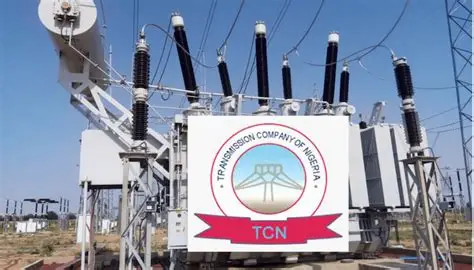


The Transmission Company of Nigeria (TCN) has dismissed Ikeja Electric’s claim that recent Band A feeder outages resulted from grid instability, saying the supply shortfall stems from reduced power generation and not from any failure of its transmission network.

In a statement signed by its management on 6 November 2026, TCN responded to a public notice published by Ikeja Electric (IKEDC) on 5 November, which linked several outages recorded on 3 and 4 November to grid instability and named TCN as the party responsible. TCN called the attribution inaccurate and misleading.
The company argued that identifying the root cause of disturbances, shortfalls and interruptions on the national grid is not the job of a distribution company.
Citing Section 67 of the Electricity Act 2023, it said that duty belongs exclusively to the Nigerian Independent System Operator (NISO), which has made no finding pointing to TCN in relation to the outages in IKEDC’s notice.
TCN referred the public to NISO’s clarification of 5 November, which blamed the current drop in generation on gas supply constraints at thermal power stations and lower reservoir inflows affecting hydroelectric stations.
According to NISO, the reduced generation cuts the energy allocated to distribution companies, leading to fewer hours of supply and more load shedding, with the effect on each company depending on available generation and its allocation.
TCN stressed that it can only transmit the energy made available to it.
Presenting figures from its records, TCN said 68 per cent of interruptions on all feeders supplying IKEDC on 1 and 2 November were frequency-control load shedding caused by low generation.
A further 26 per cent resulted from IKEDC’s failure to comply with load allocation set by NISO’s National Control Centre, or from faults and works on IKEDC’s own network.
The remaining 6 per cent were TCN planned maintenance, switching or a line limitation. TCN said none of the interruptions was caused by a TCN equipment fault or trip.
On the 33kV feeders named in IKEDC’s notice, TCN reported 46 interruptions. Of these, 29 were load shedding due to low generation, and 14 were recorded against IKEDC, comprising 9 cases of non-compliance with load allocation and 5 faults or trips on its own network.
The other 3 were scheduled TCN maintenance on the Ogba to Alimosho line on 1 November. TCN gave the example of the Rack Centre feeder, which was interrupted on 2 November by a cable fault on IKEDC’s network that its own crew repaired.
It added that IKEDC’s notice itself assigns several of the feeders, including MTN, Iju Water Works and Rack Centre, to IKEDC for 33kV faults.
TCN said blaming generation shortfalls on it misinforms customers, weakens public confidence and hides the real challenges that all stakeholders must tackle together.
It urged IKEDC and other distribution companies to stop making unfounded claims about the causes of supply shortfalls and to base their communication on verified information from NISO.
Customers were also advised to consult NISO’s official platforms for accurate updates on the state of the electricity supply industry.
TCN expressed sympathy with those affected by reduced supply hours and pledged to keep transmitting all available energy safely and reliably, working with NISO, generation companies and distribution companies to improve the situation.