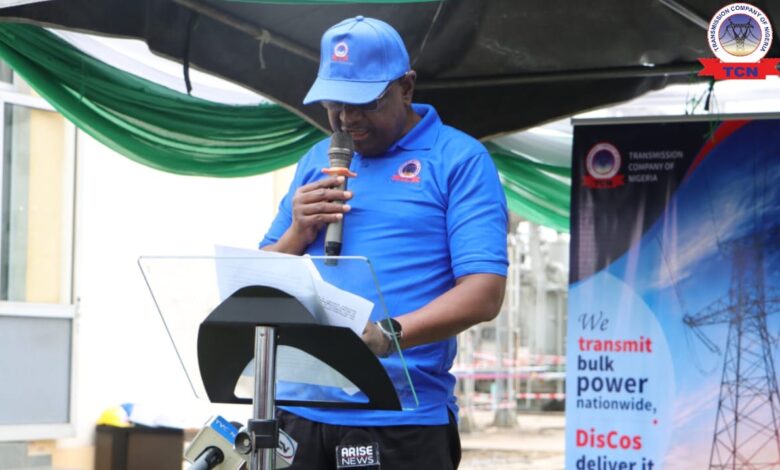


For years, businesses in Lekki and Alausa have watched Lagos’ economic ambition outpace its electricity infrastructure. This week, the Federal Government moved to close that gap, commissioning eight new power transformers across four Lagos transmission substations in a bid to unlock hundreds of megawatts for the state’s fastest-growing commercial corridors.
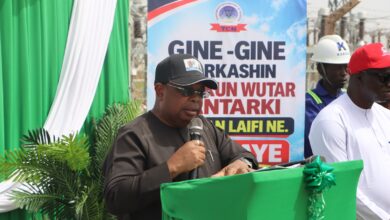
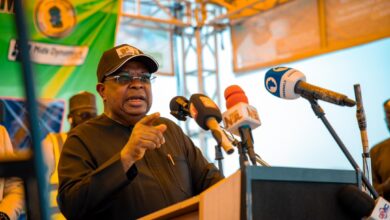
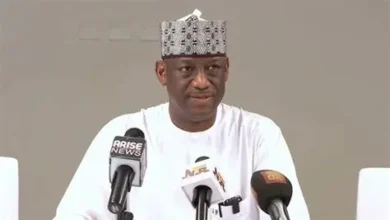
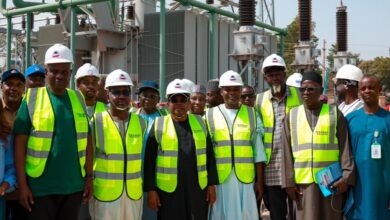
Minister of Power, Chief Joseph Tegbe, commissioned the projects over two days, Monday and Tuesday, touring the Apapa, Ijora, Alausa and Likki substations. Together, the interventions add 540 MVA of transformer capacity at the 132kV level, enough to wheel 432MW- and a further 300MVA at the 330kV level, adding 240MW more. In total, 840MVA of new transformer capacity is now feeding into the Eko and Ikeja distribution networks.
Standing before the newly energised transformers, Tegbe framed the projects as an economic statement rather than a technical upgrade. “They represent targeted investments in capacity for businesses to grow, capacity for industries to produce, and capacity for communities to prosper,” he said.
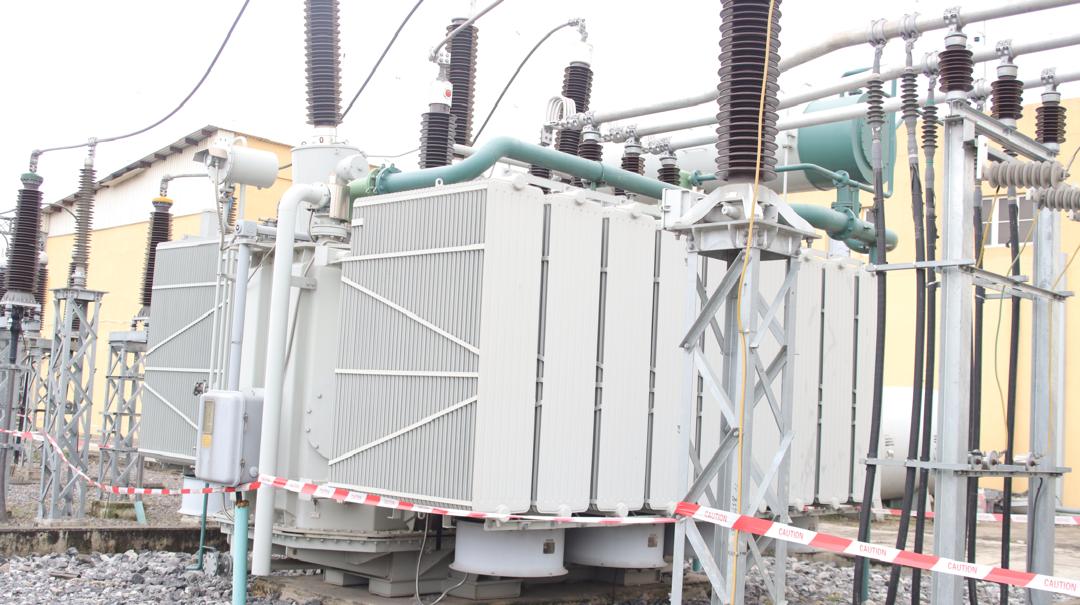
Nowhere was that framing sharper than at Lekki, where the Minister said the intervention had effectively doubled the substation capacity. Transformer capacity at the 330/132kV level rose from 300MVA to 600MVA -about 480MW, while the 132/33kV level climbed from 120MVA to 240MVA, roughly 192MW. Nine new 33kV feeders were also added to move that power into the Eko Electricity Distribution Company network.
“Lekki represents the Nigeria we are building towards -a more industrial, more commercially active, more connected to global markets and increasingly attractive to domestic and international capital,” Tegbe said. “As investment flows into a corridor such as this, electricity infrastructure cannot be an afterthought.”
At Alausa, home to Lagos State’s seat of government as well as dense industrial and commercial activity, a new 100MVA transformer lifted the substitution’s total capacity from 135MVA to 205MVA -about 164MVA, with 80MW of that additional bulk power now available to Ikeja Electric.
“Ikeja is where the ambition of Nigeria meets the industrious nature of Nigerians,” Tegbe said, describing the project as a deliberate strengthening of a strategic location that spans government offices, factories, markets and workshops.
The commissioning began on Monday at Apapa, where a Gas Insulated Switchgear facility built with two 60MVA transformers -funded by the Japan International Cooperation Agency (JICA) -added about 96MW of bulk power availability for one of Lagos’ major industrial corridors, serving areas including Apapa Wharf, Tin Can Island and Ajegunle.
At Ijora, two ageing 30MVA transformers were replaced with modern 100MVA units, lifting the substation’s capacity from 90MVA to 230MVA -a jump of 112MW, with improvements extending to Costain, Oyingbo, Customs and surrounding communities.
Tegbe cast the four projects as part of a broader national strategy rather than isolated fixes. “Our transmission challenges did not emerge overnight, and they will not disappear through one intervention,” he said. “Identify the bottleneck. Invest in it. Remove the constraint. Unlock the capacity.”
TCN Managing Director, Engr. Sule Abdulaziz echoed that message, noting that the Alausa upgrade -executed by Shanghai Electric under a World Bank-Fund initiative launched in January 2021 -would deliver more stable power to at least 70,000 residents in the area.
He said the four projects collectively reflected TCN’s push to modernise infrastructure, cut technical losses, and meet Nigeria’s rising electricity demand, while appealing for additional grant support to fund further upgrades nationwide.
Abdulaziz credited President Bola Tinubu, Lagos State Government, JICA, the World Bank, contractors and TCN engineers for delivering the projects, tying them to the administration’s Renewed Hope Agenda.
TCN officials said similar transmission projects have already been completed in other states and will be commissioned in the coming months, as the company continues what it describes as a systematic expansion of the national grid.