

The Nigerian Independent System Operator (NISO) has warned grid connected steel and cement manufacturing companies to correct harmonic distortions and poor power factor on the national grid or face sanctions in accordance with established regulatory and technical frameworks.

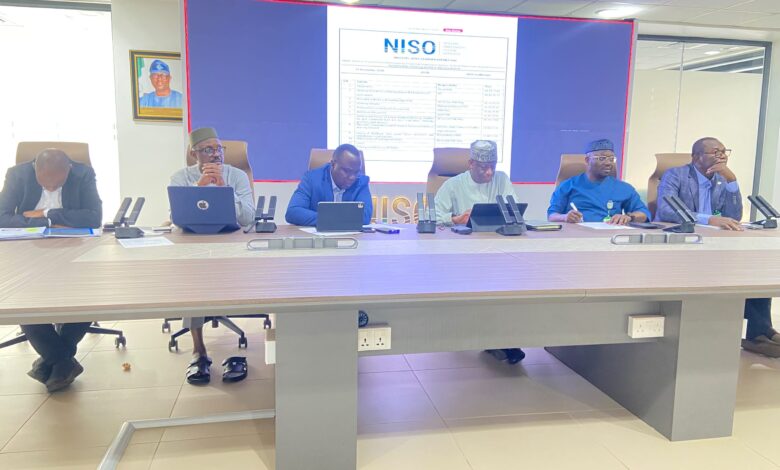
Warning was given at a stakeholder engagement held on Thursday, 19 November 2026, at NISO Head Office Utako, Abuja, to follow up on earlier engagements regarding the need to maintain acceptable harmonic levels on the national grid.
NISO, in a statement on Friday, said the engagement focused on harmonic assessment, grid compliance, power factor correction, equipment interactions, resonance risks and monitoring requirements.
It said while speaking at the event, the MD/CEO of NISO, Engr. Abdu Bello Mohammed, acknowledged significant contributions of steel and cement industries to industrialisation, infrastructure development and economic growth.
However, he emphasised the need for operators to ensure their industrial activities remain within acceptable power quality thresholds in line with established technical requirements.
Engr. Mohammed explained that equipment such as electric and induction furnaces, rectifiers and variable frequency drives could introduce harmonic distortions into the electricity network, potentially increasing technical losses, causing equipment overheating, interfering with protection systems and affecting electricity quality for other consumers.
He also identified excessive reactive power demand and poor power factor as challenges that could increase network loading and complicate voltage management.
MD/CEO stressed that compliance with applicable Grid Code provisions and other established Nigerian Electricity Supply Industry documents was mandatory, noting that companies must take necessary corrective measures to address identified deficiencies.
He further emphasised that failure to operate within prescribed thresholds could attract appropriate sanctions.
He outlined key priority actions for affected companies, including comprehensive power quality assessments, identification of harmonic sources, power factor improvement, installation of appropriate harmonic mitigation solutions, and continuous monitoring with regular technical reporting to NISO.
He further disclosed that NISO currently monitors industrial customers in real time and is developing enhanced monitoring systems to improve visibility into harmonic injections and power factor compliance.
He assured stakeholders of NISO willingness to provide technical guidance and work collaboratively with operators to address implementation challenges while reiterating importance of timely corrective action.
Earlier, ED, System Planning, Engr. Shehu Abba-Aliyu, in his welcome address, highlighted the importance of maintaining acceptable power quality as industrial electricity demand continues to grow.
He recalled that NISO had previously engaged steel and cement industries in September 2025, followed by further correspondence with companies on their Grid Code obligations.
He appreciated companies that had responded positively to NISO communications and encouraged others to strengthen their engagement and address identified compliance gaps.
He noted that uncontrolled harmonic injections could discourage power quality sensitive industries from connecting to the national grid, potentially undermining efforts to expand industrial participation in the electricity market.
Engr. Abba-Aliyu explained that engagement was designed to review harmonic assessment findings, examine compliance at identified industrial connection points, clarify technical requirements and explore available technologies for harmonic filtering and power quality improvement.
He reiterated that the NISO objective was not only to identify non compliance but also to understand technical and institutional challenges facing industrial operators and provide guidance towards achieving required standards.
In his closing remarks, ED F and CS, Mr Babajide Ibironke, urged participating companies to sustain compliance with NISO technical standards, maintain open communication channels, and work collaboratively with NISO to resolve identified challenges, noting that sustained cooperation would be essential to improving power quality and safeguarding national grid.
GM, System Planning, Engr. Kabiru Adamu, and AGM ER and I, Engr. Thomas Oludeji Ojo, also presented technical insights on harmonic assessment findings, grid compliance requirements, and options for addressing power quality challenges.
Participants also included NERC, TCN, and NEMSA. The meeting reinforced NISO commitment to grid discipline, power quality, and compliance, and highlighted the need for sustained collaboration with industrial consumers to protect grid infrastructure, support industrial growth, and ensure stable, reliable, and sustainable electricity supply.