SPECIAL REPORT: How Civil-Military Cooperation Is Reshaping Security In Nigeria
By Anne Osemekeh


When military historians assess successful campaigns, they often focus on battles won and territories reclaimed. Yet in today’s security environment, another measure of success has become equally important—the confidence of the people.
Around the world, armed forces increasingly recognise that sustainable peace depends not only on combat power but also on trust, partnership and the resilience of the communities they are sworn to protect. It is this philosophy that underpins Civil-Military Cooperation (CIMIC), a doctrine that has become an indispensable pillar of modern military operations.
For Nigeria, this philosophy has assumed even greater significance. The country’s security landscape has evolved considerably over the past two decades. The emergence of terrorism, banditry, kidnapping, piracy, oil theft, communal conflicts and other asymmetric threats has underscored a critical reality: military force alone cannot guarantee lasting peace. Security operations increasingly depend on the cooperation of local communities, whose support is often the difference between operational success and failure.
Although civil-military relations in Nigeria have undergone significant transformation since the country’s return to democratic governance in 1999, the concept itself is not entirely new. The Armed Forces of Nigeria (AFN) have long undertaken humanitarian assistance, medical outreaches, educational support and community development projects, particularly during internal security operations and peace support missions. However, these initiatives were traditionally regarded as complementary to combat operations rather than strategic components of military campaigns.
Experience has since shown otherwise. Military operations against insurgents, bandits and other non-state actors have demonstrated that enduring success requires more than superior firepower. It demands public confidence, actionable intelligence from local communities, protection of civilians, and close collaboration with humanitarian organisations, traditional institutions and civil authorities. These lessons, reinforced by global counter-insurgency doctrine and international best practices, have increasingly shaped the operational philosophy of the Armed Forces of Nigeria.
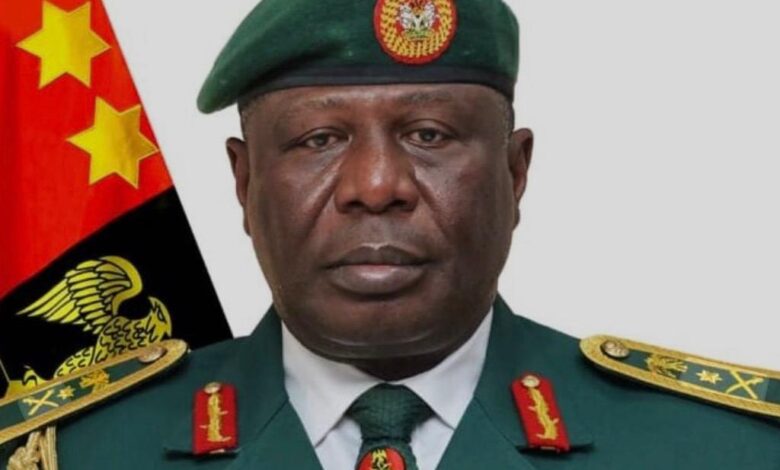
It is against this backdrop that the AFN has intensified efforts to institutionalise Civil-Military Cooperation as a core component of operational planning. Articulating this vision, the Chief of Defence Staff (CDS), General Olufemi Oluyede, stated that “the AFN is being repositioned as a force that is not only operationally capable, but also ethically grounded, people-centred and responsive to the socio-cultural realities of its operational environment.” The statement captures a broader institutional shift towards balancing combat effectiveness with responsible military conduct and meaningful engagement with civilian populations.
Today, CIMIC is no longer viewed as a peripheral activity. Rather, it has become a strategic enabler that complements kinetic operations, strengthens operational legitimacy and enhances mission success. This approach reflects a growing appreciation that military power alone cannot defeat complex security threats rooted within civilian populations.
The activities carried out by formations and units of the Armed Forces during June 2026 provide compelling evidence of how this doctrine is being translated into practical action.
As General Oluyede reminded Defence Correspondents in April 2026, “Military success is not only defined by battlefield victories but also by our ability to win the hearts and minds of the people.” Across multiple theatres of operation, that philosophy found expression through humanitarian assistance, community development, stakeholder engagement and civilian protection initiatives.
These initiatives were highlighted at a recent press briefing by the Defence Headquarters (DHQ) Directorate of Media Operations to update Defence correspondents on ongoing military operations in the month of June and in the second quarter, and include the following:
Supporting Livelihoods and Community Resilience
On 11 June at Dahuwa Primary School in Chamo District of Dutse Local Government Area, Jigawa State, troops conducted an agricultural support programme by distributing 40 bags of fertiliser to selected farmers drawn from surrounding communities.
Although modest in scale, the intervention addressed one of the underlying drivers of insecurity—economic vulnerability. Supporting agriculture and local livelihoods contributes to food security while strengthening relationships with communities whose cooperation remains vital to successful military operations.
Such initiatives reinforce the understanding that security extends beyond protecting lives to creating conditions that allow communities to prosper.
Embedding Civilian Protection in Military Operations
Civil-Military Cooperation is equally reflected in efforts to minimise civilian harm during military operations.
On 2 June, the Civil-Military Relations Branch of the Nigerian Air Force organised a one-day Civilian Harm Mitigation and Response (CHMR) seminar for senior and strategic officers. The seminar reinforced the principle that protecting civilians should not be viewed as an operational limitation but as a force multiplier that enhances mission effectiveness.
Participants examined the evolution of civilian harm mitigation, its application in asymmetric warfare and the importance of complying with International Humanitarian Law during air operations. Such professional development initiatives reflect the Air Force’s commitment to ensuring that operational success is achieved alongside the highest standards of professionalism and accountability.
Beyond compliance with international norms, civilian protection also strengthens operational legitimacy by reducing grievances that terrorist and criminal organisations often seek to exploit for propaganda and recruitment.
Building Security Through Partnership
The AFN also strengthened engagement with stakeholders through participation in the Delta State Security Summit held in Asaba on 17 June.
The summit brought together security agencies, community leaders, traditional rulers and civil society organisations to deliberate on collaborative responses to emerging security threats.
Discussions emphasised that security is a shared responsibility requiring active citizen participation through timely intelligence sharing, particularly in combating terrorism, kidnapping, cultism, cybercrime and other criminal activities.
The engagement reflected a growing recognition that communities are not passive beneficiaries of security but indispensable partners in achieving it.
Promoting Stability in the Niger Delta
Civil-Military Cooperation also played an important conflict-resolution role in the Niger Delta.
Between 2 and 4 June, troops of Operation DELTA SAFE facilitated mediation between Chevron and the Warri Kingdom Coastal Host Community Development Trust, SEEPCO and the Onuebum communities, as well as Oando Resources and the Diebu Satellite Communities.
The engagements addressed grievances relating to employment opportunities, contract awards, community benefits and outstanding obligations. By facilitating dialogue and encouraging peaceful resolution of disputes, the military contributed to maintaining stability within host communities while safeguarding critical national economic assets. Such engagements demonstrate that effective security also involves preventing conflicts before they escalate into crises.
Delivering Development Through Special Intervention Projects
The Nigerian Army equally sustained its Chief of Army Staff Special Intervention Civil-Military Cooperation Projects with the commissioning of several community-focused infrastructure projects.
On 1 June, a newly constructed town hall was commissioned and handed over to Ikot Udoabia Community in Etinan Local Government Area of Akwa Ibom State.
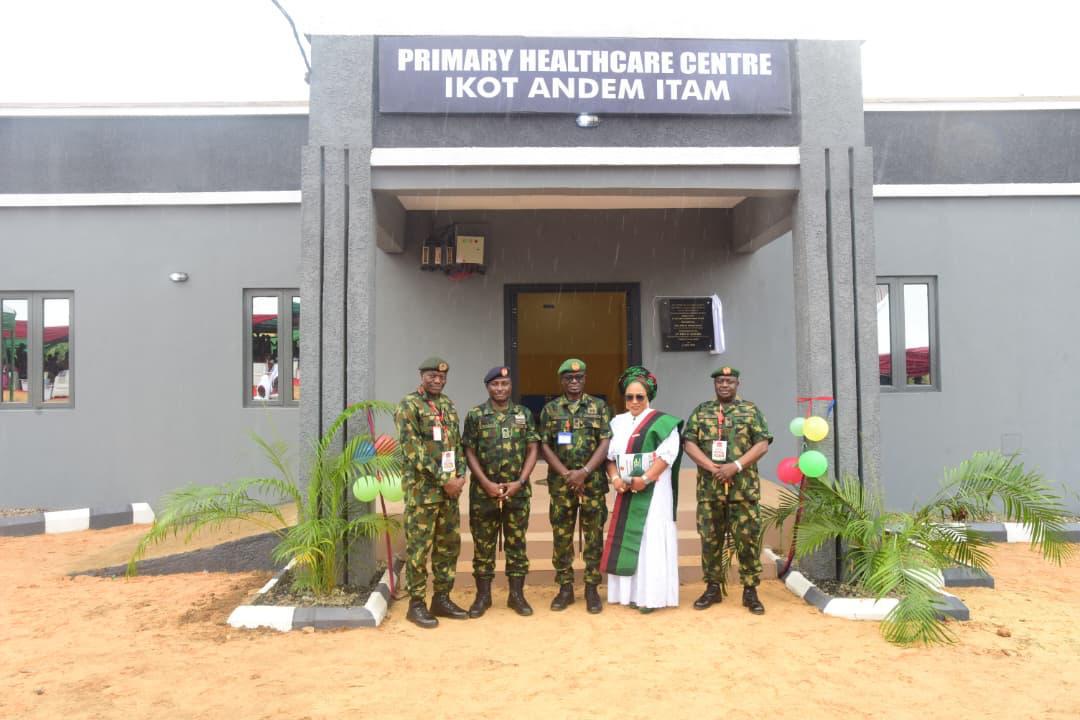
Three days later, a modern Primary Health Care Centre was inaugurated at Ikot Andem in Itu Local Government Area, providing improved healthcare services for residents.
On 20 June, the Army commissioned and handed over a fully equipped Emergency Paediatric Unit at the Yobe State Specialist Hospital in Potiskum, expanding access to specialised healthcare for children in the state. These projects illustrate the Armed Forces’ commitment to complementing security operations with tangible investments in community development and public welfare.
Facilitating Humanitarian Access
Humanitarian cooperation also remained a key feature of military operations in the North-East, the DHQ averred. Representatives of the United Nations Office for the Coordination of Humanitarian Affairs (UNOCHA), the World Food Programme (WFP) and the United Nations Children’s Fund (UNICEF) visited Headquarters Theatre Command, Operation HADIN KAI, to discuss ongoing humanitarian programmes and identify areas for deeper collaboration.
Discussions focused on the challenges associated with delivering food supplies, cholera response kits and other relief materials to remote communities affected by insurgency.
Recognising these challenges, the Theatre Command provided both ground and air escorts for humanitarian convoys, ensuring the safe and timely delivery of relief materials without security incidents.
Speaking during a courtesy visit by delegations from the International Committee of the Red Cross (ICRC) and Médecins Sans Frontières (MSF), the Theatre Commander, Operation HADIN KAI, Major General Abdulsalam Abubakar, aptly captured the changing nature of modern military operations when he observed that “joint operational environment security has gone far beyond the traditional military concerns as it has encompassed the safety, well-being and dignity of individuals and communities.”
His remarks underscore the increasingly important role of the military in creating secure conditions for humanitarian organisations to reach vulnerable populations.
The Strategic Value of Civil-Military Cooperation
A review of the Armed Forces’ activities during June 2026 reveals a deliberate integration of kinetic and non-kinetic lines of operation. While troops sustained offensive operations against terrorists, bandits and other criminal elements, equal emphasis was placed on strengthening public trust, supporting livelihoods, resolving community disputes, facilitating humanitarian access and protecting civilians.
This reflects a broader evolution in military thinking. Around the world, contemporary armed forces increasingly recognise that communities constitute one of the most valuable sources of actionable intelligence. When citizens trust the military, they are more willing to report suspicious activities, resist intimidation by criminal groups and actively support security efforts.
Civil-Military Cooperation therefore serves as a force multiplier. It builds confidence, enhances operational effectiveness and creates an environment in which military gains can be consolidated and sustained.
For Nigeria, where many security challenges are deeply intertwined with social and economic realities, this approach is particularly relevant. Infrastructure development, humanitarian support, mediation and community engagement are not merely goodwill gestures; they are strategic investments in national stability.
The Road Ahead
The experiences of June 2026 demonstrate that Civil-Military Cooperation has become an integral component of the Armed Forces of Nigeria’s operational philosophy. From supporting farmers in Jigawa and investing in healthcare infrastructure in Akwa Ibom and Yobe to facilitating humanitarian assistance in the North-East and mediating disputes in the Niger Delta, the AFN continues to demonstrate that security extends beyond the battlefield.
As Nigeria confronts increasingly complex security challenges, decisive military action will remain indispensable in neutralising those who threaten national peace and sovereignty. Yet lasting peace will depend just as much on the trust, cooperation and resilience of the people.
The Armed Forces of Nigeria’s growing emphasis on Civil-Military Cooperation reflects an enduring truth of modern conflict: while military operations may defeat adversaries, sustainable peace is secured when communities see their armed forces not only as defenders of the nation, but also as trusted partners in development, stability and national progress.