

Young Nigerian girls from underserved communities showcased homemade renewable energy prototypes in Abuja this week, capping off a summer camp backed by FGN Power Company (FGNPC) aimed at growing the next generation of engineers and energy innovators.
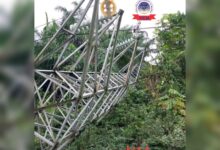
The week-long STEM summer camp, organised by the Visiola Foundation -a not-profit dedicated to educating, training, and mentoring African girls and young women -culminated in a closing competition where participants presented renewable energy solutions they had designed and built themselves to a panel of judges.
FGNPC’s Managing Director/Chief Executive Officer, Mr. Kenny Anuwe, served as chief judge at the event, assessing entries on technical understanding, creativity, quality of presentation, and potential real-world impact.
Students were evaluated on how well they identified renewable challenges, built working solutions, and articulated the technology and thinking behind their prototypes.
Speaking at the event, Anuwe stressed that closing Nigeria’s power sector capacity gap required collaboration well beyond government.
“The Federal Government cannot build the power sector alone; it requires the support of key public and private sector partners,” he said. “This is why we remain open to partnerships with organisations such as the Visiola Foundation, which help expand capacity-building opportunities.”
He linked the camp’s goals to FGNPC’s broader capacity-building efforts, including the Siemens Energy Education & Development (SEED) and the Power Training Institute (PTI) workstream, both of which are designed to strengthen engineers’ capacity in power system simulation, network studies and system planning.
“The role of the private sector, non-governmental organisations and financiers remains critical,” he added, commending the Visiola Foundation for its sustained impact over the years.
Anuwe noted that the camp’s objectives closely mirror FGNPC’s own mission of cultivating future engineers, scientists, innovators and energy professionals.
FGNPC said it views early investment in STEM education is critical to building a talent pipeline that can sustain Nigeria’s energy transition and support a more reliable, sustainable and efficient power sector in the long-term.