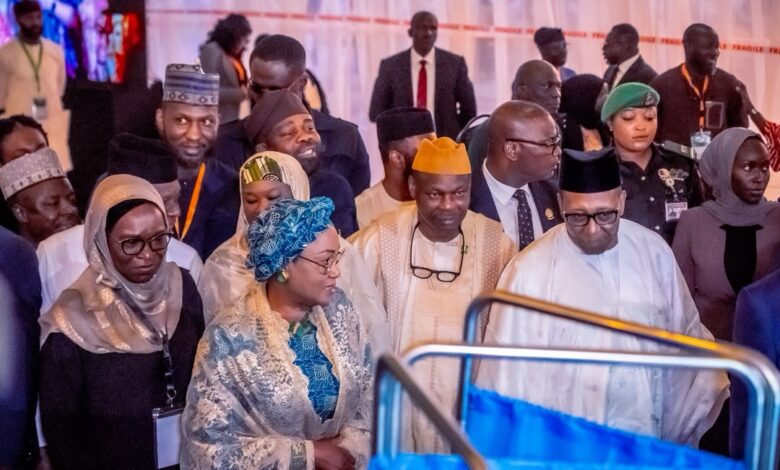


In line with efforts to reduce the high rate of maternal and newborn mortality, First Lady of the Federal Republic of Nigeria, Senator Oluremi Tinubu has flagged-off national incentives to increase maternal and newborn care utilization, targeted at saving 2.9 million pregnant women.
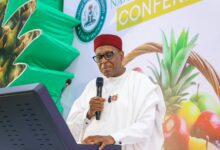
Speaking at the ceremony held in Abuja on Monday, Tinubu stated that the occasion represents a further step towards ensuring that every Nigerian child has a healthy start in life and that no woman loses her life while giving birth.
“This vision is in line with the Renewed Hope Agenda on health of His Excellency President Bola Ahmed Tinubu, GCFR, which recognizes health as an essential pillar of development.
“MAMII is a bold national intervention that unites key stakeholders to reduce preventable maternal and newborn deaths by strengthening awareness, emergency care, referral systems, making safe childbirth and newborn survival the standard of every Nigerian family.
“As a mother, I believe pregnancy and childbirth should be moments of hope and joy, with every woman having access to quality care. However, social, economic, cultural, and logistical barriers still exist.
This is what makes today’s flag-off of particular significance”, she said.
The incentive package launched by the First Lady included a second batch of 215,000 Mama Kits and bags, as well as 40,000 maternal food support packs and 40,000 sets of essential newborn clothing.
She lauded the Federal Ministry of Health and Social Welfare’s intention to extend the distribution of food support packs and essential newborn clothing to additional local government areas identified as having low uptake of the Maternal and Neonatal Mortality Reduction Innovation Initiative (MAMII) incentives.
Such practical support, she noted would encourage less privileged pregnant women to attend antenatal clinics, prepare adequately for delivery, and continue receiving essential care after birth.
She therefore encouraged state and local governments, traditional and religious leaders, development partners, philanthropists, and other stakeholders to support these efforts by ensuring incentives reach women in vulnerable and underserved communities by increasing utilization of maternal and newborn health services.
On his part, Coordinating Minister of Health and Social Welfare, Professor Muhammad Pate, said MAMI was developed under the Health Sector Renewal Investment Initiative to address both the supply and demand sides of maternal healthcare, including strengthening primary healthcare facilities, human resources, essential commodities and affordability of services.
Highlighting progress recorded under the initiative, the Coordinating Minister disclosed that more than 60,000 women had received free Caesarean sections and other emergency obstetric services through the National Health Insurance Authority, while over 120,000 frontline health workers had been retrained.
He added that thousands of healthcare facilities had been revitalised and more than 6,000 women affected by obstetric fistula had received corrective treatment and empowerment support.
Professor Pate said the incentives being introduced under MAMI were aimed at encouraging pregnant women to access antenatal care, skilled birth attendance and other essential services.
He also emphasised the importance of maternal nutrition, including multiple micronutrient supplementation, and linked the intervention to the Community Food Bank Initiative, stressing that well-nourished mothers are critical to developing the human capital needed for Nigeria’s future.
He therefore called on State Governments and Commissioners for Health to sustain and expand the gains recorded under MAMI, noting that States were closer to communities and have a critical role in improving health outcomes.
Earlier, the Minister of State for Health and Social Welfare, Dr. Iziaq Salako, in his welcome remarks, said Nigeria’s maternal mortality burden remained unacceptably high, with the 2023–24 Nigeria Demographic and Health Survey indicating that a Nigerian woman faces approximately a 1-in-19 lifetime risk of dying from pregnancy-related causes.
He added that Nigeria accounts for close to 29 percent of global maternal deaths, underscoring the urgency of sustained and targeted interventions.
Dr. Salako said MAMII, launched by the Federal Government in November 2024, targets 172 LGAs across 33 states, representing about 20 percent of the country’s LGAs but accounting for approximately 55 percent of maternal deaths.
The initiative aims to reduce maternal mortality by 30 percent and neonatal mortality by 20 percent in the targeted areas by 2028, while providing free, timely and comprehensive care to about 2.9 million pregnant women.
The Minister disclosed that more than 250 health facilities were currently implementing MAMII in states including Bauchi, Borno, Kaduna, Kano, Katsina and Ogun, with over 32,000 women and 1,700 newborns already benefiting from emergency obstetric and neonatal care.
He added that NEMSAS has transported nearly 79,000 beneficiaries, about 60 percent of whom are pregnant women, to appropriate care, while fourth-visit antenatal attendance in MAMII LGAs increased by 20 percent in one quarter.
Dr. Salako said the new incentives are designed to reinforce behaviours that save lives, particularly early antenatal registration, facility-based delivery and postnatal follow-up, reaffirming the administration’s commitment to ensuring that no woman loses her life while giving birth.