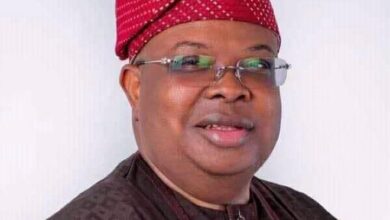
The Minister of Power, Chief Joseph Tegbe, has again dismissed rumours of an electricity tariff increase, saying the Tinubu administration has no immediate plans to raise tariffs.

Tegbe made the clarification on Monday during a media parley with journalists in Abuja, urging Nigerians to disregard reports suggesting otherwise.
“Let me categorically state, and this is not a political statement, we have no plan to increase electricity tariffs,” he said.
The minister used the briefing to account for his first 100 days in office, from June 8 to September 16, listing what he described as modest but measurable improvements across the power sector.
He said his administration inherited electricity infrastructure that is over 40 years old and had focused its early efforts on stabilising the system rather than pursuing new large-scale projects.
Tegbe said the diagnosis carried out at the start of his tenure found weaknesses across the entire electricity value chain, including gas supply constraints, an ageing generation fleet, vandalised transmission infrastructure, and distribution losses of between 30 and 40 percent.
He noted that generation companies were being paid for only 27 percent of their bills, a shortfall he said was undermining their ability to maintain plants and pay gas suppliers.
Despite these challenges, the minister pointed to several achievements.
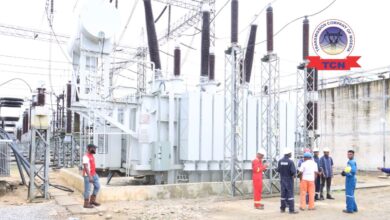
He said the 375 megawatt Alaoji power plant had been restored to the national grid after three years offline, while new transformers commissioned in Lagos and Abuja had unlocked more than 900 megawatts of additional transmission capacity.
He added that national generation and transmission had exceeded 5,000 megawatts in recent weeks, compared with a range of 3,700 to 4,700 megawatts before June, with a peak of 5,330 megawatts recorded in August and September.
On rural access, Tegbe said the Rural Electrification Agency and its partners had completed 62 solar and mini-grid installations across 30 states, providing about 43.6 megawatts of solar capacity and over 41,000 new connections, benefiting more than 208,000 people.
He also announced the launch of the Renewable Asset Management Company, which he said would professionally manage publicly financed renewable energy assets and aims to raise 3 trillion naira in the coming years.
On the financial side, the minister said about 1.23 trillion naira had been raised toward settling the sector’s debt backlog, part of a wider effort to address 3.3 trillion naira in outstanding obligations.
He said interventions targeting energy theft along the Ikorodu-Sagamu corridor had blocked an estimated 120 billion naira in annual revenue leakage.
On metering, Tegbe said about 350,000 meters were installed during the first 100 days, bringing cumulative installations to just over one million as of August. He said the resolution of the AMMON litigation had unlocked procurement of about 1.4 million additional smart meters.
The minister also highlighted a series of engagements with Chinese firms, including Sinomach, CMEC, CNEEC, TBEA and HengFei Cables, aimed at accelerating projects under the Presidential Power Initiative, as well as a cooperation agreement with Huawei on grid digitalisation.
Looking ahead, Tegbe said the next phase of work would focus on stabilising the Lagos, Enugu-Port Harcourt and Abuja-Kaduna-Kano transmission corridors, developing a transmission “super grid,” improving utilisation of existing assets, and preparing infrastructure for future demand, including the long-delayed Mambila hydropower project.
He acknowledged that many Nigerians were yet to feel the impact of the reported improvements.
“National progress can coexist with an unreliable feeder in a particular community,” he said, adding that the government does not deny the experiences of those yet to benefit.
Tegbe appealed to the public and the media for continued support and scrutiny, saying the reform of the power sector “is not a sprint, rather, it is a marathon.”