AECAF 2026: Experts Push For Stronger Investment In Nigeria’s Hydrocarbon Sector
By Sunday Etuka


Nigeria’s oil and gas industry has long served as the backbone of the nation’s economy, accounting for a significant share of government revenue and foreign exchange earnings since crude was first discovered in commercial quantities at Oloibiri in 1956.

Over the decades, the sector has weathered numerous storms, from the oil price collapses of the 1980s and 2015/2016, to the shale revolution in the United States, the COVID-19 pandemic, and, more recently, a global energy transition that has pushed investors to reconsider their exposure to fossil fuels.
Yet despite these pressures, the industry remains central to Nigeria’s development ambitions, prompting renewed conversations about how the country can sustain and even grow investment in the sector going forward.
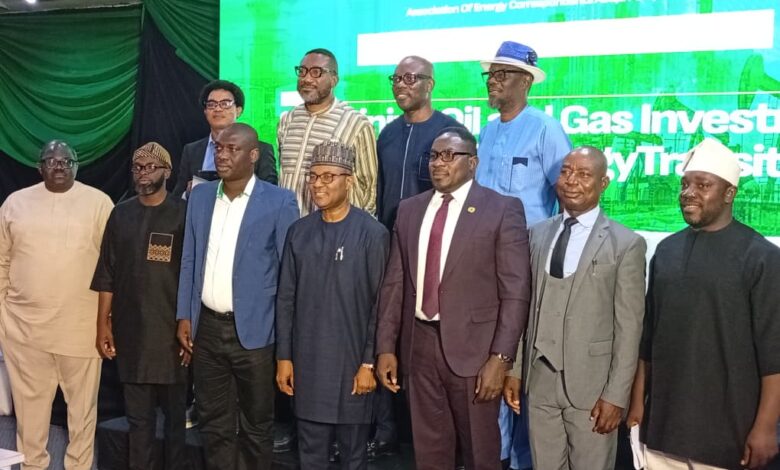
It was against this backdrop that government officials, regulators and industry stakeholders gathered in Abuja on Thursday for the 2026 Annual Conference of the Association of Energy Correspondents Abuja FCT (AECAF), held at the Nicon Luxury Hotel under the theme “Sustaining Oil and Gas Investment in Nigeria Amid Energy Transition.”
The gathering drew senior voices from the Ministry of Petroleum Resources, the Nigerian Upstream Petroleum Regulatory Commission (NUPRC), downstream operators and energy journalists who cover the sector daily.
Government’s Commitment To Reform
Speaking at the event, the Minister of State for Petroleum Resources (Gas), Rt. Hon. Ekperikpe Ekpo, said Nigeria’s task was not merely to produce hydrocarbons but to build an investment climate that allows the country’s resources to drive industrialisation, create jobs and improve living standards.
He pointed to the Petroleum Industry Act (PIA) 2021 as a foundation for that effort, while cautioning that legislation alone would not reassure investors without consistent implementation and efficient project delivery.
Ekpo devoted particular attention to gas, describing the Decade of Gas Initiative as central to shifting the commodity from being primarily an export product to one that fuels domestic power generation, manufacturing, fertiliser production, petrochemicals and transportation.
He cited ongoing infrastructure projects, including the AKK and OB3 gas pipelines, as critical links between the country’s gas reserves and the markets that need them.
The minister also urged energy correspondents to report the sector with accuracy and balance, arguing that investor confidence is shaped not only by policy but by how the industry is portrayed publicly.
Regulatory Outlook And Production Gains
The regulatory perspective came from NUPRC, represented in two separate addresses. Commission Chief Executive Oritsemeyiwa Eyesan, in a message delivered on her behalf, noted that Nigeria’s crude oil and condensate production averaged about 1.68 million barrels per day in August 2026, meeting the country’s OPEC quota for a fourth straight month.
She said the Commission had approved field development plans worth more than $57 billion since 2024, with a further 22 major offshore projects expected between 2026 and 2030 carrying an estimated investment potential of $30 billion to $50 billion.
Eyesan said the priority now was execution, adding that the Commission’s Upstream Oil and Gas Decarbonisation and Sustainability Blueprint was pushing operators to weigh energy efficiency, gas utilisation and emissions performance from the earliest planning stages of new projects, rather than treating environmental compliance as an afterthought.
In a separate goodwill message, the Director of Surface Development at NUPRC, Engr. Joseph Olawole Ogunsola, speaking on behalf of the Commission, disclosed that Nigeria’s proved and probable reserves stood at 37.01 billion barrels of oil and condensate and 215.19 trillion cubic feet of gas as of January 1, 2026.
He said the Commission’s regulatory objective was to shorten the path to safe, economic production while maintaining the oversight needed to protect investors, the environment and national value, pointing to measures such as the 2023 Gas Flaring, Venting and Methane Emissions Regulations and the 2026 Decommissioning and Abandonment Regulations as tools giving investors clearer visibility into project costs and liabilities.
Downstream Concerns Over Market Competition
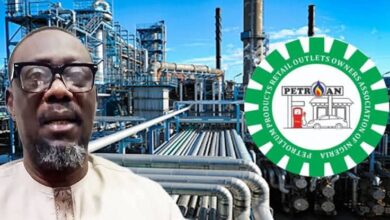
Beyond upstream policy, the conference also surfaced concerns from the downstream segment of the industry. Dr Billy Gillis-Harry, National President of the Petroleum Products Retail Outlets Owners Association of Nigeria (PETROAN), called for an open and competitive petroleum products market to ensure affordable and transparent pricing.
While commending the Dangote Petroleum Refinery for its investment, he said other refiners and product suppliers should be allowed to participate meaningfully in the market, warning that Nigeria could not afford a situation where a single company controlled the supply of petroleum products.
Gillis-Harry cited the planned 25,000 barrels per day Azikel Refinery in Bayelsa as one of the emerging projects capable of boosting domestic refining capacity, arguing that competition among refineries and suppliers would help create market based pricing and give consumers access to more affordable products.
He also called for stronger collaboration among upstream, midstream and downstream operators, noting that crude production, refining and retail distribution were interconnected.
To support transparency in the downstream space, he said PETROAN had developed a Petroleum Quality Assurance and Quality Control (PQAC) and Price Intelligence System to track product volumes, quality and prices, allowing retailers to monitor the quantity and quality of products loaded, their source and landing costs.
He urged motorists to report suspected under dispensing at outlets displaying the association’s sticker and pledged continued collaboration with regulators, including the Nigerian Midstream and Downstream Petroleum Regulatory Authority (NMDPRA) and the Federal Competition and Consumer Protection Commission (FCCPC), to promote fair competition.
He maintained that crude oil would remain relevant despite the growth of alternative energy sources, even as Nigeria works to protect the environment while maximising its petroleum resources.
Lessons From Two Decades Of Coverage
In his welcome address, AECAF Chairman John Ofikhenua reflected on two decades of covering the sector, recalling how shocks such as the United States shale boom, the COVID-19 pandemic and the global push toward net zero emissions had each, in turn, drained investor confidence from Nigeria’s oil and gas industry.
He argued, however, that global crises, including the Russia Ukraine war and disruptions linked to the Israel Iran conflict, had repeatedly proven the enduring relevance of fossil fuels, drawing investors back to Nigeria even after they had withdrawn.
Ofikhenua pointed to strong investor interest in the Dangote Petroleum Refinery and Petrochemicals share offer and in NUPRC’s oil field bid rounds as evidence that confidence in the sector was returning. He called for sustained implementation of the PIA, improved security in the Niger Delta and stable, consistent government policy as prerequisites for retaining that confidence.
Way Forward
Across the addresses, a common thread emerged. Nigeria’s oil and gas sector, despite its considerable resource base and improving production figures, continues to face structural challenges, including policy inconsistency, security concerns in the Niger Delta, infrastructure gaps and market concentration in the downstream segment.
Speakers agreed that overcoming these challenges will require sustained implementation of the PIA, greater regulatory predictability, deliberate efforts to open up competition across the value chain and continued investment in gas infrastructure to support domestic industrialisation.
Ultimately, stakeholders at the conference agreed that Nigeria’s ability to hold on to oil and gas investment in the coming years will depend less on the size of its reserves than on how consistently the country can translate policy commitments and regulatory approvals into executed, producing projects that deliver tangible value to Nigerians.